
Key Observations
- The “lock-in effect” is creating sustained demand for second mortgages as homeowners with low-rate first mortgages seek liquidity without refinancing
- Record U.S. homeowner equity, conservative loan-to-value ratios, and stronger underwriting standards have improved the credit profile of today’s second mortgages
- Banks’ retreat from home equity lending has created a structural supply gap, allowing non-bank originators and securitization platforms to expand
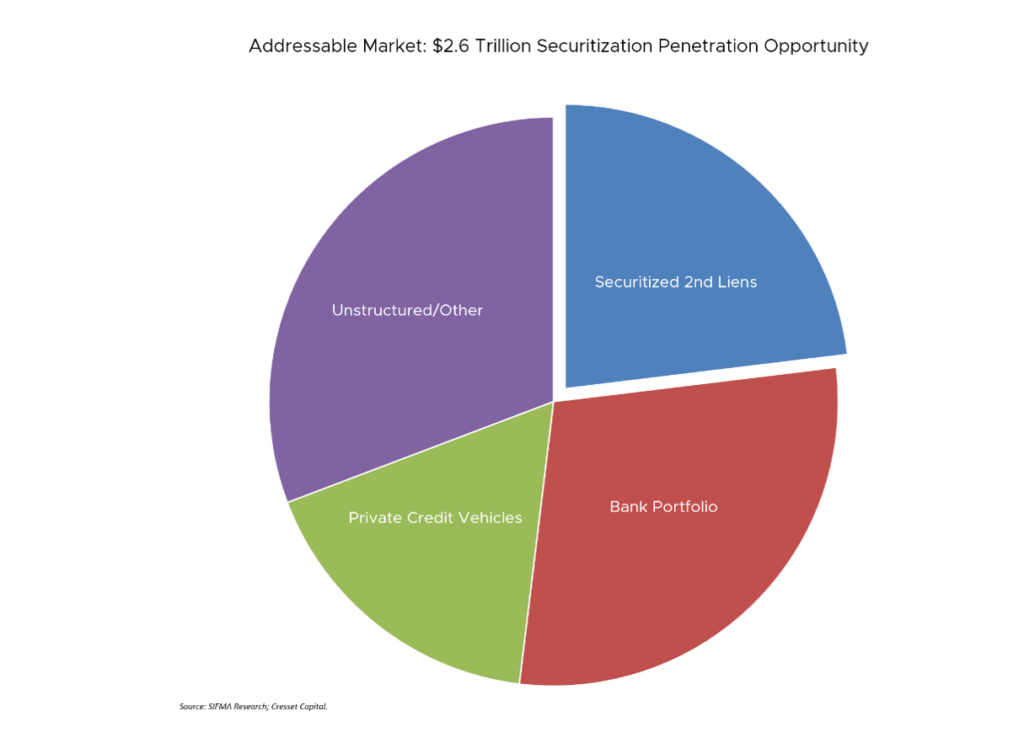
- An estimated $2.6 trillion addressable second-lien market remains largely untapped, with less than 23% currently securitized
- Residential second mortgages may offer diversification benefits due to their relatively low correlation with broader corporate credit and risk assets
Housing Market Post-Crisis
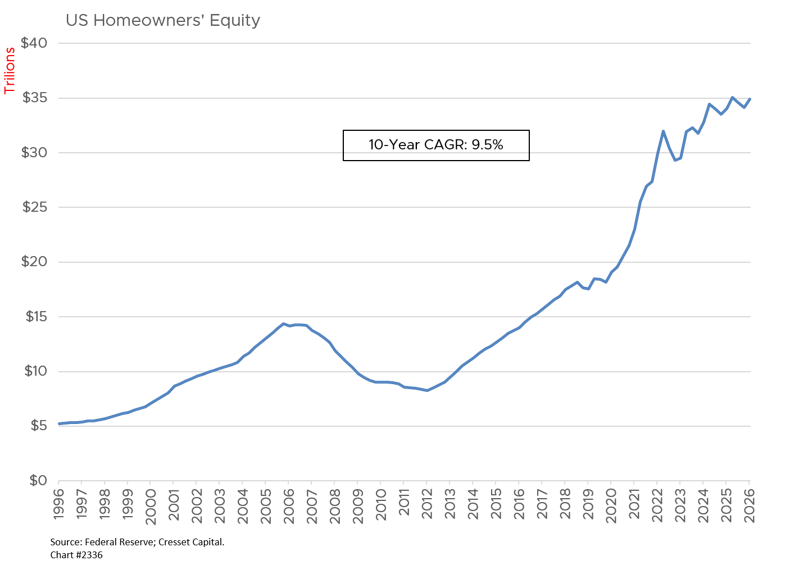
The housing market has undergone a fundamental transformation since the 2008 financial crisis, evolving from a speculative asset class characterized by permissive lending and rapid price appreciation into a more mature, supply-constrained market where homeownership has become a stable store of wealth. The collapse that destroyed $7 trillion in homeowner equity triggered a multi-year unwinding in which household balance sheets deleveraged through both principal paydown and behavioral conservatism. Now, US homeowner equity stands at $35 trillion and loan-to-value ratios have declined to historically conservative levels. Moreover, the borrower base has shifted decisively toward prime credit.
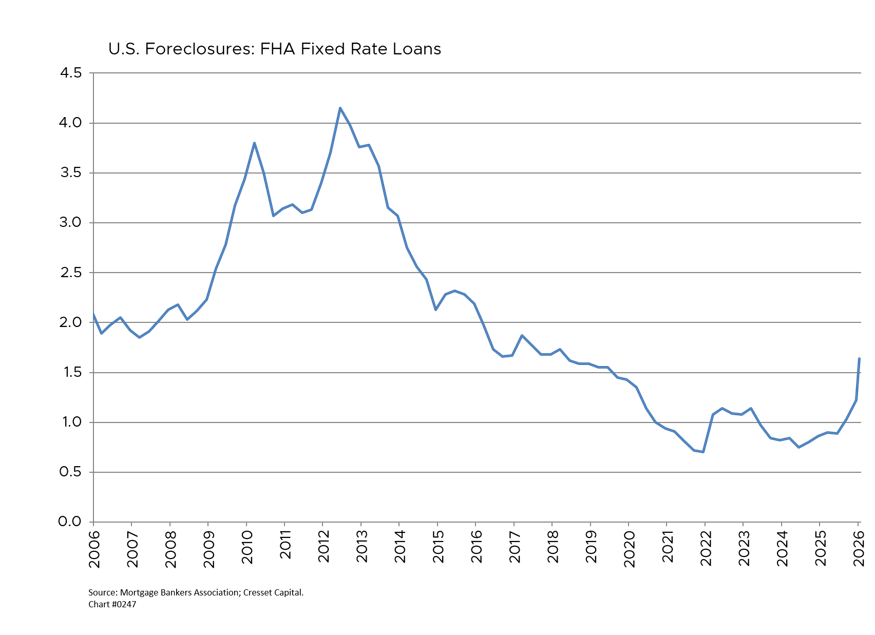
Meanwhile, underwriting standards for residential mortgages have improved dramatically since the 2008 crisis, shifting from negative selection and moral hazard toward rigorous documentation, conservative loan structures, and comprehensive stress-testing protocols; standards that would have prevented most of the collateral defects that materialized in the housing crisis. Loan structures themselves have shifted toward full amortization with fixed-rate terms, eliminating the interest-only and negative amortization features that created mismatches in the prior cycle, while down payments nowadays are in the 20-30% range rather than the 0-5% down payments that enabled rapid default cascades during the housing decline. Regulatory frameworks including Dodd-Frank and qualified mortgage definitions have created a baseline for originator diligence that did not exist in the pre-2008 environment where regulatory oversight of non-bank originators was minimal. As a result, second mortgage products originated today carry realized lower loss rates and a credit profile that stands in stark contrast to pre-2008 securitizations when underwriting discipline collapsed in pursuit of market share.
The Lock-In Effect: A Durable Structural Driver
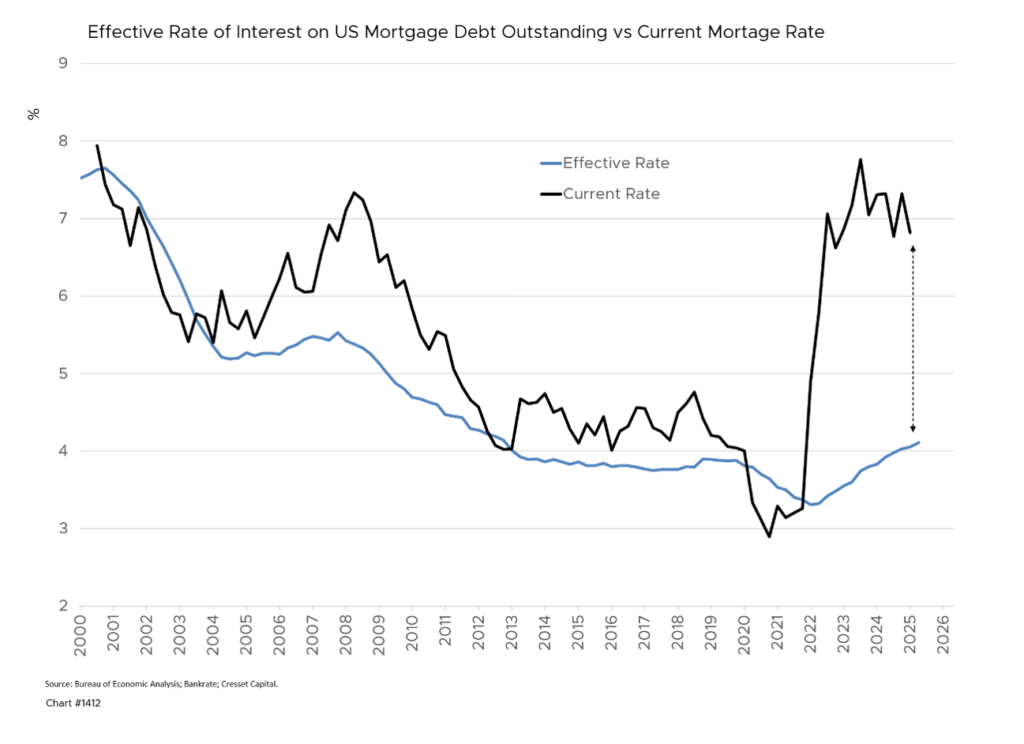
The most powerful macro argument begins with a simple observation, approximately 51% of the US mortgage market is comprised of loans carrying interest rates below 4%. Today’s effective mortgage rate on existing mortgages outstanding is 4.1%, substantially below today’s 6.9% current rate on new 30-year fixed mortgages. This extraordinary rate differential between existing mortgages and current market rates has fundamentally altered homeowner behavior, creating what market participants term the “lock-in effect.” Homeowners with sub-4% mortgages face prohibitively high refinancing costs and represent an immobile borrower base unlikely to move or access traditional cash-out refinancing to extract home equity. This behavioral lock-in is not a cyclical phenomenon that will reverse quickly when rates normalize. Rather, it is a durable structural feature of the US housing market that will persist across multiple years and through various rate scenarios.
Faced with this constraint, homeowners increasingly seek alternative financing mechanisms to access their home equity for home improvements, education funding, debt consolidation, and other life cycle needs. Homeowner demand for capital is not speculative; it stems from the basic economics of household balance sheets. Rather than vanishing when rates decline, demand for second mortgages will likely persist as long as a material cohort of borrowers remains locked into below-market rates.
Record Homeowner Equity and Conservative Underwriting
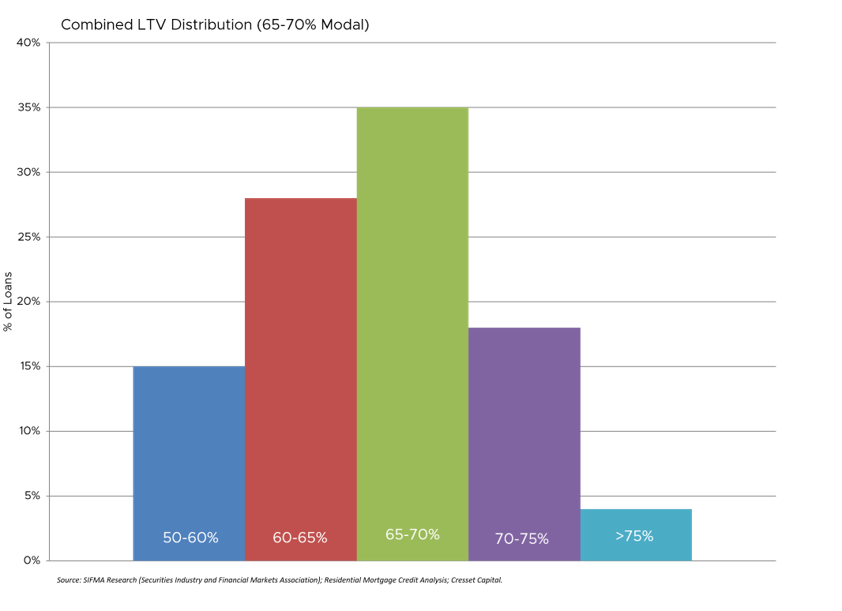
Supporting loan demand is record US homeowner equity, approximately $35 trillion, reflecting meaningful improvement in household balance sheets. Equally important, the loan-to-value ratios embedded in second mortgage securitizations have remained conservative, typically clustering in the 65 to 70% range on a combined basis with first mortgages. These low LTVs provide substantial downside protection and cushion against housing price volatility, a risk management feature that cannot be overstated when assessing the credit quality of the underlying collateral.
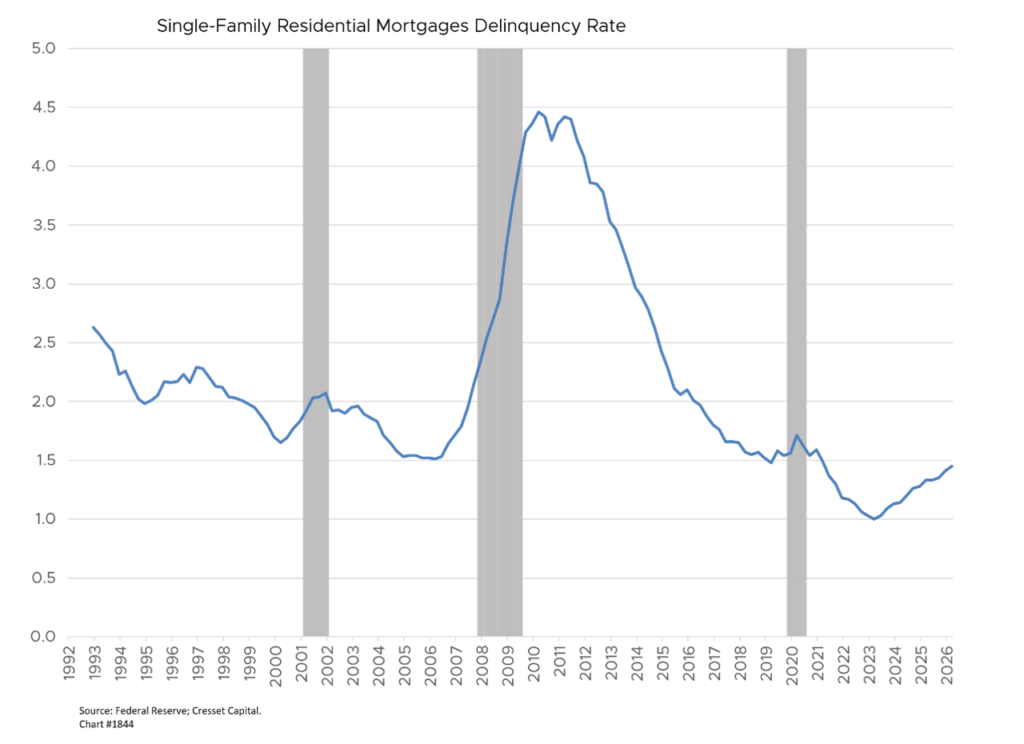
Meanwhile, borrower profiles underpinning second mortgage demand have also remained solidly in the prime-to-near-prime spectrum. FICO scores on originated portfolios consistently exceed 730, substantially above the subprime threshold. Debt-to-income metrics typically range between 30 and 40%. Because most loan products are fully amortizing, they self-liquidate over time and do not carry the extension risks inherent in interest-only or balloon structures. This combination of strong credit metrics, conservative leverage, and self-amortizing terms creates a credit profile notably resilient to economic stress. Today’s residential mortgage delinquency rate is in the 14th%ile of its historical range, suggesting strong credit.
Bank Retreat: A Supply Constraint with Secular Implications
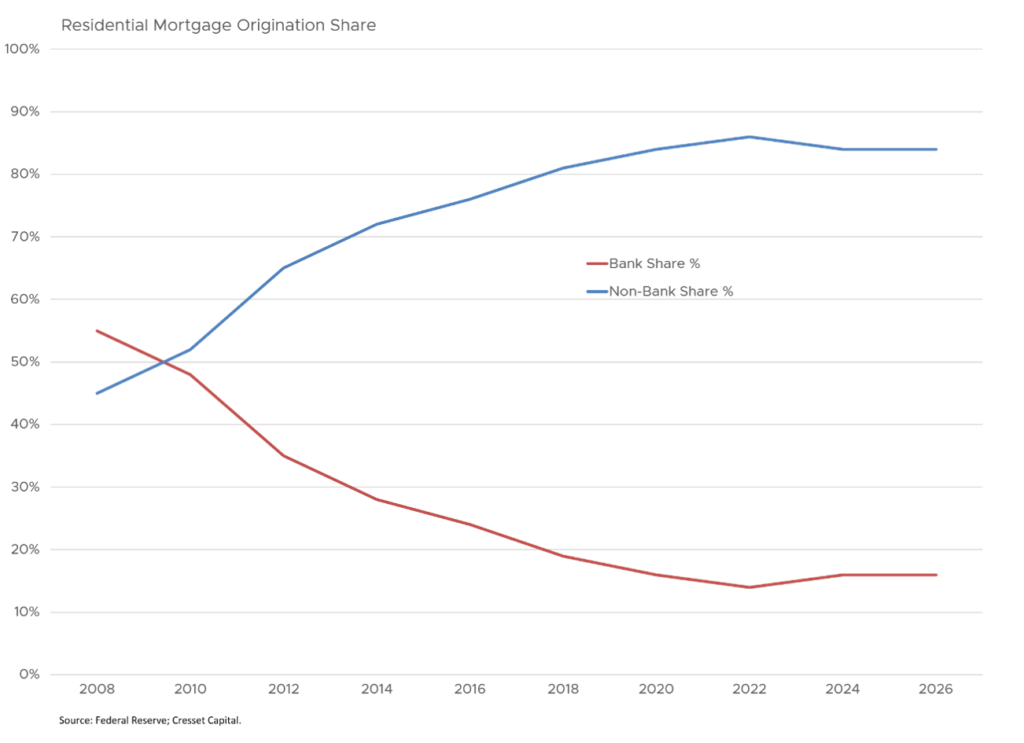
A critical macro driver that often flies under the radar of broader capital markets discourse is the structural retreat of traditional banks from home equity lending. In the immediate post-crisis era, banks dominated residential mortgage origination including home equity products. Today, banks represent only 16% of new mortgage originations, down from 35% at their prior peak. This decline reflects a durable change in regulatory capital treatment, compliance infrastructure, and strategic prioritization by large financial institutions.
Post-Dodd-Frank regulatory burden, heightened capital requirements, and the opportunity cost of deploying balance sheet capacity into higher-yield alternatives have all contributed to this retreat. The supply vacuum created by bank exit is unlikely to be backfilled by traditional lenders returning to the market. Instead, non-bank originators and specialized credit platforms have filled this gap, creating a structural supply constraint in residential home equity credit that is extraordinarily favorable to securitization economics.
An Addressable Market of Remarkable Scale
The second-lien residential mortgage market represents an estimated $2.6 trillion addressable opportunity across both home equity lines of credit and closed-end second mortgages. Of this universe, however, less than 23% is currently being captured or structured into securitized form. This implies approximately $2 trillion of residential second mortgage exposure resides either in bank portfolios, in private credit vehicles, or in unstructured form with independent originators.
For context, the total residential mortgage-backed securities market exceeds $6 trillion. The penetration of securitization into the second-lien market is a fraction of the penetration achieved in the prime first mortgage market, suggesting substantial structural room for securitization to scale within this asset class as the market recognizes its economic advantages.
Moreover, second mortgages typically exhibit low correlation to corporate credit cycles and to broader risk asset performance, a diversification characteristic increasingly valued by institutional allocators managing complex portfolio exposures.
The Bottom Line
The securitized residential second mortgage market sits at the intersection of several favorable macro dynamics. Durable loan demand is driven by rational household response to rate locks. At the same time, supply is constrained due banks retreating from originations. Favorable credit fundamentals are creating an underwriting tailwind. For investors seeking exposure to residential credit with secular structural support, meaningful yield, and disciplined underwriting standards, this market represents a interesting opportunity.