
Key Observations
- The “debasement trade” has re-emerged in force, with gold up roughly 15% since early July to around $4,686/oz and bitcoin posting its best week in three years.
- Investors are reacting to Treasury Secretary Bessent’s bond-buyback intervention and a weakening dollar, adding to concerns about currency debasement.
- Investors worry about $40 trillion in federal debt, interest costs exceeding the defense budget, and a Fed and Treasury that appear more willing to lean on the currency than to address the deficit directly.
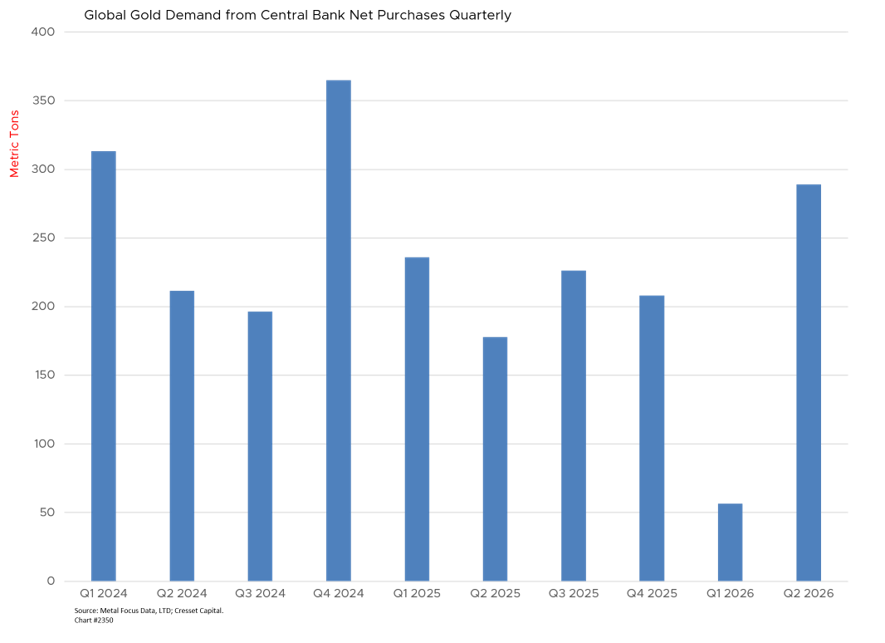
- Central bank gold buying, the single biggest demand driver of the multiyear rally, cooled sharply in Q1 2026, with purchases down 76%, from an estimated 244 tons to just 57 tons.
- The 57 tons purchased by central banks represented the weakest first quarter in 15 years, raising questions about a key source of structural demand for gold.
- Gold’s opportunity cost remains real, as it offers no yield compared with 4% to 5% on Treasuries, while the metal is already down nearly 30% from its January peak, putting the “add gold” conversation well off the highs.
Why Investors Are Worried About Dollar Debasement
Debasement, as a trade, is a bet that the U.S. will manage a growing $40 trillion debt load not by meaningfully cutting spending or raising taxes, but by financial repression. By keeping interest rates below inflation, policymakers can effectively inflate the debt away over time. That’s a slow, insidious transfer of value from currency holders to borrowers with no single headline event, just a gradual erosion. What’s changed this year is that erosion no longer looks purely hypothetical.
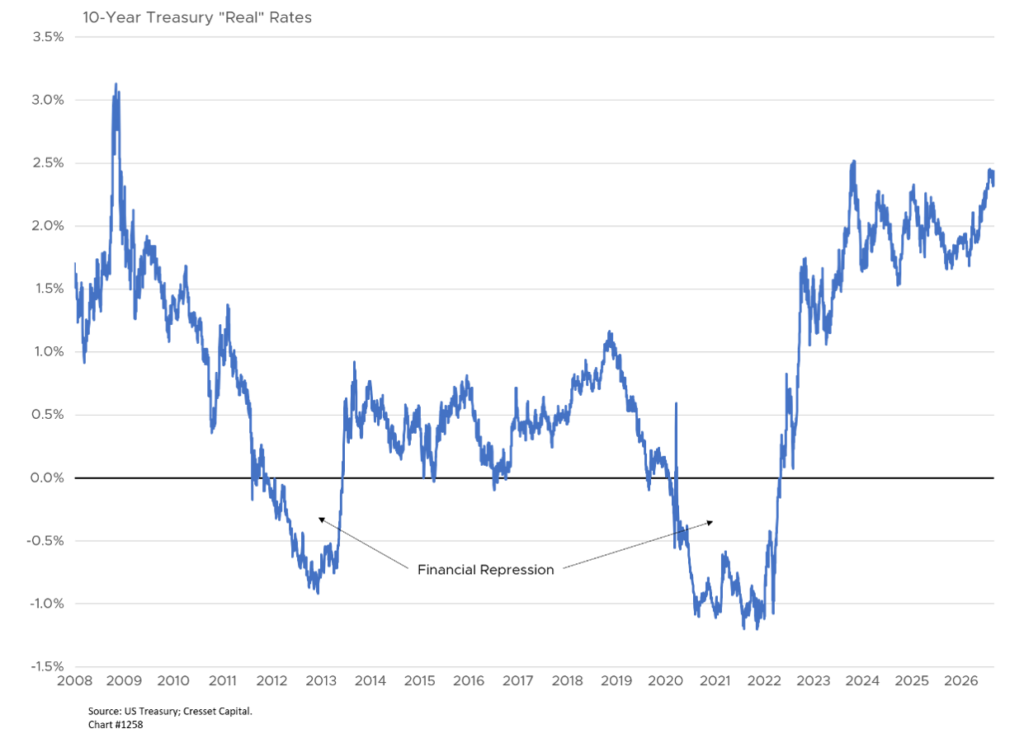
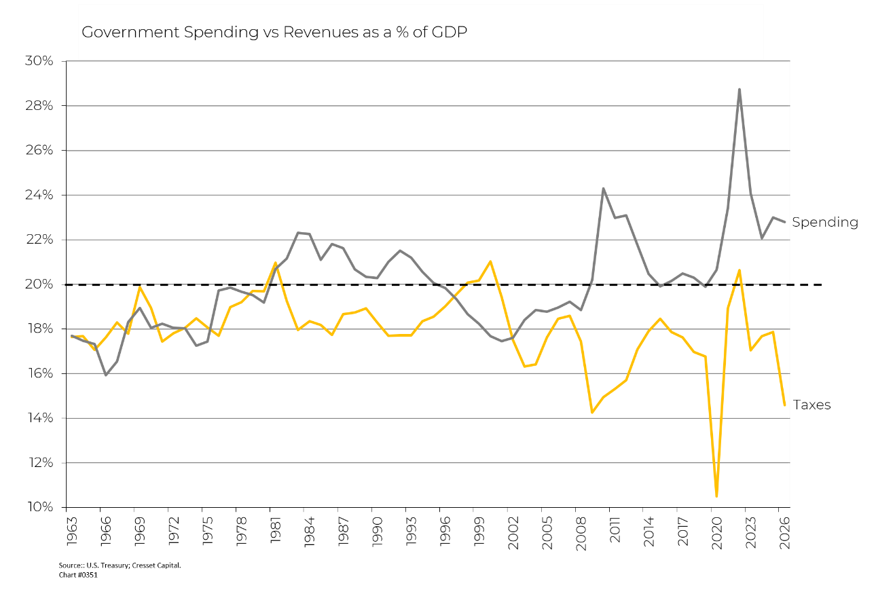
Last month, debt crossed $40 trillion, and the U.S. is now spending more annually on interest than on defense, something that historically has only happened to great powers during major wars. While not a crisis by itself, it does change the incentives facing policymakers. A government paying an enormous interest bill has a strong motive to want borrowing costs lower. Balancing the budget is the hard way, while financial repression, holding interest rates below the inflation rate, the “easy” way.
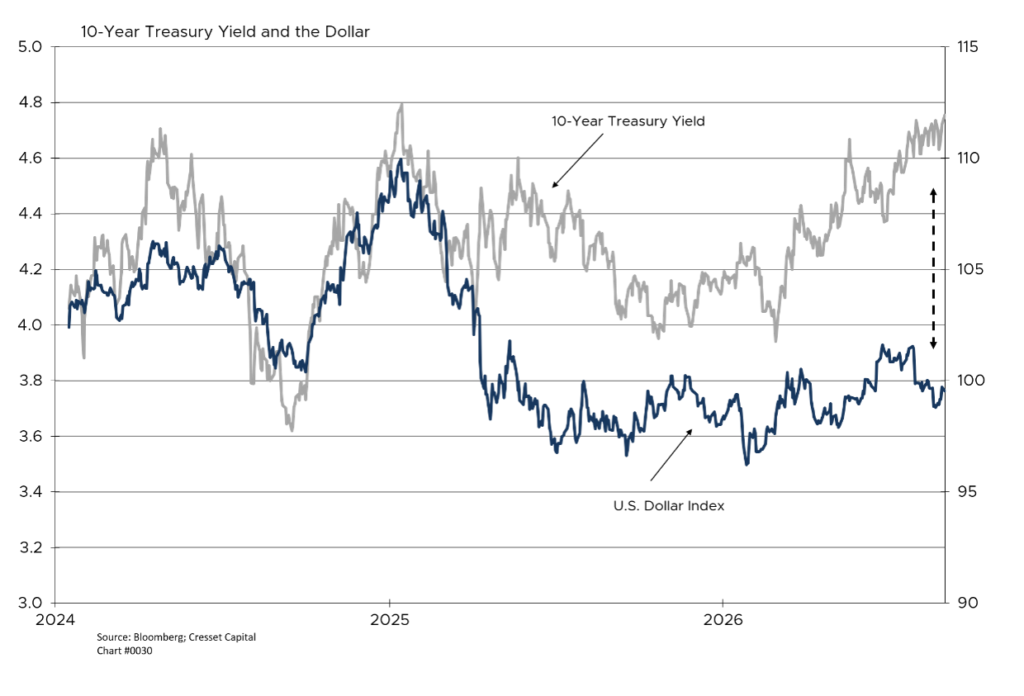
Treasury Secretary Bessent’s decision to double long-term bond buybacks represented a technical, small-scale intervention of a few billion dollars against a market that trades over $1 trillion dollars a day. It didn’t work. Instead of calming yields, it rattled confidence in the dollar and triggered a sharp bout of dollar selling alongside surges in gold and Bitcoin. Wary investors viewed the world’s most powerful economic policymaker taking unconventional, seemingly ineffective action to suppress yields, reinforcing the debasement signal.
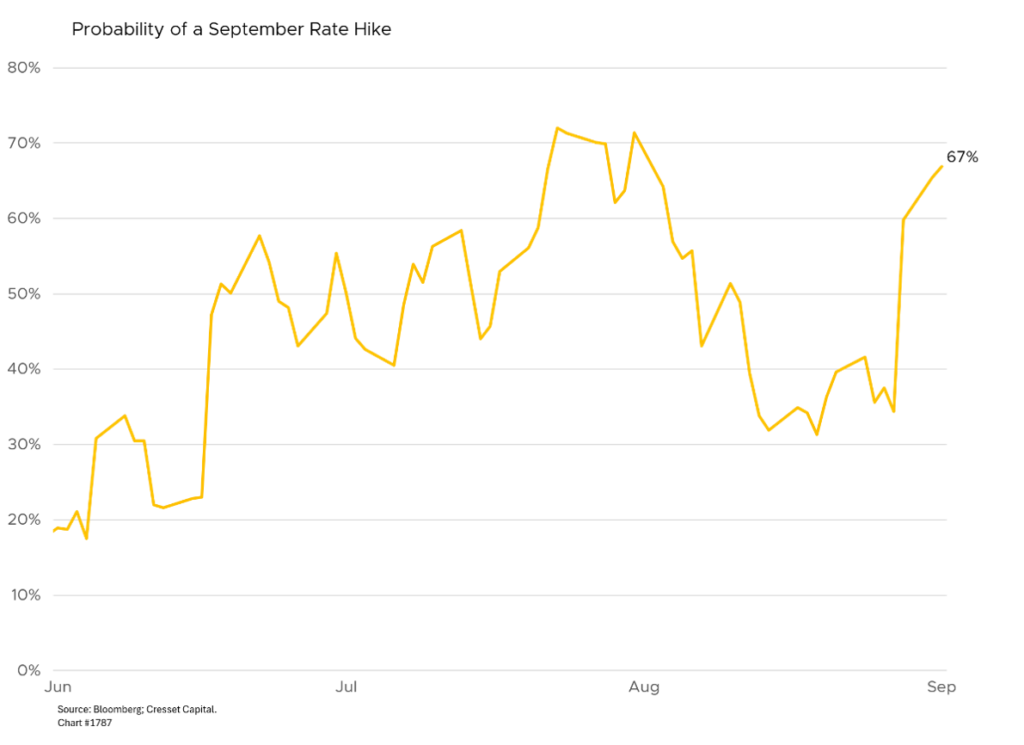
Adding to the uncertainty is a new Fed chair who, at Jackson Hole, sharpened his inflation warning and edged closer to signaling a possible rate hike, while still declining to spell out forward guidance or a reaction function. Warsh used the speech to address critics of his muddled July press conference, where uncertainty about the path of interest rates had prompted bond traders to sell off long-term debt. His message this time was firmer, “While this summer’s [inflation] readings were better than expected, they do not tell me that underlying trends have meaningfully improved,” he said, adding that he does not want markets to look primarily to the Fed for their next trade. That’s a notably more hawkish tone than the market had priced in, prompting traders to increase the likelihood of a September rate hike to 67%, complicating the debasement narrative. The Fed and Treasury remain on different pages, with one signaling higher rates and the other actively trying to suppress long-end yields through buybacks. That divergence, more than the specific direction of either institution, is what continues to unsettle institutional investors, even those who don’t believe a formal debt crisis is likely.
Markets Price the Debasement Risk
Gold and Bitcoin’s synchronized rally recently underscores the debasement trade. Investors aren’t fleeing to safety in the traditional sense. Historically, financial crises would channel capital into Treasuries, not away from them. Today’s investors are hedging against the possibility that U.S. policymakers choose currency depreciation as the path of least political resistance.
Does Gold Make Sense in Portfolios Today?
The case for a gold allocation is real, but it’s more nuanced than the headlines suggest, and the timing matters.
The Bull Case: Gold has structurally re-rated. It’s rallied consistently since the Fed normalized rates in 2022 and has displaced Treasuries as the top reserve asset globally, according to the European Central Bank. Central bank buying, even after the sharp Q1 revision, remains a genuine multi-year theme tied to reserve diversification away from the dollar following the 2022 seizure of Russian assets. Private wealth demand, particularly in China and India, may prove to be a more durable pillar. It should be noted that iShares Gold Trust and SPDR Gold Shares, the two largest gold ETFs, are backed by physical gold. Together, they represent $220 billion in gold ownership.
Gold’s Changing Demand Picture
The Bear Case: The composition of gold’s demand base is shifting in a way that should give investors pause. Central banks, historically price-insensitive buyers who provided a floor, have pulled back meaningfully, with some, including Turkey, Russia, and Azerbaijan, turning into net sellers. Retail investors piled in aggressively last autumn, helping drive the January peak, but have since pulled back as momentum reversed, contributing to the subsequent 30% drawdown. The buyer base is rotating from patient, structural hands toward more reflexive, momentum-driven capital, arguing for higher volatility, not necessarily a lower floor.
Gold also carries real opportunity costs that are easy to overlook in a debasement narrative. It yields nothing, compared with 4% to 5% on Treasuries. Over the long run, gold offers pure purchasing power, meaning that it offers a 0% “real” return. 10-year Treasury Inflation-Protected Securities (TIPs) offer investors a 2.4% yield over inflation. For income-dependent investors, particularly retirees, that opportunity cost is not trivial.
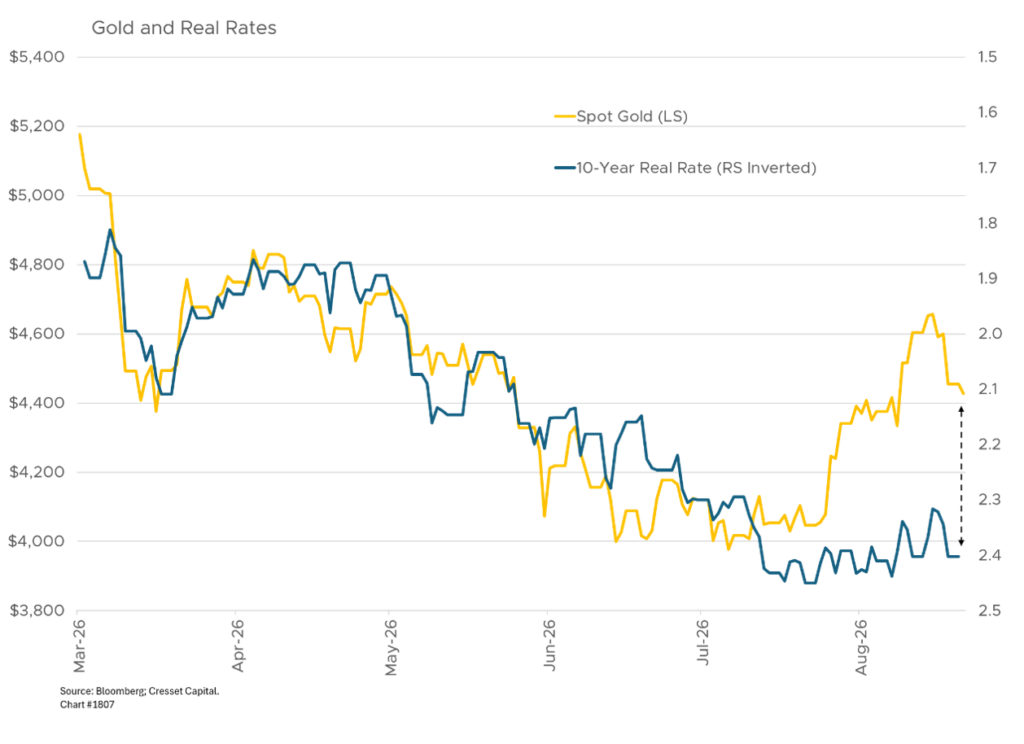
While the directional shift here is more important than the level, prices already reflect a lot of the debasement thesis, and the metal is meaningfully off its peak. It’s a case for treating gold as portfolio insurance against policy unpredictability, not as a replacement for income-generating fixed income. A modest allocation is a reasonable way to acknowledge the debasement risk without abandoning income generation or taking on excessive volatility. Note that gold, like insurance, carries an annual cost every year that nothing happens.
Bottom Line
Dollar debasement concerns are legitimate. They reflect a genuine and growing divergence between the U.S. fiscal trajectory and the policy tools being deployed to manage it, and markets are pricing that divergence in real time through gold, bitcoin, and dollar weakness. But the debasement trade is well known, and gold’s traditional buyers, central banks, are pulling back even as private wealth steps in. A modest gold allocation as insurance against policy unpredictability and currency erosion could make sense if it’s sized to acknowledge the risk without sacrificing the income and stability that bonds still provide. The case for gold rests on the growing unpredictability of U.S. fiscal and monetary policy, not on the expectation of an imminent fiscal crisis. Instead, investors should plan for higher taxes and spending cuts. To quote a political maxim, “Congress will do the right thing once they’ve exhausted all other alternatives.”