
Key Observations
- The Trump-Xi summit extended the current trade truce through January 10, delaying rather than resolving the broader tariff dispute.
- The summit’s trade agreements were largely symbolic, with limited impact on the broader U.S.-China trade relationship.
- China’s control of critical minerals continues to provide significant strategic leverage in ongoing negotiations.
- The new U.S.-China AI dialogue is unlikely to slow investment or competition in artificial intelligence.
- While U.S. policy toward Taiwan remains unchanged, investors should continue monitoring developments across the broader relationship.
- Near-term tensions may ease, but the long-term competition surrounding trade, technology, semiconductors, and critical minerals remains intact.
Xi Jinping’s first state visit to Washington in eleven years concluded last week after less than 48 hours of substance wrapped in three days of ceremony. Investors treated it accordingly. The yuan posted its largest weekly loss since June, onshore Chinese equities finished lower, and Hong Kong and U.S.-listed Chinese indexes retreated.
The Truce Was Extended on the Shortest Terms Available
The most concrete agreements were cemented before the talks began. Both sides agreed to extend the Busan trade truce by two months, to January 10. The Busan truce is the one-year trade ceasefire the two leaders struck in South Korea last fall, under which the United States cut the fentanyl-linked tariff from 20 percent to 10 percent and shelved a threatened 100 percent increase, while China suspended its newly announced rare earth export controls and resumed agricultural purchases. Beijing had pushed for a two-year extension, or at least coverage through the end of Trump’s term. Washington refused on the view that China has not been living up to the deal. The brevity of the extension reflected the level of friction, particularly on critical minerals.
For investors, the tariff overhang was kicked out rather than resolved, and even that was short. January 10 sits three weeks after the G20 in December, which compresses the negotiating window considerably. Bessent has said he will use the extension to press for fuller implementation. Renewed escalation risk is structurally intact and now concentrated in the first weeks of 2027.
The Deliverables Were Small Enough to Be Symbolic
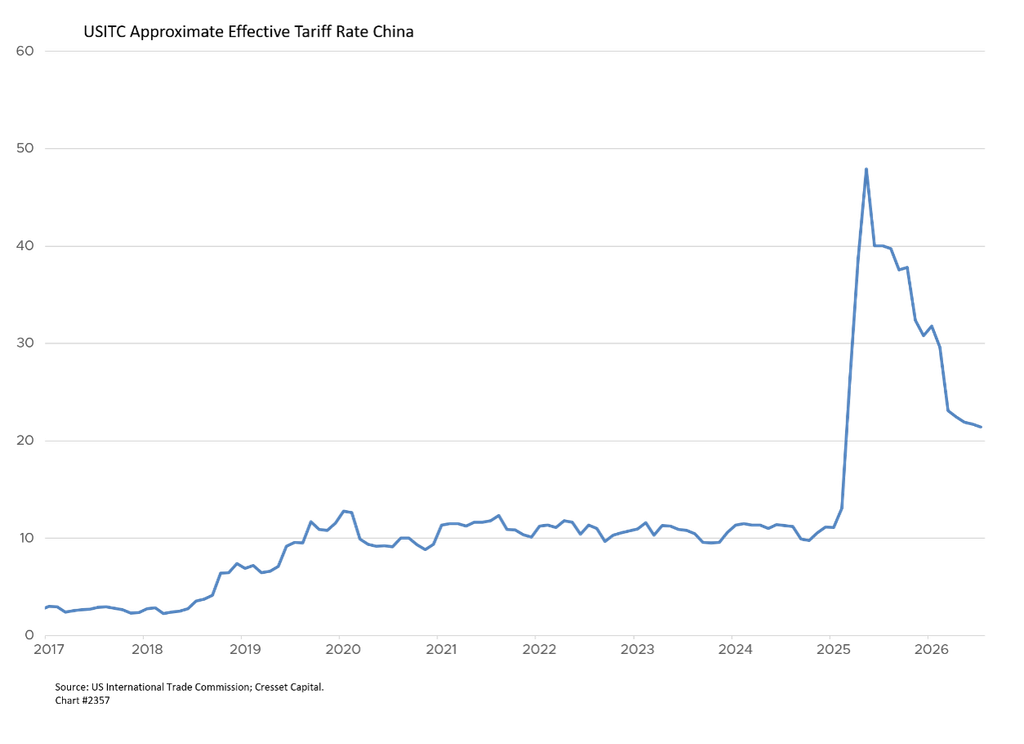
Under the newly operational Board of Trade, both sides agreed to reduce tariffs on up to $30 billion of goods each way, covering U.S. agricultural products and medical devices against Chinese small appliances and toys. The macroeconomic impact was negligible, and the math supports that. China still faces an average effective U.S. tariff of roughly 23 percent, versus 7 percent for the rest of the world, and this agreement does not move that materially.
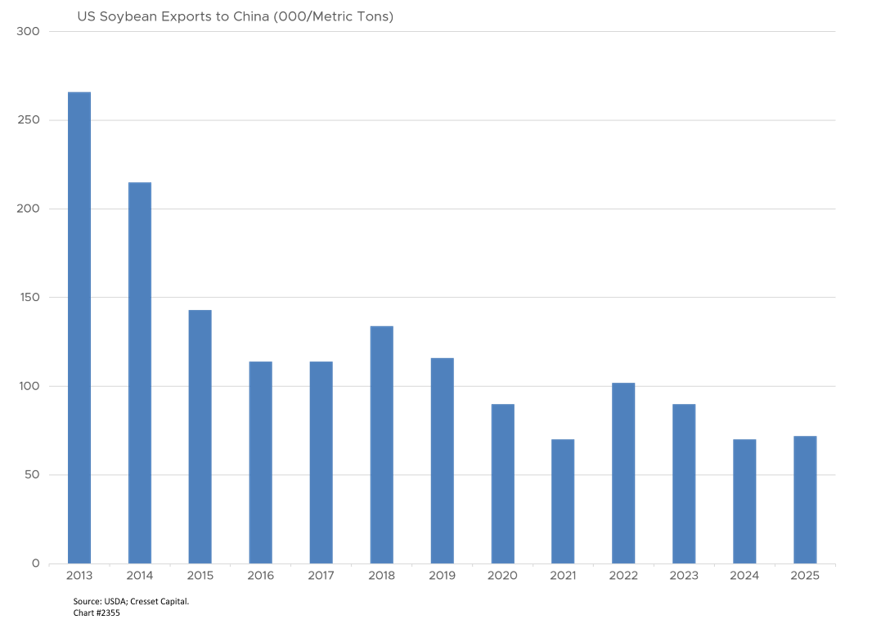
China also committed to importing at least 10 million metric tons of U.S. coal in both 2027 and 2028. Set against Chinese coal production of 4.8 billion tons and imports of 490 million tons, the gesture was rather modest. Meanwhile, Washington couldn’t reaffirm China’s prior import commitments on beef or soybeans, and Bessent said China is running behind on roughly $17 billion of other farm purchases.
Rare Earths Remain the Binding Constraint
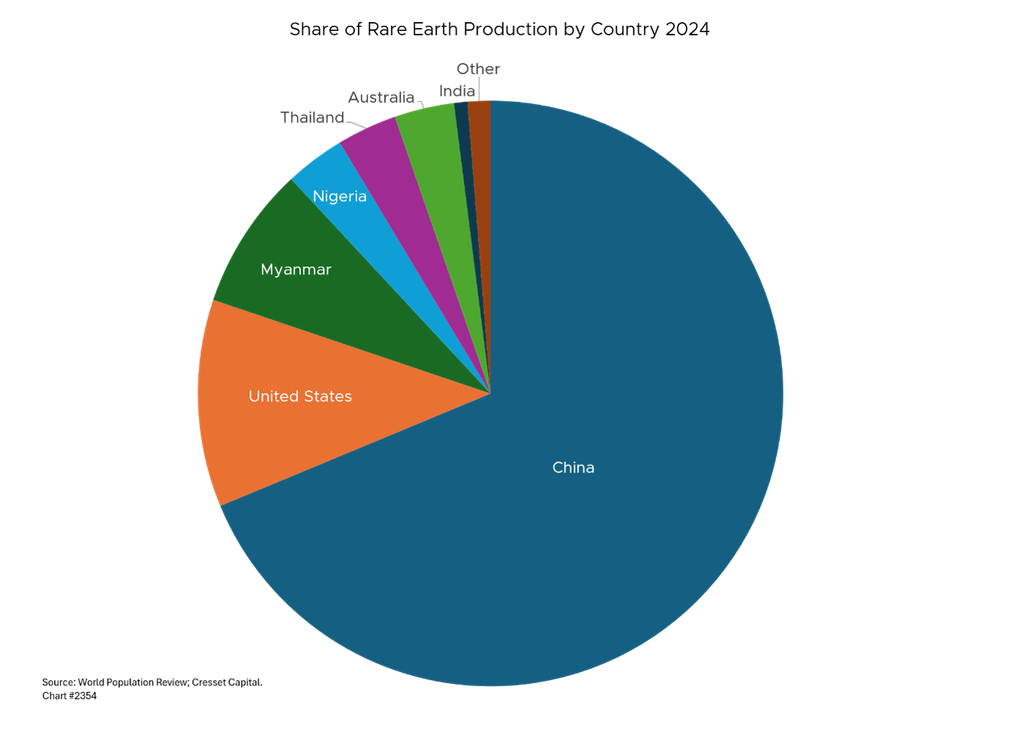
Chinese rare earth exports to the United States have run nearly 500,000 kilograms per month over the past year, well below pre-truce levels, and Beijing is scheduled to add restrictions to additional elements including erbium, used in fiber-optic cable. The United States, as most of the world, remain dependent on Chinese magnets through 2030 and beyond, which limits American escalation options.
At any level of confrontation China can inflict more economic pain on the United States than the United States can inflict in return. Washington has already proven it, conceding on tariffs, technology controls, and visa policy simply to keep those minerals flowing. That imbalance is not a passing trade headline. It is a fixed feature of the relationship.
Artificial Intelligence: A Channel, Not a Framework
The two governments launched an AI dialogue and a communications channel for incidents. What was left unsettled, however, was scope, participants, and whether American concerns about Chinese distillation of U.S. models will be addressed at all. Trump said he wanted to leave the competition where it is. Xi offered that AI should remain under human control.
We do not expect the dialogue to slow anything down. Chinese industry largely views American safety warnings as fear-based messaging intended to preserve the U.S. lead in AI, a view reflected in state-linked commentary, according to a recent New York Times report. Neither side would believe the other’s claim to be decelerating. Anthropic’s Dario Amodei, the most vocal advocate of restraint, was not invited to the state dinner. The AI capital spending cycle faces no diplomatic constraint. The pressure on that trade stays commercial, through cheap Chinese open-weight models compressing inference pricing.
Taiwan: Drift Risk Rather Than Event Risk
Xi pressed Trump to move U.S. language from not supporting Taiwan independence to opposing it. The White House readout did not mention Taiwan at all, and Ambassador David Perdue said that policy is unchanged, adding that Washington does not support coercion either.
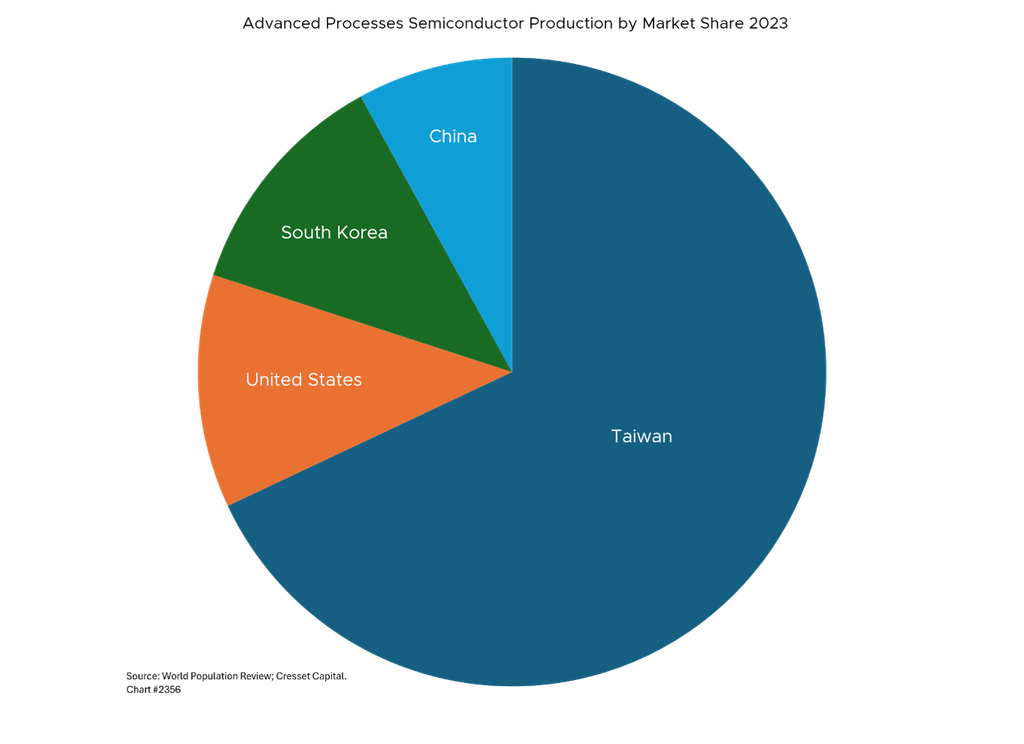
The danger is not that Washington announces a change in policy. It is that the policy changes without anyone announcing it. The arms package has been on hold since spring, Taiwan’s president has not been permitted to stop on U.S. soil since last year, and each friendly summit makes it harder to reverse course without appearing to provoke Beijing. The Taiwan semiconductor supply chain risk is to be reduced gradually, over quarters as production ramps up domestically.
The Calendar Is Now the Policy
Trump and Xi are expected to meet twice more this year, at APEC in Shenzhen in November and the G20 in Miami in December. Four meetings in a year would be unprecedented. Bessent has framed the cadence itself as an achievement because the lure of the next meeting gives both sides an incentive to avoid disruption in between. That is a genuine volatility suppressant into year-end, and it is also why the Taiwan package stays frozen.
The Broader Relationship: Rented Calm
The Sino-U.S. relationship does not depend on Trump and Xi personally. It rests on the fact that neither economy can afford to break from the other. China, confident in its own position, has less reason to act aggressively. It should be noted that both sides are not trading like for like. What Beijing gives up, such as pausing export controls or buying soybeans, it could take back in a day, while what Washington gives up on technology is effectively permanent.
Rush Doshi, who ran China policy at the Biden White House, describes Beijing’s goal as using the next few years to grow strong enough that Washington can no longer meaningfully slow it down. Calm relations buys Xi that time. This suggests the relationship is now about as warm as it is going to get, even though nothing substantive in either country’s policy has changed underneath.
Bottom Line
The summit was a managed stabilization exercise that delivered exactly what investors expected. The two-month extension removes acute tariff risk only through January 10, the $30 billion tariff package and China’s coal commitment were too small to move markets, and the AI dialogue imposes no constraint on the capital spending cycle. What has not changed is the asymmetry underneath. China controls inputs the United States cannot replace this decade, while Washington’s concessions are harder to reverse than Beijing’s. Rare earths remain a strategic priority for both countries, as do semiconductors. There is some counterbalance. China’s relatively weak banking system works in the US’s favor when facing stiff export tariffs.