
If you’re a founder, employee, or early investor of a private company, holding
shares or stock options prior to an initial public offering (IPO) can be both an exciting and complicated position to be in. Private stockholders need to take into account a number of legal, financial, and tax considerations when deciding whether to purchase, hold, or sell their shares, when, and how.
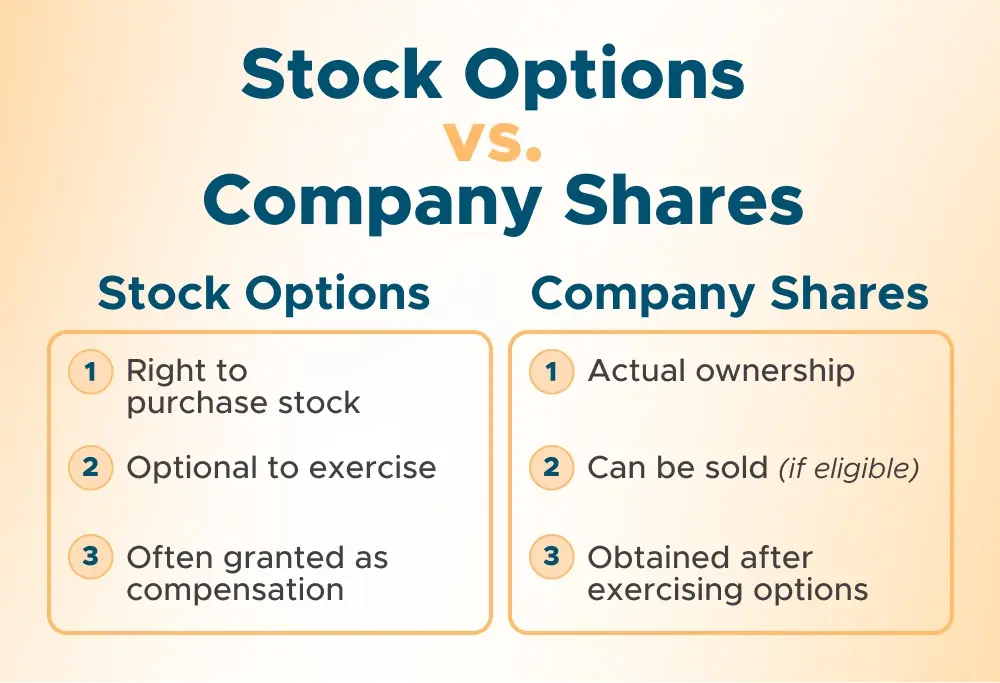
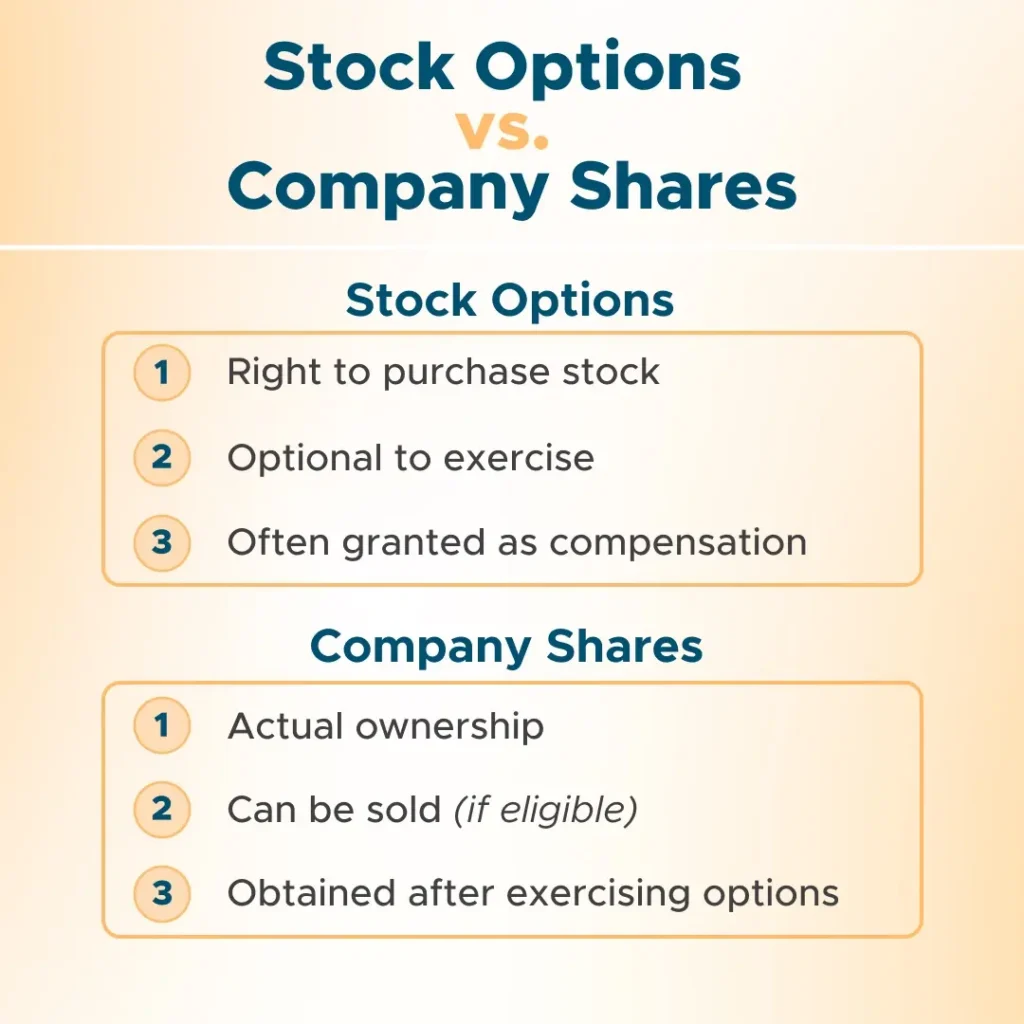
Before we dive into pre-IPO equity selling, it’s important to understand the difference between company stock options and shares. Options give you the right to purchase company stock at a set price within a specific window of time (though you are not obligated to do so). Options are usually offered to employees as part of their compensation package and used as an incentive to both recruit and retain employees long-term.
Once you have exercised your right to purchase company stock, your options become actual shares. While the main liquidity events for most private stockholders are an IPO or acquisition, selling private stock is possible under specific circumstances, but requires significant consideration and planning in advance.
In this article, we’ll review why pre-IPO planning is essential, how to sell pre-IPO stock, the tax implications for doing so, and strategies to help your newfound wealth last.
What Pre-IPO Planning Means for You
There is a significant difference between having equity (company shares) and cash (bank accounts, money market funds, short-term bonds). Cash is liquid, which means it can be accessed and used immediately. With equity, you have to sell private company stock before you can access funding. If and when you should sell pre-IPO stock depends largely on your individual financial situation and goals, as well as restrictions that govern what, when, how, and to whom you can sell.
Regardless of what you do or don’t do before an IPO, once the IPO happens, it’s going to create tax implications for you, so it’s best to plan for them in advance. For instance, if you’re going to exercise your stock options, it’s usually better to do so earlier rather than later to help reduce your tax liabilities and maximize gains. Where you are in the IPO timeline will ultimately determine your planning window and what options are available to you for selling private shares.
Can You Sell Your Pre-IPO Shares?
In some cases, private stockholders may be allowed to sell their pre-IPO shares through a secondary transaction. There are several ways this can happen:
- Secondary markets: These platforms allow you to sell (and buy) private company stock. However, many companies don’t allow their stock to be sold on secondary markets. For those that do, you’ll likely have to get approval from the company/board of directors first. Once approved, a successful sale depends on there being demand for your stock. You may also have to meet the platform’s minimum requirement for the amount of shares sold (usually at least $100,000 worth). In addition, the proceeds from the sale could be taxed at the regular income tax rate (the highest rate possible).
- Direct/private sales: If you already have a buyer, you can sell your pre-IPO stock through a broker dealer or affiliated bank. However, similar to secondary markets, you’ll likely have to get approval from your company first, and the funds you receive from the sale could be taxed at the highest rate.
- Company tender offers and buybacks: Sometimes companies will send out a solicitation for shareholders to sell their stock back to the company or a third-party buyer. Selling your shares through a tender offer is generally a taxable event. How the proceeds are taxed will depend on the type of shares sold, how long the shares have been held, and specific details of the offer.
There are a number of restrictions that must be observed when selling shares before and after an IPO. To assess your options, it’s best to start by taking inventory of the type of shares you have, which may include Restricted Stock Units (RSUs), Incentive Stock Options (ISOs), or Non-Qualified Stock Options (NSOs).
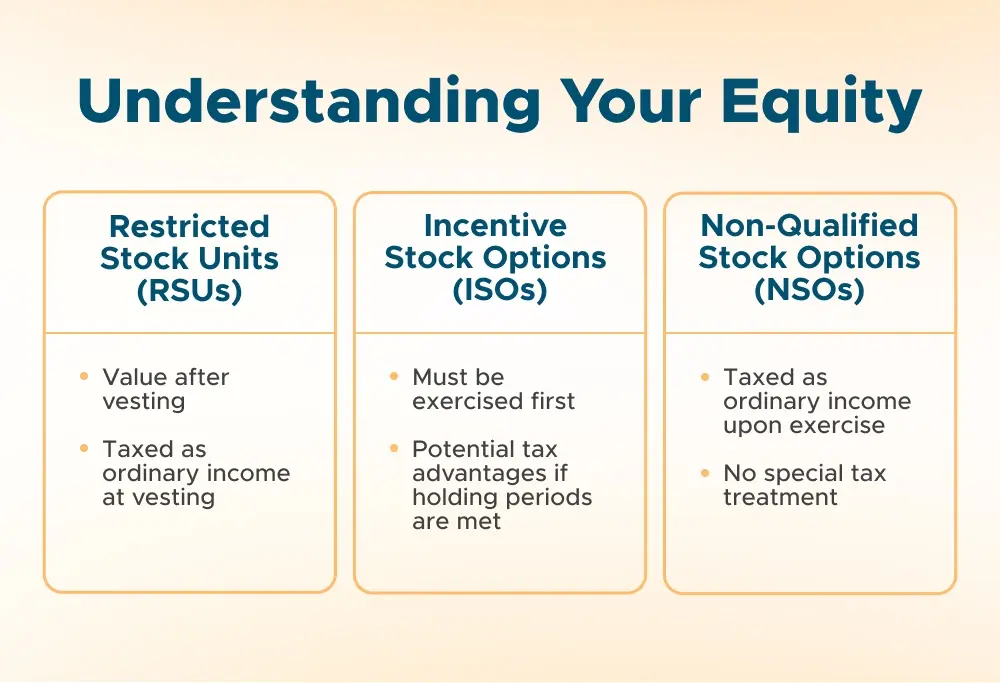
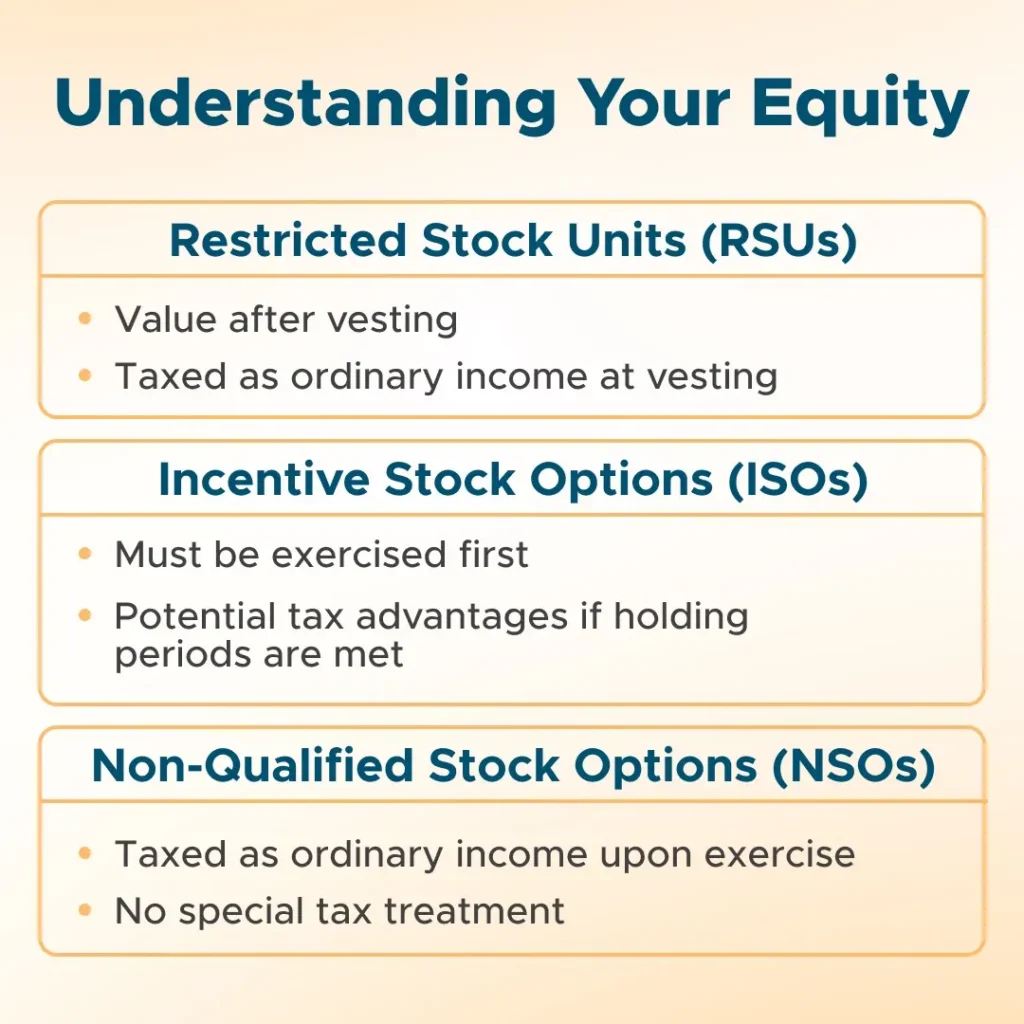
- RSUs represent an employer’s unsecured promise to grant a certain number of shares to you when vesting requirements have been met. They have no value until they have vested. The year that vesting is completed, they must be declared as ordinary income. If the stock is not immediately sold after vesting, any difference between the sale price and the fair market value on the vesting date will be subject to capital gains treatment when sold. If you leave the company before your stock vests, you will lose it all, including the taxes you paid the year it was granted.
- ISOs are not shares themselves, but rather the option to purchase shares. This means that you cannot sell stock options pre-IPO. Instead, these options must be vested and exercised before they can be sold. Once exercised, sales of these shares are subject to holding periods, which determine whether the sale is “qualified” or “disqualified” for tax purposes. To be considered “qualified” (and receive the subsequent tax benefits), the sale must happen more than 1 year after the date the options were exercised, and more than 2 years after the date the options were granted.
- NSOs are similar to ISOs in that they provide the option to purchase shares at a set price. However, NSOs do not qualify for special tax treatment like ISOs. When NSOs are exercised, the “bargain element,” which is the market value minus the exercise price, is treated as regular income, and therefore subject to federal, state, and employment taxes.
Once you know the types of shares you have, it’s important to understand the restrictions your company may have on how to sell pre-IPO shares, which could include the following:
- Right of first refusal: Allows your company or existing investors to match your offer within 10 to 30 days, sometimes longer. This can create delays and jeopardize deals.
- Board approval: Allows your company to block the sale of your private stock.
- Transfer limits: Restricts who you can sell to and/or the number of shares.
- Blackout or “quiet” periods: During these specific timeframes, you (along with all company employees and insiders) cannot buy or sell shares.
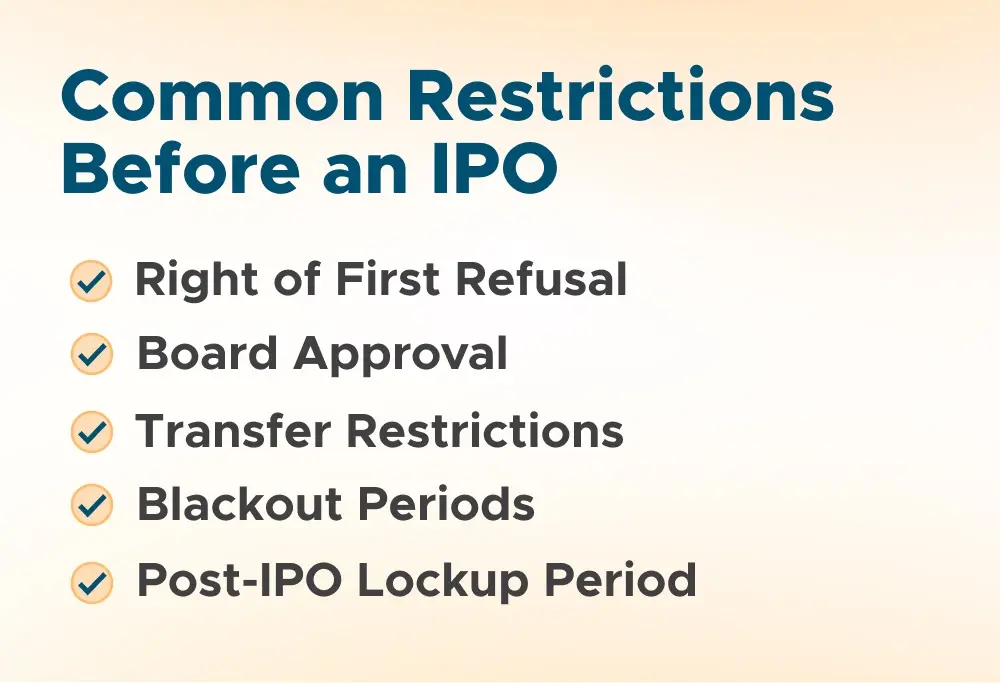
Restrictions apply post-IPO as well. Most notably, there is a lockup period after an IPO during which founders, employees, and early investors are prohibited from selling or transferring shares. This helps to stabilize the stock price after the IPO. Lockup periods typically range from 90 to 180 days.
Considering the many variables, considerations, and restrictions outlined above, assessing your position, including your share count, vesting schedule, strike price, and current vs. expected valuation, is a critical part of pre-IPO planning.
Tax Planning for Pre-IPO Equity
From exercising options to holding, blackout, and lockup periods, the tax implications for purchasing, holding, and selling private shares are often driven by timing. Making the right decisions at the right time is crucial to potentially reducing your tax burden.
Here are some key considerations to be aware of:
- Qualified Small Business Stock (QSBS) tax exemption: When certain small business stock is sold, this tax exemption allows eligible investors to exclude a portion of capital gains depending on when the stock was issued and how long it was held.
- AMT exposure: Exercising ISOs before an IPO can trigger Alternative Minimum Tax (AMT) exposure, as can selling shares post-IPO when it results in capital gains taxes. Mostly affecting high-income taxpayers, this exposure occurs when your Alternative Minimum Taxable Income (AMTI) surpasses the exemption amounts set by the IRS. This is due to the “phantom income” created by the difference between the set price and the fair market value when the options were exercised. For every dollar above the IRS limits, the exemption is reduced by 50 cents.
- 83(b) elections: Instead of waiting to pay taxes on RSUs when they vest, 83(b) elections allow you to pay taxes on the total fair market value of restricted stock at the time they are granted. This can significantly reduce the amount of taxes owed because the share price at the time of the grant is often much lower than the price at the time of vesting.
- Estate and gifting strategies: Gifting or transferring stock during the pre-IPO phase can help reduce gift taxes and, assuming the company’s value appreciates after the IPO, move significant value out of the taxable estate. Options for gifting or transferring stock include a Grantor Retained Annuity Trust (GRAT), Spousal Lifetime Access Trust (SLAT), and Charitable Lead Annuity Trust (CLAT).
- Charitable giving: Contributing highly appreciated, low-basis stock to a Donor Advised Fund (DAF) allows the donor to avoid paying capital gains tax on the appreciation of the donated stock while receiving a deduction for the fair market value (subject to AGI limits). The pre-IPO phase is an optimal time to do this, but in order to avoid scrutiny from the IRS, the stock must be gifted before a sale agreement is in place.
Turning Equity Into Lasting Wealth
For anyone anticipating an IPO, the financial and tax planning considerations we’ve listed above should be top of mind. It’s also likely that this private stock accounts for the majority of your personal wealth. Holding a concentrated stock position of any kind carries risk, and that overall risk is even higher when the concentrated holding is in the company for which you work.
A thoughtful diversification plan can help reduce concentration risk and support long-term planning. There are a number of strategies for reducing a concentrated stock position, including tax-efficient diversification and a staged sell-down.
Holding significant wealth in private stock with no real liquidity is a complicated position to be in. It’s important to work with a trusted advisory team who can help you plan for your liquidity and cash-flow needs both before and after an IPO, as well as navigate the complex legal, financial, and tax implications. Doing so may help you plan for your liquidity needs, support your lifestyle goals, and preserve wealth for future generations.
Remember: The best time to start IPO planning is well before it happens.
Frequently Asked Questions
What does pre-IPO mean?
When a company is pre-IPO, it means it is still privately held. It has not yet undergone an initial public offering (IPO), during which it sells shares to the public for the first time.
What is an IPO plan?
An IPO plan is the steps a company needs to take in order to go from private to public by undergoing an initial public offering (IPO).
Can you sell private stock?
Yes. Some shareholders are eligible to sell their stock pre-IPO, though restrictions vary by company. However, you cannot sell pre-IPO options — the options must be exercised first.
How do I sell pre-IPO?
For eligible stockholders, there are several ways to sell pre-IPO stock, including secondary markets, private/direct sales, and company tender offers and buybacks.
Are pre-IPO shares worth anything?
The value of pre-IPO shares is dependent largely on how a company is valued, if it succeeds, market conditions, and options to liquidate.
To learn more about how Cresset has assisted clients through thoughtful liquidity planning to help achieve the most tax optimal outcome, contact us.