COLD PROMO OPEN
Eric Becker
McKissack and McKissack is the nation’s oldest minority and woman owned professional design and construction firm.
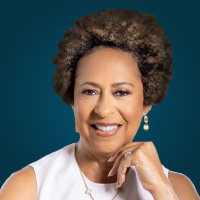
Cheryl McKissack Daniel
I knew my ancestors were resilient. I didn’t know they were strategic. I am proud of that. I am proud of the fact that they were strategic.
Eric Becker
And there was this expectation that you would go into the family business too.
Cheryl McKissack Daniel
My mother called up my boss and told my boss I was quitting.
Eric Becker
Now that’s a moment of truth.
Eric Becker
There must have been times where you did feel the pressure of this, of family legacy and the expectation of being a steward.
Cheryl McKissack Daniel
I feel like you have to embrace it. People say, “don’t take business personal,” but it is personal.
SHOW OPEN
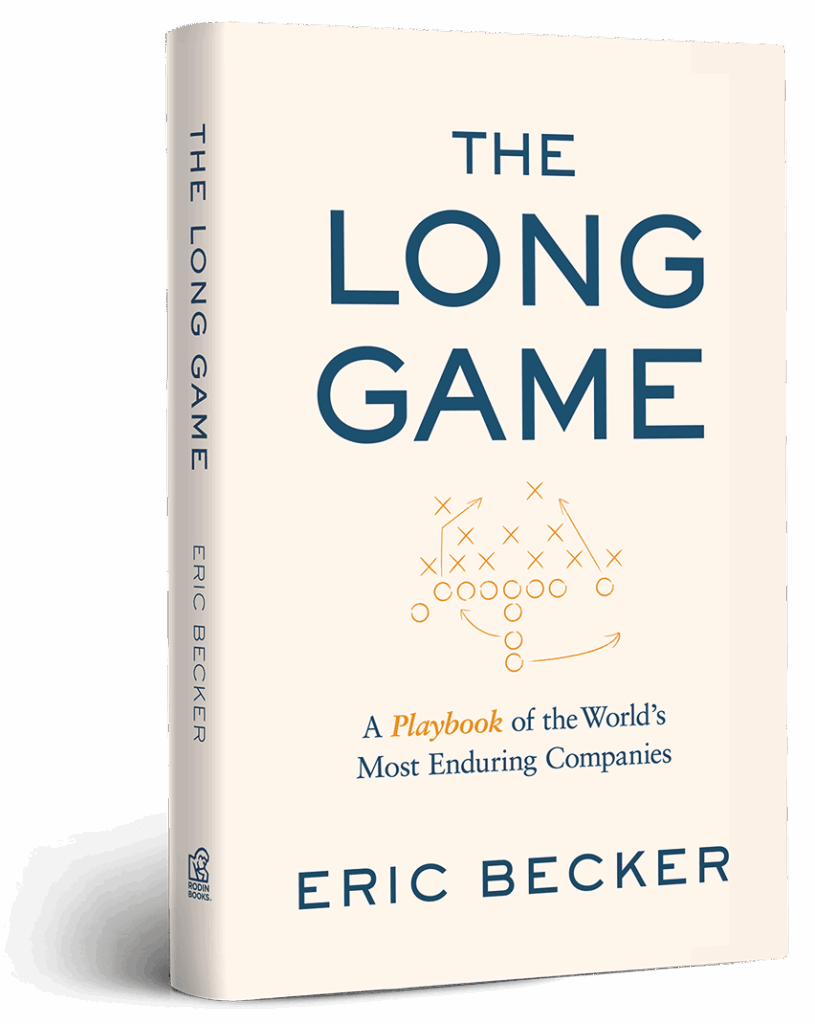
Welcome to “The Long Game Podcast.” I’m Eric Becker. I’m an author, an entrepreneur, And I’m founder and chairman of Cresset, a family office that we built to serve founders, multi-gen business owners and their families.
For all the entrepreneurs and all the aspiring entrepreneurs, for leaders, and CEOs, the long game is for you.
It’s the practices, it’s the leadership skills, it’s the culture that can stand the test of time.
I’m Eric Becker and this is “The Long Game.”
INTRO
Eric Becker
Cheryl McKissack Daniel serves as chair of the board of McKissack and McKissack following 25 years as president and CEO.
As a fifth generation leader, Cheryl carries forward a remarkable legacy tied to more than $50 billion in construction projects. Her family’s story begins with enslaved ancestors who were master builders and craftsmen laying the foundation for the legacy firm established in 1905 that has endured for more than a century. Today, the firm’s imprint can be seen across America from universities, churches, and stadiums to transformative infrastructure projects like the new Terminal 1 at JFK and LaGuardia airports.
Welcome, Cheryl McKissack-Daniel. Thank you for being here with us.
Cheryl McKissack Daniel
Thank you for that introduction, Eric. Very nice.
Eric Becker
Well, it’s super nice to be together and you so generously participated in the development of the book, The Long Game, and now to have the opportunity for this conversation is very special. Thank you for being here.
Cheryl McKissack Daniel
My pleasure. I’m excited to speak with you this morning.
Eric Becker
I’d love to start out with the incredible McKissack history. This is a company that is not only endured, but adapted and succeeded while facing incredible challenges over nearly every chapter of American history. It’s such a unique and remarkable founder’s story that you recently captured in your book, The Black Family Who Built America. Can you share some of that with us?
Cheryl McKissack Daniel
Absolutely. As you said, our history dates back 230 years and really starts with the first descendant of our family, Moses McKissack the first, who came to this country as a slave and was taught the trade of making bricks. And that was in 1790. So incredible. And his son, Moses McKissack the second, was a master carpenter…
Eric Becker
Incredible.
Cheryl McKissack Daniel
…and he was given as a gift to the Cheers family and moved to Spring Hill, Tennessee. So while we started off in North Carolina, we ended up in Spring Hill, Tennessee. And Moses McKissack II was known for his work at the Maxwell House Hotel, which is where seven presidents stayed, including Franklin D. Roosevelt, where he coined the term “good to the last drop” speaking about Maxwell House Coffee. And then his son Moses McKissack III and Calvin McKissack, they became the first Black licensed architects in America with license 117 and 118 in the state of Tennessee. And you can imagine what…
Eric Becker
Amazing.
Cheryl McKissack Daniel
…that was like for two black men to show up at the town hall in Tennessee in 1922 to take their architectural license test and then receive their license. So we dedicate a lot of the book to that story. And then the company was passed down to my father, William McKissack. And now we’re on the fourth generation,
He also kept the family business going with design and architecture throughout the northeast of this country and the southeast. When he became ill, my tenacious mother took over, Leatrice McKissack, with the sole mission of saving the company for her daughters who were also in the design and construction business. And that’s our history.
Eric Becker
It’s an incredible and uniquely American story, really amazing. And I can only imagine what it must have been like to go and to take that test at that time in that part of the world and then to succeed and to get those licenses. It must have been incredibly celebrated within the family and really a sign of change in America that that could happen too.
Cheryl McKissack Daniel
Yes, you know, I like to say that 230 years after Moses McKissack the first laid his first brick, the McKissack family is still a pillar of strength, of resiliency, of ingenuity. In an America that is still grappling with the same questions we answered so long ago around equity, diversion, and inclusion.
Eric Becker
Yes.
Cheryl McKissack Daniel
They definitely disrupted the mold in the 1920s when they decided, or they didn’t even decide, it was a necessity for them to get their architectural license, or they would have been out of business. Now just think about the fact they incorporated in 1905, the architectural licensing laws did not go into effect until the 20s. And so if they didn’t get their license, basically, they were out of business. And so they had to achieve that goal. pursuing that in the deep South with prejudice, Jim Crow laws, I mean, they went through it all, but they were able to find one board member who they lobbied who said, you know what, we should not prevent you from taking these tests. And so they took the tests and passed the first time, and the board was counting on them not passing. And so when they passed, they had to again lobby the board to say, you know, please give us our license. We’ve met all the qualifications.
So, when we talk about disrupting the mold, they created more than just architectural structures and the built environment, they created an environment for black professionals like themselves to be able to step into and say, you know, we can reach our dreams, and we can go further than the limits set on us by society.
Eric Becker
Which is just incredible and so, so encouraging, when I think of young people today and the times that we’re living in with a divided nation, with technologies disruption, but to hear a story like that, it’s so inspiring. We’re really very blessed to have stories like that that can help, I think, especially young people.
To believe that they can do that, that they can do it too in whatever challenge they may be facing in their life in today’s world. But going back to that time, it must have been so dangerous for them. Travel was different. And just as they were working on projects, as the company expanded and they became successful, what was life like for them at that time?
Cheryl McKissack Daniel
You know, it was very difficult because Calvin and Moses had to visit, probably visited their construction sites once every two months. They lived in Nashville, Tennessee and their construction sites were, you know, as far as Tuskegee, Alabama. And so, traveling was very difficult. They couldn’t travel at night. They couldn’t stay in hotels. They couldn’t eat in restaurants. So, they had to pretty much stay with friends and family all along the way. But I mean, and I often think about that. If I showed up at my construction site every two months…
Eric Becker
Right. It’s hard to hard to run a business that way. And we have all the benefits of technology. They didn’t have any technology to speak of.
Cheryl McKissack Daniel
…are you okay?
No, and you know when you think about that, the fear, the fear factor that’s on top of it. So what’s been intriguing to me is Moses McKissack the second really incorporated the McKissack’s first with McKissack contracting in Pulaski, Tennessee in 1869. Well, Pulaski is a very small town. It’s still small, but it…
Eric Becker
Right.
Cheryl McKissack Daniel
…so happens to be the same town that the Ku Klux Klan started as well in 1865. So how on earth did Moses McKissack II manage to build a business right under the same area as the Ku Klux Klan?
Eric Becker
In the same town.
Cheryl McKissack Daniel
And so, I have to think that a lot of their moves were very strategic. They were building relationships. They had to be very quiet about what they were doing. But I also think they had a circle of protectors, certain people who needed their services. And so as long as they were valuable to them, they made sure they were protected.
Eric Becker
And you have this amazing concept or saying of the four P’s. And then I think you have a fifth P, but maybe you can tell us a little bit about them and how that is a thread in this story.
Cheryl McKissack Daniel
Well, you know, when we looked at the history of the McKissack’s and we questioned how are the McKissack’s able to last for five generations? You’ve done a lot of studying on family businesses, generational businesses, you know, the second, getting to the second generation is about 40%. The third generation is about 18, and the fourth is 3%, and we’re not even talking black business…
Eric Becker
Right. Right, right. Yes.
Cheryl McKissack Daniel
…right? Okay, so how did the McKissack’s stay in business for five generations? And so we looked at what were some of the qualities and that’s how we came up with the five P’s, persistence, preparedness, perseverance, and then productivity. And then of course I added the other, which is prayer, because it had to be a purpose bigger than ourselves. It had to be…
Eric Becker
Yes. Yes.
Cheryl McKissack Daniel
…something much bigger than us at work. And believe it or not, Eric, I deal with some of the same things they dealt with 120 years ago. I don’t know if you remember, there’s a line in the book that says, you know, oftentimes America’s progress leaves you off right where you started.
And so, I think about the P’s, and I think about persistence and it reminds me that I need to go into rooms on a constant basis, even if they don’t want me there. And I face that all the time. So, the persistence keeps me in the room and reminds me the very act of just showing up is resistance all by itself. And then the productivity is what your point is earlier. It’s all about being excellent. You know, I understand that I received this inheritance at an unimaginable cost.
Eric Becker
Yeah, just show up.
Cheryl McKissack Daniel
Unimaginable cost. So what I do with it really matters. And so, I can’t cut corners. I have to put my best foot forward. I have to know my numbers. I have to know, you know, my construction sequencing. I have to know, you know, my contracts. And I have to be prepared every time I showed up. And then the perseverance is just dealing with the long game.
Eric Becker
Yes. Yeah.
Cheryl McKissack Daniel
In the long game, there are ups and downs, there are setbacks, there are things that you take personal. But persistence just reminds me that my legacy was not in one win. It was in staying the course. Doing what I needed to do. Yep, doing what I needed to do every day…
Eric Becker
Yes, be succeeding over time. Yeah.
Cheryl McKissack Daniel
…showing up doing what Cheryl needed to do, not what others needed to do, not watching what other companies have to. I pay attention, but what is it that we need to do at McKissack?
And then of course, prayer just gives you the confidence, and it also humbles you to let you know that this is happening because there’s someone bigger than myself. And it quiets you long enough to be able to deal with…
Eric Becker
Yes.
Cheryl McKissack Daniel
…the decisions that come your way as a business owner.
Eric Becker
It’s a beautiful thing. The other thing that I’m struck with listening to that story and knowing the story and having thought about it is the way in which your family opened doors for others. And so when I think of black entrepreneurship in America, well, really had, where did it begin? And it probably began with the architecture exam in Tennessee and having the first two black architects, licensed architects in America, that broke down what seemed to be an impenetrable barrier that then others could walk through that door and start businesses and get certified in other professional fields. Really incredible.
And that probably wasn’t their mission. They probably didn’t wake up and say, “I’m breaking down a barrier so that others can follow me.” But what an amazing thing that they did it and that others benefited. And that’s a beautiful part of prayer as well, if I think about it.
Cheryl McKissack Daniel
Yep, absolutely. I mean, architecture was reserved really for the elite. So, you know, the McKissack’s did not have a role in that. So, they created their own space and, you know, made their own role and became, you know, like the hidden figures in design and construction.
Eric Becker
And then when it came to your fifth generation, what was it like to grow up in a family business, to grow up as the fifth generation in Nashville? You know, what was it like for you going to school and, thinking that maybe you would go into, was it assumed you would go into the business and that was someday, or was it not assumed?
Cheryl McKissack Daniel
Well, I think it was always assumed, definitely our parents wanted us to be a part of the business. And so we were quietly, we didn’t know we were being groomed, but we were being groomed.
Eric Becker
Right. Yes. In everything, in everything from the way you went to school and where you socialize and everything was probably all about the experiences they wanted you to have as a future leader.
Cheryl McKissack Daniel
Well, sure. I mean, we didn’t get dolls for Christmas. We got Leroy lettering sets. We, you know, we got drafting tables, T-squares, things like that. We would go to our father’s office on Saturdays and trace documents. By the time, you know, I was 12, I could trace full documents of residential buildings.
Eric Becker
Wow.
Cheryl McKissack Daniel
And so, you know, the upbringing was different. And then Nashville, we lived in North Nashville where there was Tennessee State, Meharry Medical School, and Fisk University within a mile from Vanderbilt. So we were in an education Mecca. So, there was always this emphasis on a strong education.
Growing up in my close to Fisk University, just thinking about the Black Renaissance and all of the Black writers who came out of that university and visited that university. You had all the notables, Booker T. Washington, W.E.B. Du Bois, Honor Bontops, Langston Hughes; they would all in some way find their way to Fisk University or Tennessee State. So you grow up with this richness of education and thinking and creating and building an economic life. That’s just how we grew up. And then living in Nashville…
Eric Becker
Right. Amazing.
Cheryl McKissack Daniel
…where every corner you turn there was a building that your grandfather or your father built or designed or a church.
Eric Becker
Right. Incredible.
Cheryl McKissack Daniel
Yeah, all the milestones that are in Nashville. Matter of fact, they’re part of a historical trail. And when you go visit Nashville today, and so we didn’t realize, you kind of take it for granted when you’re growing up with it. But later on in life, it doesn’t take long after, you know, hitting the hard knocks and going to corporate 500 companies and working…
Eric Becker
Wow.
Cheryl McKissack Daniel
…and realizing there is no path, no straight path for you as a young black professional, you quickly begin to understand the value of your own family business and the value of charting your own destiny.
Eric Becker
That’s such an incredible thing for young people to think about of charting their own path in this changing world. And that’s a good moment to shift a little bit in that you left that incredible environment that you grew up in and the richness of that education and community.
And you went to Howard University to get an engineering degree and actually didn’t join the family business right away. You went to work for Turner Construction, a firm that I see their signs all over, an incredibly large enterprise. How did that come about and was that part of the plan that you would work at another company? And what was it like working at another company outside of your family business?
Cheryl McKissack Daniel
Turner was an amazing experience, it’s blue chip company in construction, at the time they were the largest, they probably still are the largest in America. And they provided construction services for all types of projects. And so the experience was vast. I started off in the estimating department, which gives you a little information on all aspects of construction. But I could see when I looked at the leadership at Turner, that there was not going to be much room for me at the top.
Eric Becker
Right. And there was this expectation that you would go into the family business too.
Cheryl McKissack Daniel
And it was also, well, yes, my mother called up my boss and told my boss I was quitting.
Eric Becker
Now that’s a moment of truth. We have these moments of truth in life and having your mom call to tell your boss you’re quitting is pretty amazing. So that was your call to come home to the company.
Cheryl McKissack Daniel
Yes! Yes, yeah, then she called me and told me I quit that day.
Eric Becker
And did you? I mean, I imagine then you did. Incredible.
Cheryl McKissack Daniel
Yes, yes, I did. Yeah, that was foresight on my mother’s part, and her timing couldn’t have been better. You know, it was perfect. And, you know, I look back on it now and I’m glad that she did it. At the time, I was a little perturbed.
Eric Becker
Right.
Cheryl McKissack Daniel
I didn’t want to start commuting to Nashville, Tennessee on a weekly basis, but that’s what I did.
Eric Becker
But what did you find when now suddenly, you were back with the company? How was it different? What was it like?
Cheryl McKissack Daniel
Well, I had not run a business before, but I did have the experience now of working with a very large, efficient, well-oiled, well-run construction company.
So, it was easy for me to see how we could improve the McKissack business. But for me, I had to first observe and understand what it was my mom wanted me to do, and that was really to be in business development. Now, I had not ever greeted a client.
Eric Becker
No worries.
Cheryl McKissack Daniel
I was behind the scenes doing estimates. I wasn’t forward-facing with the client. And so, you I learned all those techniques from her. I learned, you know, public speaking and, you know, being able to give the elevator pitch on McKissack and McKissack. Being able to stand in front of employees and speak.
Yeah. And so to write proposals, answering the RFPs and preparing for interviews, my mother taught me all of that. And so after I was able to do that and building relationships, how to build relationships…
Eric Becker
Is about the culture and relationships. Yeah.
Cheryl McKissack Daniel
…you know, the value of having integrity, the value of keeping your word, even when you don’t feel like it. You know, and so, and I carry that to this day.
Eric Becker
And what was it that, I mean, it must’ve been very difficult, but what was it that ultimately you loved New York and you knew how much opportunity there would be for you and the company in New York, but to actually move the company to New York the way that you did, how did that come about? Cause that seems like also a moment of truth.
Cheryl McKissack Daniel
Well, I was newly married when I started commuting. so, you know, two years of leaving my husband for Monday to Thursday began to wear on the marriage. And so I thought it was important for me to come back home. At that point, I knew enough about the business that I felt like I could step out and start a new branch in New York. I knew it wouldn’t be easy, but I felt like, you know, my mom gave me so much confidence. I felt like I could do it. And so, the timing, it just had to be then.
And this was at the very beginning, the cusp of the minority women-owned business programs in the city and state of New York. And so, I just knew I could take advantage of those programs to get a foothold into New York because a lot of the firms who were going to participate in these programs…
Eric Becker
Sure.
Cheryl McKissack Daniel
…just didn’t have the portfolio that I had. I could point to almost 100 years of work. So, you I just knew that would be my competitive edge. Except when I start meeting with people, they would say, we don’t care what you did in Nashville, Tennessee, or Alabama, or North Carolina. What have you done in New York City?
Eric Becker
Interesting. Wow. They didn’t hold it against you though, but they didn’t put anything into it.
Cheryl McKissack Daniel
No, but it wasn’t the competitive edge that I thought I had. However, the difference is because a lot of smaller firms struggle with finance, business acumen, being able to bring on good staff. I could demonstrate that I could do that because I had done it in Nashville and I had the support of Nashville. And so that was a competitive edge starting a notch higher on the capital required to have a business.
Eric Becker
And it seemed that all of this, when I was reading some of the stories, it seems like all of this comes together. And when you were, think, listening to the TV was on one day and you heard the announcement that the New Jersey Nets were going to be bringing the basketball team to Brooklyn, and you had to use every one of the skills and everything we’ve talked about, the experience, you had to kind of bring this all together to create an opportunity out of whole cloth because you heard that announcement and it’s not like it was all baked. You had to go and figure it out. How did that happen?
Cheryl McKissack Daniel
Yes, you are absolutely right. That was a great opportunity and a defining moment, one of those moments that changed the company. And I knew it. I knew we had to get on that project. And so I just turned over every stone. I made a list of everyone I needed to meet, all of the trade organizations, all of the community organizations in Brooklyn, making sure I met the developer at the time who was Bruce Ratner and circling everybody who was important to him. Because that is another tactic that I use is making sure when they turn to say, who do we want as our minority firm? I want everyone in the room to say McKissack…
Eric Becker
Right? Right? Brand the brand.
Cheryl McKissack Daniel
…the brand. I mean, that requires going to meet everyone and explaining to everyone what impact, what positive impact it would have on them to have us as the contractor. And so that’s what I did.
Eric Becker
It’s incredible. It’s incredible. And it makes me think of when we studied what I called Centurion companies, that is our own name. And many people think of them as slow to change or maybe, you know, conservative and bureaucratic. But what we’ve learned and that what you know is that it’s actually the opposite, that the firms that endure are agile and they take risks.
And I love the quote from your book where you say that on each big project, we reach a new level. We’re standing at the edge of a cliff. Either we’re going to make it or we’re going to plunge to the ground below in a spectacular crash. It’s never going to be middle of the road, inconspicuous or ordinary. And that’s such an incredible thing that even after generations, you still have that risk taking and also doing things…
Cheryl McKissack Daniel
Yes.
Eric Becker
…in an incredible way, not in the middle of the roadway. I think that’s so amazing being fifth generation and having that risk taking mindset.
Cheryl McKissack Daniel
Yes, I think that agility is very important. I think when you’re carrying the weight of a generational business, you have a desire to make sure you get that baton to the next person and that you made the business better. And you can’t do that without being agile, without making sure you know the latest technology that could help make your business more efficient or create higher revenues and profits. You can’t help but think outside of the box on what you can do differently and how you can improve. And so, you know, I would say that the generational companies, that the weight that’s on us might be a little bit more.
And that is why we are scratching, crawling, whatever we can do to make sure we keep this business going and make sure that we pass it on to the next generation and that it’s better.
Eric Becker
As I, as I studied these companies, I almost felt like they had the Superman S for super stewards because they were stewarding the businesses into the future and they felt this burden of responsibility to make it better than the way they found it.
Cheryl McKissack Daniel
Yes, absolutely.
Eric Becker
What is your advice to a young person that’s in a family business and maybe is feeling some of that pressure of family legacy? How did you manage that when you were feeling any kind of pressure from the family?
Cheryl McKissack Daniel
I feel like you have to embrace it. People say don’t take business personal, but it is personal.
Eric Becker
Right? Right. It is, of course.
Cheryl McKissack Daniel
It is personal. It is your parents. It is your uncles, your aunts. So you have combined business with family. And so I take it personal. And when you take it personal, that means that it matters, is what you value. And so when you feel that pressure and you feel like you need to achieve beyond maybe what you feel you can achieve. That’s a good thing. That means that you have taken it to heart. You valued what you have and believe me, you’re going to do something with it.
Eric Becker
Yes.
Eric Becker
And what would your advice be for, again, a young person in a family business, or maybe they’re a first-time entrepreneur, the way in which your family has addressed confronting adversity, managing risk, managing change, there’s been so much change over these generations. What do you take away as the lessons that we can teach a first-time entrepreneur about how to confront adversity? What have we learned?
Cheryl McKissack Daniel
Well, when it comes to adversity, and believe me, I’ve had my share. I have faced negative retained earnings. I have faced cash flow issues. I have faced, you know, exodus of important people. I have faced all these things. But, you know, what I have learned over the years is there is not one problem that I did not create myself.
Eric Becker
Okay. You own it. You own it.
Cheryl McKissack Daniel
So, if I created it, I can get myself out of it. And so that’s how I look at it. Yes, take the responsibility. Learn what you did wrong. When you lose a big project, I look at myself, I look at my team, what could we have done better?
Eric Becker
I love that. So lean into it, lean into it, lean into whatever the issue is and own it and own it.
Cheryl McKissack Daniel
There’s always a silver lining in some type of negative down experience.
Eric Becker
Yes. And this story, which we only have this limited time. And so, there’s so much more. And I really encourage our viewers to buy your book and to read this incredible story of The Black Family That Built America. But when you think of all of this in its totality and the legacy and the contribution that your family has made, not only in the projects that have been built, but on breaking down barriers and opening doors for others. What of all of it, what is the thing you’re most proud of?
Cheryl McKissack Daniel
I am most proud of, I knew my ancestors were resilient. I didn’t know they were strategic. I am proud of the fact that they were strategic, and they knew what they were doing. It wasn’t an accident.
Eric Becker
Great. That’s incredible
Years ago, I ran a contest with 80 board members of companies I was involved with and 20 CEOs. And I asked them, what’s the best question that you’ve ever asked or been asked? And the winner was a lovely man named Gary Keisling. And he said, the best question for me is that every day I ask myself, “What am I tolerating, but shouldn’t be?” And so I sent Gary and his wife to a lovely dinner for winning the contest of those hundred people.
And I try to ask myself that question every day. I’m curious if you have a favorite question, either one that you’ve been asked or that you like to ask others.
Cheryl McKissack Daniel
Well, it’s similar to that. What am I saying yes to that I don’t need to?
Eric Becker
That’s powerful. That’s powerful.
Cheryl McKissack Daniel
And, you know, what are my list of no’s? Like, I’m shifting roles right now and, you know, it’s a behavior change. And so I have to ask that question all the time. You know, is this in my bucket or is it in someone else’s bucket? Yeah. Mm-hmm.
Eric Becker
Right, that makes sense.
As we close today’s conversation, I keep coming back to this. Legacy isn’t something you inherit. It’s something you actively build on, protect, and ultimately pass forward. From the earliest days of your ancestors laying bricks under unimaginable circumstances to your role today as chair of the oldest minority and woman owned design and construction firm in the United States, McKissack and McKissack is the ultimate long game story, and a testament to resilience, risk-taking, agility, and purpose.
Cheryl, thank you so much for being here and for sharing this incredible family legacy with us. Thank you.
Cheryl McKissack Daniel
My pleasure, Eric.
Eric Becker
Before I let you go, if this episode resonated with you, please share it generously and please click the subscribe button below. Send this to someone in your world who’s navigating a pivotal moment right now. Someone who’s staring down a decision might need the reminder that recognizing the moment is half the battle. See you next time on “The Long Game.”
“The Long Game,” a podcast by Cresset, is intended for information only and is not investment advice. Any company discussed is not a recommendation to buy, sell or hold any security. Investment involves risk, including loss of principal.
Please consult your advisors before making investment decisions.