COLD OPEN PROMO
Eric Becker
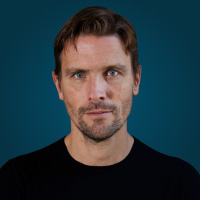
Welcome to “The Long Game Podcast.” My guest today is described as having a near clairvoyant ability to identify business trends.
Bob Safian
The story you tell about yourself is your strategy — and the strategy is the story that you tell.
Eric Becker
He pegged Airbnb, Spotify and Uber as long-term bets even before they were household names.
Bob Safian
You have to be both disciplined and flexible. It’s knowing when to say, “this is what we’re doing” and when to adapt.
Eric Becker
And as the former Editor-in-Chief of Fast Company, he was the first person to put a young Mark Zuckerberg on a magazine cover.
Bob Safian
He was viewed by other business media as being a dumb kid.
SHOW OPEN
Eric Becker
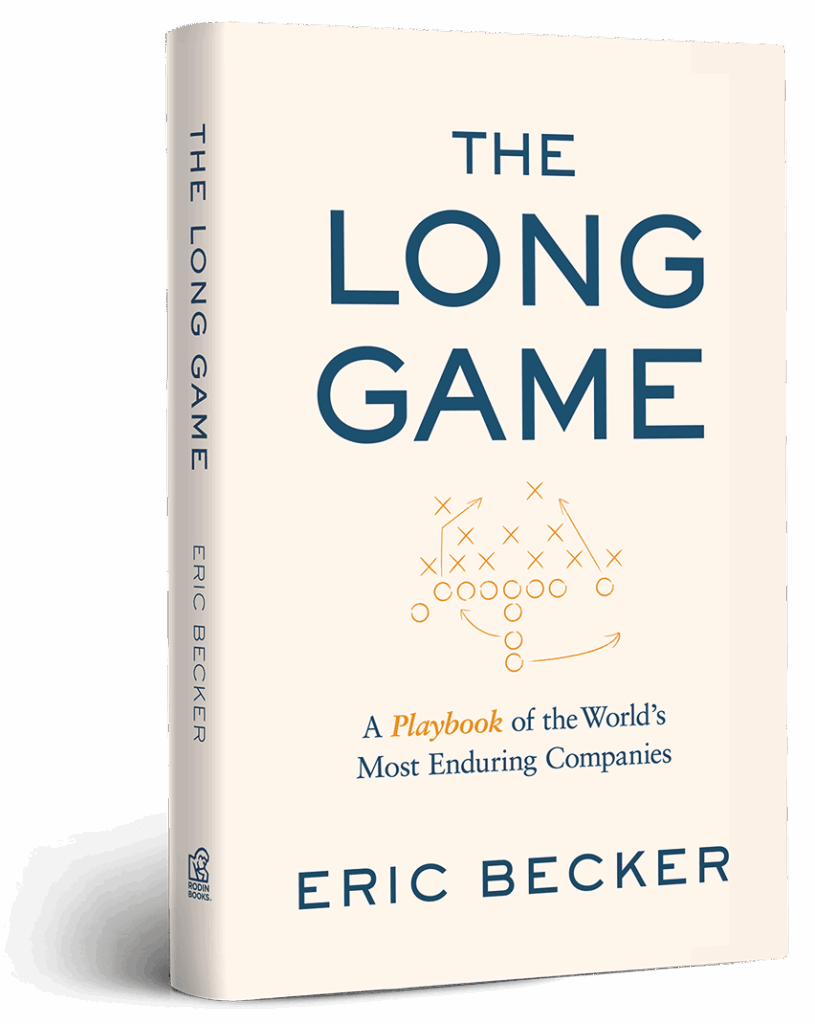
Welcome to “The Long Game Podcast.” I’m Eric Becker.
I’m an author, an entrepreneur, and I’m founder and chairman of Cresset, a family office that we built to serve founders, multi-gen business owners, and families. For all the entrepreneurs and aspiring entrepreneurs, for leaders and CEOs, “The Long Game” is for you. It’s the practices. It’s the leadership skills. It’s the culture that can stand the test of time.
I’m Eric Becker and this is “The Long Game.”
INTRO
Eric Becker
He’s an expert interviewer, analyst, and thought leader on tech and innovation, and the host of the Rapid Response podcast. Please welcome, Bob Safian.
Bob Safian
Well, thank you, Eric. Thanks for having me. It’s great to be here.
Eric Becker
It’s great to be here, but since you’re an expert interviewer, maybe we should change roles and have you on the fly interview me.
Bob Safian
Well, we’ll do it. We can do it both ways.
Eric Becker
That sounds great. Well, seriously, thank you for being here. And let’s start with this whole idea of the incredible track record that you have. Brian Chesky of Airbnb, Reed Hastings of Netflix, Mark Zuckerberg. You were writing about these founders long before the rest of the world caught on. And I’m really curious if you could take us maybe into a room where you were sitting with a founder and how you determined that we were going to be hearing a whole lot about them. What was it like to be in the room before anybody else knew?
Bob Safian
Well, I’d like to say that I am clairvoyant, but no one has that. No one really has that ability. And I’ll say that when, what drew me and continues to draw me to certain kinds of characters is I’m curious about new models and new approaches and particularly ones that are gathering an extensive audience, an extensive response. And that’s what drew me to those characters. I will say, I remember that making the decision about putting Mark Zuckerberg on the cover at Fast Company, you know, at that point he was 22 years old. They had, I don’t know, 20 million users or something like that. Right.
But the reason that we could have him on the cover was because he was viewed by other business media as being a dumb kid because he had turned down these billion dollar offers from Yahoo and Viacom just when the folks at YouTube were sort of quote smart enough to sell out and get their money from Google. And that made him available. It also made his story intriguing. You know, our cover line was the kid who turned down a billion dollars, who’s not intrigued by that. We didn’t know, I certainly didn’t know that Mark was gonna be a leader with staying power at that point at 22 years old, but we did know that and have a sense that social media was gonna be a big deal. And Mark was a sort of compelling way to tell that story, right? And that’s what draws us into it. It’s the storytelling that attracts me.
Eric Becker
Which I love and I think of storytelling as really a metaphor in life. I’m curious of what we can learn from that if your job, let’s say it’s like for a venture capitalist is to decide on someone to invest in, or if we think about CEO founders of businesses, selecting that CEO to lead a business. Are there signals from your experience and maybe storytelling is one of them, how compelling the storytelling is? But are there other signals that you’ve recognized that maybe tell us that someone is backable?
Bob Safian
Well, I think there are two different things you’re talking about there. think when you’re a VC, like me as being a journalist, you’re putting together a portfolio, right? And so it’s across that portfolio you’re looking for impact, but you don’t have the same pressure on making the specific right decision on one thing. I can talk about the Mark Zuckerberg cover. I’m not going to talk to you about the covers that I did that maybe are people who didn’t pan out quite the same way, right?
When you’re choosing a CEO for a business, though, particularly for a public business, but a business that’s reached a certain scale, that’s a different calculation because that’s not a portfolio, right? That’s one leader in one place. And I do think that communication is very important for effective leadership, and it’s become more and more effective. I was talking with someone yesterday about how some leaders and some organizations don’t necessarily get this, the story you tell about yourself is your strategy and the strategy is the story that you tell. Those things really do need to be in concert. It’s not obviously the only thing that identifies a compelling CEO, but a compelling CEO does have to have a vision of the future that they want to create through this business and with this business. And those that tell those stories well, know, tend to, they certainly tend to raise money better. And some of them, if they have the other attributes, you know, can be successful over a long time.
Eric Becker
And have you found any other attributes like, for example, I’ll propose curiosity. Is curiosity something that you would say, yes, I’ve seen that in 90 to 100% of the best founders or CEOs. Do you agree with that? And are there other characteristics like curiosity?
Bob Safian
I think curiosity, you’re right, is, Eric, is definitely a key criteria. I mean, I think the hard part, and I know these sound like they’re at odds, but you have to be both disciplined and flexible, right? So it’s sort of knowing when to say, this is what we’re doing. There’s a tremendous focus that the best CEOs have, I remember talking at one point to Mark Parker, the CEO at the time of Nike, the second CEO at Nike. And we were talking about their portfolio of things and I said, have you ever thought about having Nike branded, we were talking about fitness, Nike branded doctors, Nike branded hospitals, you could go into healthcare. And he said, “Nike is about sport, it’s about sport.”
And that discipline is super important. That doesn’t mean, though, that his strategy and any CEO strategy can remain fixed. Right. And so it’s that combination of discipline and I think and flexibility, particularly in the world we’re in now, that really that really defines the CEOs that end up delivering.
Eric Becker
I agree. That makes total sense. And it’s true to someone listening to that who doesn’t necessarily, maybe they haven’t seen it. It’s the ability to know what are the things that in fact are negotiable and changeable and we’re open to. And then what are the things that in the vision that CEO has, they’re fixed and they have to be like Nike’s not going into healthcare, Bob, no matter how much you’re excited about it.
Bob Safian
Yeah, yeah, I’m thinking of another executive I spoke to, very successful, Ken Frazier, who was the CEO of Merck for a long time. And Ken and I talked about sort of principles, you know, what are the principles of a business? And he said, listen, if, you know, things don’t go the right way for you and you decide to change that principle, that means it wasn’t really a principle. was just a preference. Right. If it costs you money to stick to that principle, then it wasn’t a principle, then it was a preference. And having that lens about what are the things that you’re really going to stake your future on, you’re really going to stake your enterprise on, I mean, that’s hard to do, and it can’t be everything, but it should be something. It should be something.
Eric Becker
Right. Yes. And there are probably some that we all could agree on like integrity or there are some foundational things that have to be fixed in the best of the best. And then there are the choices that they’re making relative to their vision for the business. I think it’s, yeah.
Bob Safian
Yeah, what differentiates them? I mean, integrity is sort of table stakes, but integrity alone is not what’s gonna get you to be a 50 year old company, 100 year old company, right? It’s not enough.
Eric Becker
Yes, one of my favorite topics. So, which what? Well, actually, so let’s jump into that. So, I do think that it is fun and funny that we’re together today and that we have a guy who wrote a book and originally an article on the long game, fascinated with companies that lasted 100 years or more. And then I’m on with a gentleman who used to manage a magazine that name of which is fast company so fast and kind of long game together. It’s funny, but I’m curious, you know, when you look at these companies today that you had identified as these big innovators that changed the game, you know, do you look at some of them and say, yeah, they should be here 50, 100 years from now. They are playing a long game. Do you see that?
Bob Safian
Well, I guess what I’d say is they could be here, you know, and maybe they should if they make the right choices, right? They have a foundation to build from. But as you know so well, like the decisions you make, you can squander an advantage very quickly if you start to compromise on things that are inappropriate. And, you know, the leadership decisions really do matter in making it through those difficult times because every business is going to have these difficult times. And really, it’s the it’s the difficult times that define you.
You know, Brian Chesky at Airbnb, who you mentioned, you know, when the pandemic hit like Airbnb’s business just disappeared. I mean, there was no one who was going to Airbnb’s. No one was letting anybody else into their house. Right. I mean, the business like virtually went away and Brian really used that moment to kind of, you know, refocus on what makes this enterprise special, what are we about? He narrowed down the focus a little bit more and the business came back very strongly and ended up, you know, IPO-ing at a much higher valuation than he had originally thought it was going to. So, it’s those hard moments in some ways that reveal who the leaders are and who the what the businesses are that are gonna make their way through.
Eric Becker
I couldn’t agree with you more. In the businesses that I studied, we found that there were kind of in a hundred years, there were maybe 10 to 15, what we called moments of truth, which would be that type of an event that you were just talking about. And the decision that you made in that moment of truth, it was kind of everything. Like, did you pivot? What was the decision that you made? And if you did, then you were around at a hundred and literally any one of them could have been the end of an enterprise. So perhaps that’s consistent then with what you’ve seen.
Bob Safian
Yeah, I mean, there’s this expression, these “bet the company” moments, right? These “bet the company” decisions. Sometimes they really are “bet the company” decisions. And sometimes they’re decisions that you don’t realize are “bet the company” decisions until later because of the way the world moves. I mean, really like that is what the role of the CEO ultimately is, is to make the hardest decisions where there is the least amount of clear information, right? And they are bets. Oftentimes they’re not right answers and wrong answers, they’re choices. And those choices, sometimes they work out and sometimes they don’t, but they’re choices.
Eric Becker
I agree. In fact, after like decades now of starting businesses and running businesses, I’ve come up with this idea in my own life of no regrets because, because we may be wrong, but the process that we use to make that decision, the research that we did was thorough. The debate that we had was robust. We made the decision. And then if we were wrong, at least we have no regrets that we really went about it the right way. So that’s what I…
Bob Safian
Absolutely. Eric, I couldn’t agree with you more. I do feel like, you know, Brian Chesky, again, has this paradigm. He talks about principle decisions and business decisions. Right. And he says, really, in the tough situations, you want to make principle decisions because you want to feel like even if this doesn’t work out, even if it didn’t turn out the way I hoped it would, I’m still proud that’s the decision I made. Right. And that’s really what you’re saying. Like, make it based on something where like, it goes well, it doesn’t go well, but I feel confident that this is the right decision for us.
Eric Becker
So, one of the things that I used to say is build your business like you’re going to own it forever because you just might. And that’s all part of kind of long game thinking. But I am curious with all of the founders that you met, have you met anyone who kind of revealed to you in the interview that they’re in it for a quick exit? Like I created something and I’m going to build this and get out kind of as soon as it’s realistic. Have you come across that and has anybody been successful with that as their strategy?
Bob Safian
I mean, I think there are certainly founders who do that and who take the payday and move off. They may not be household names quite the same way. And sometimes I will say for some of them, they’re disappointed with what has transpired afterwards because for them, really, it wasn’t about the money. It was about the journey, and the journey is a lot more fun, and you have a lot more control when you’re running your own enterprise. I will say that I feel like Mark Zuckerberg’s decision not to sell Facebook sort of validated and ushered in a generation of business leaders, founders who are like, it’s better to not sell. The presumption always used to be with rare exceptions, Bill Gates or Steve Jobs, right? That like you’d start a business, it would get to a certain point, and then you’d have to bring in a professional CEO to actually run the business going forward, right? I mean, listen, that’s why Google brought in Eric Schmidt to be with Larry and Sergey at Google to sort of bring in that, you know, that more senior season person.
And I think Mark has really inspired a generation of entrepreneurs to think like, no, maybe it’s better if I stay in charge, that there’s something special that I bring to this. I mean, it’s not just Mark. Howard Schultz at Starbucks in some ways did some of the same things. Him coming back as CEO was sort of indicative of that. I think it can be very powerful to be motivated by a founder, a founder’s vision. But I also think the transition from a founder to whatever the next generation is can be challenging. And some folks do it well, you know, and some really struggle when they get to those transitions.
Eric Becker
There’s so many ways in which you can struggle. You can struggle with yourself in terms of your ability to make that transition, or you could be okay with the transition and struggle with who you select and your selection process. So there are kind of a lot of ways to go wrong with that.
Bob Safian
Yeah, and whether you choose someone from inside, you know, who’s who serves succeeding you, which is what tended to happen at Nike, I mentioned, or at Disney. And there are other places where like, no, I want to go outside and it’s time to bring in some fresh viewpoints. And there’s there are valid reasons again, choices in both of those. And, you know, and sometimes it’s down to whether you have the right person that fits that choice.
Eric Becker
It does. I think that if, whether it’s in a multi-generational family or whether it’s in a business that you’d like to have the potential to be multi-generational, I tend to think of it as ethical succession that you try and take your ego out of it, make the very best choice that you can for the organization, and then you have to see what happens because you won’t be right all the time. But you have to have a discipline around it or there are just many ways that you can go wrong.
Bob Safian
Well, you use that phrase, you say, take your ego out of it. mean, I think for a lot of CEOs and founders, you know, taking their ego out of it is not easy. mean, these are not people with small egos. Certainly by the time they’ve reached a certain level of success, and they may think they’re taking their ego out of it. But, you know, there’s a lot of. Yeah.
Eric Becker
It’s hard to do, especially if you’re the founder, really, really hard to do. No question about it. And then of course, the first time that your successor hits a speed bump or a pothole, it’s so tempting to just be like, I’m back, you know, I’m back.
Bob Safian
That’s right, that’s right. And if you’ve made the right choice, you know, don’t need to come back. it’s sometimes hard to be patient that way, you know.
Eric Becker
It is, but biologically, we know that if we want to have an enduring organization, there will be a time where you have to pass the baton, the proverbial baton to the next generation.
Bob Safian
Yeah, mean, listen, I was not the founder of Fast Company, but I ran it for 11 years. You know, I started just running the editorial side and then we added digital and I was overseeing the business side and it was a great adventure. It was, you know, emotionally challenging to sort of pass off the torch. But when you know it’s the right time. And I think for me, having some distance from the place afterwards was a good thing, you know, to sort of appreciate them from afar in some ways. But I also had to start doing something new with this new podcast, Rapid Response, to sort of feel like I had my own balance a little bit.
Eric Becker
Makes sense, with all this incredible network of relationships that you have, who are some of the leaders that are inspiring you right now? You know, when you think about this more broadly, who’s exciting to you right now through whatever initiative they might be doing.
Bob Safian
I will say there are leaders who I have my eyes on, not necessarily because I’m inspired by them per se, but because their choices and their decisions will have an outsized impact on our future. And those are the folks who are around AI, that’s you know, the open AI and anthropic and, you know, these emerging businesses, yes, that may be, you know, 100 year businesses, but they may be the Friendster of this era, you know, I mean, it’s, right? It is hard. Some of them certainly will be, you know, not everyone is going to get there, is Nvidia going to be. I mean, listen, Intel is still around, but Intel is not the driving force that it was. Right. Cisco was, you know, the most valuable company. again, it’s still here, you know, but it doesn’t have the same stature and heft that it had. And what would it take, will it take for Nvidia to do that? Is that even the right goal for Nvidia? I think those are some of the questions you’re sometimes asking, which is like, what is the right goal? Is the right goal scale? Is the right goal longevity, right? Like where, where do you trying to get to?
Eric Becker
Yeah, that’s a really, really good question. I think one thing that in terms of what you were talking about, leaders that you have your eye on, one thing that I find so interesting and really encouraging is that, yes, it’s true that CEOs right now, there might be some of these third rails they have to be careful of, but one, if they stay really, really close to the customer and they speak in a way that the customer wants to hear and listen for, then that probably is a you know, a good true north in terms of what to do, because that is ultimately who is paying the bills.
Bob Safian
Yes, and that’s where the values of the organization and some of the principles that we talked about earlier certainly come into it. When I say I’m intrigued by what’s happening at OpenAI, like Sam Altman is having societal impact beyond just the confines of his company, right? And I think there’s opportunity. I mean, the power that he has and the power that is amplified by the fact that they feel like those in government who might offer alternate perspectives don’t really, quote, understand this tech. Right. And so and so that sort of the argument is that gives them a free pass to do whatever is good, whatever they think is good, which means whatever is good for their business, but that doesn’t necessarily mean it’s gonna be good for all of us. And it doesn’t necessarily mean it’s gonna be good for their business over a hundred years, right?
Eric Becker
For sure, I think that’s a really important point and that’s where I think when you look at society, that is, here we always are debating the role of government and big government is bad, but these guardrails and thinking about what something as massive as AI will be. That is the role of policymakers to adapt to that. when you think about it, it does seem like a tale of two cities. When I talk to CEOs, they’re so excited about AI and they’re already giving evidence of tremendous productivity, improvements and impact on organizational effectiveness and speed. Like it’s making people better, almost like they, you take a robot and a human, put them together.
Bob Safian
Yes.
Eric Becker
It’s incredible that way. But then you also talk to other people that are maybe it’s a young person who’s just graduating from college and they’re like, gosh, it just seems like it’s so hard to get a job right now for somebody who wants an entry level position in a professional organization. So, it is a tale of two cities, and it is challenging. How do you think about it in terms of like what’s great? And then what will be our great challenge from this new technology?
Bob Safian
Well, I talked to a CEO this week who pointed out the sort of a core paradox of what we’re going through right now. The valuations of these new AI businesses are high enough that they, in order to deliver on them, they have to deliver productivity to their clients, to other companies at a very large scale, which means those companies are going to lay off a lot of people. So, if you look at this, you’re like, well, either that’s not true and we have an incredible bubble and we’re going to have a stock market crash because of it, or it is true and we’re going to have tremendous unemployment because we’re going to push all these people out.
Now, I don’t know whether it’s necessarily going to end up being that extreme one way or the other. What I always say about these things is it could, not unlike the questions you were asking me about which companies are going to be around 50 or 100 years from now. Like it could be that way. We still have the agency to make the choices that can protect on the downside, hopefully enough and deliver on the upside enough that we get more of the good than the bad. Right. And those I think are the choices that were that we’re living in. I mean, there is no question that this technology is incredibly, incredibly powerful and it is improving at a pace that is hard for us to emotionally fathom as humans. You know, like exponential growth is just so hard for us to see. There’s a…
Eric Becker
I think our brains kind of want to protect us from that, you know.
Bob Safian
Yeah, I mean, there’s an analogy that an executive at Microsoft shared with me. And he said, “If you think of a pond in the spring that has some algae in it, and the algae grows a little bit each day,” he said, “You know that thing, it doubles every day. And at some point in your summer, the whole pond is covered with algae.” He said, “The thing that people don’t realize is like, what exponential means is the day before that, it was only half covered. Like it looked like it hadn’t been done two days before, it was only a quarter covered.” And so, the pace at which these things can change, it always takes us by surprise, you know?
Eric Becker
Yes, it does. And all the unintended consequences, like someone sent me, I think it was an HBR article this morning that I thought was fascinating because in our business, we view it that we’re in the good judgment and good decision making business. And where does good judgment come from? It comes from experience. And this article said, if AI replaces all these entry level positions, where will the leaders of the future gain experience to actually gain good judgment. And I had never thought about that kind of unintended consequence that we need a place to start and make mistakes if we’re gonna become the leaders of the future.
Bob Safian
Yeah, and there are different kinds of education of all kinds that we’re gonna need. I mean, it seems like two minutes ago, people were saying, oh, everyone needs to be a STEM person. And now suddenly, oh, no, no, no, you need to do classics in history and whatever because it’s critical thinking that matters. I mean, probably the answer is yes, you need some of all of it, but we’re gonna be forced to rethink a lot of things as these tools become more widely used.
Eric Becker
Absolutely. So, have you been reading about, thinking about, the Alpha schools that are originating out of Austin, Texas, this idea of two hours of an AI teacher every day and then the balance of the day on the arts and on leadership and getting out into the world and learning how to communicate and things. Have you had a chance to think about that or been exposed to it?
Bob Safian
Yeah, I mean, I haven’t spent a particular time with Alpha. I have been asked different times about how I think about the like the cost of college education and whether it’s worth it, you know, sort of the systems that are in place and in whatever way we receive it. The most important thing that we learn at school is we learn how to learn. Right. That’s really what we’re doing. And the world is changing at such a rapid pace and shows every indication that it’s gonna keep changing at a rapid pace. That that’s really the essential skill. It’s learning how to learn, learning how to deal with experimentation as you talked about trying things and failing. And it’s almost like that word failing is the wrong word because really it’s just learning. That’s what it is, right? And I think, I think in whatever format, at whatever ages we’re at, even if we’re folks who are fairly far along in our careers like you and I, we have to keep learning and experimenting and being open and curious. That’s really what’s gonna matter most.
Eric Becker
I agree in that and curiosity was something you said you saw really across so many of the leaders that you’ve gotten to know. So, we’re talking about massive change when we’re just talking about AI. What about this concept of super intelligence and how do you think about that and the analogy of the pond suddenly being completely covered, like what does that do to this equation?
Bob Safian
Yeah, I think of all that as a continuum. You know, people use the word AI or machine learning or, you know, algorithms. I mean, they’re all different versions of along a continuum of different tools that can do different things. Are we going to end up in a world where, you know, I can’t differentiate between whether I’m actually talking to Eric Becker or I’m talking to Eric Becker’s avatar?
We might be. I mean, that’s not that far off to be able to create a digital twin that can make us feel that way. But I don’t think that’s necessarily the same thing as replacing what makes us human and what makes the human relationship and the human experience distinctive. And at least I hope it doesn’t. And that’s the way I think about it.
Eric Becker
Yeah, me too. Yeah, I do think that there’ll be like new breakthroughs and thresholds that will test us. You know, when I think about my parents met in the theater in the show, Anything Goes at University of Maryland, and my mom ended up in this career teaching at the Peabody Conservatory of Music and then with the Baltimore Symphony. When AI breaks into the creative arts and starts really producing, you know, art that is recognized, music that is recognized. That’s now kind of a whole other category that does touch our humaneness, I think, at a very deep level.
Bob Safian
Yeah, and I also think that there are artists who will use those tools to create art and music and other things that will outshine what the machines just make on their own.
Eric Becker
Yes, I believe that and certainly I hope so no matter what. But I believe that.
Bob Safian
But that doesn’t mean that some folks won’t listen to or engage with things that are just created by machines. I mean, there’s a broad spectrum of people in the world and interests and people who do different things. You know, it’s hard to predict how all of that is gonna balance out.
Eric Becker
So, as you’ve had a chance to think about the impact of things like AI, what do you believe the jobs of the future are going to look like? Are they going to be these human, like you talked about in artistic collaboration, is that actually the future of jobs that these will be AI collaboration between humans and maybe robots and AI intelligence?
Bob Safian
I mean, there’s a dystopic view of the future which has us more and more connected to our screens. And the more we are connected to our screens and living in the world of digital, of the algorithm, the more dystopic that becomes. What kind of jobs do we have? We don’t need to do any jobs because everything’s being done by the algorithm. The more our future actually engages in the physical world, that doesn’t necessarily change those jobs.
Now, there may be robots or, I mean, robots, people think of humanoid robots, so they may not look like people, but tools that will manage some of the more physically demanding things that humans do. We didn’t used to have cars or planes or other things that make the human experience much easier. You know, I was talking with someone about, you know, an undersea welding, you know, robot. Yeah, they can’t get enough people who want to be undersea welders and it’s dangerous. And that’s not a bad thing for robots to do, right? Even though it’s in the physical world. For the rest of us, I mean, again, this is the hope. This is the aspiration. It’s our choice, and the choices that we make that can bring this into being, do we have more time in our day for the things that are more meaningful to us as humans because we have offloaded certain things to the machines? And if we do that, it’s both about what work we do, it’s about the role that work plays in our lives, the relative balance between work and other pursuits, right?
You know, there are, again, there are a lot of choices that are still out there for us. But, and I don’t have a clear like roadmap for the future, and I try hard in this environment not to anchor on one. But to be open and curious and flexible about what are the choices we can make that take us in a direction that feels more, more compelling, more human, more palatable.
Eric Becker
Well, does it, I mean, when you think of potential outcomes, one outcome is that there’s a tremendous positive explosion in the creative arts that people that, I mean, when I was 17, I was an exchange student in Sweden and my host father rolled out a manual lawn mower and said, we all have chores in this family, and mow the lawn. I’d never seen a manual mower. They were all either a seated mower or an electric mower or whatever. And this was like, yeah, it was really hard. So, I’m very happy to have that automated away. But then what do with the time? And think about all the implications.
Bob Safian
Yes, and how do we choose to spend that time? And maybe sometimes you might want to mow your lawn yourself. That should be OK too, right? If you decide, no, I like doing that. That’s OK. But if your neighbor doesn’t, they don’t have to, right?
Eric Becker
That’s right. With all the interests that you have, one of the things I’m curious about is what are some of your sources that you go to keep up with things? So, nothing proprietary, but what do you like to read when you are there, any particular authors or sub stack authors or news sources that are kind of your go-to?
Bob Safian
So, each morning I’ll look at the Wall Street Journal and the New York Times and Bloomberg and Axios and Morning Brew. And I’ll look at all of them. And in the best cases, I’m like, OK, I know that already. I know that already. And every now and then you’ll see something where you’d be like, hadn’t caught that. That’s good. You know, I think a lot of the other more varied sources, I trust my network to bring to me. And that network is both, you know, direct and through social, you know, sort of finding that people are posting and sharing things. And I’ll use almost every and any platform to do that. But I do, you know, always remind myself like there is no way to stay caught up. There is just too much information. There is no way to stay caught up. And so you just have to say to yourself, I’m going to put this much into it. I’m going to get as much as I can. And I’m going to trust that, you know, that the universe will provide. And if I stub my toe on something because I didn’t know that detail enough, I stub my toe.
Eric Becker
In this time of great disruption and change, which you described eloquently, to your own kids, to nieces and nephews, to a young person coming to you, asking for your advice as they think about their future, what either are you telling young people or that you would tell young people to think about in terms of their future?
Bob Safian
So, I don’t think they should think about a career being one thing that you do for a long time for sure. There’s a phrase that I came up with at Fast Company that I wrote about called generation flux about, and it’s not really defined by your chronological age, it’s about your mindset, it’s this willingness to be adaptable to changes and to accept chaos and recognize what chaos is and adapt yourself accordingly. And I think those are the messages that I try to instill in my kids and people of any age, you know, to try to recognize that like this pace of zaniness will not slow and we just have to get used to it. And that is not natural for us as humans, certainly not with the way we’re trained as kids and in school and you know, it’s just not ordered the way we might want it to be, but it’s the way it is.
Eric Becker
Well, yeah, and you look at the pace of evolution and how that seems like a glacial pace of change. And then, you know, what we’re confronted with. So, in our genes must be something like change happens slow over a long period of time, and that’s best for you versus what’s actually happening. So, teach kids to stay curious and to be comfortable being uncomfortable, I think is probably how to think about it.
Bob Safian
Absolutely. Yes.
Eric Becker
Best CEO you’ve ever interviewed? Anybody come to mind?
Bob Safian
I mean, there are a lot of CEOs who I’ve been impressed by. I mentioned earlier Mark Parker at Nike. I really liked spending time with Mark. He combined and an intense creativity. I mean, he really was like an artist. You know, he started as a shoe designer at Nike and his desk was like this. His whole office was like a museum where he had, you know, pieces up that he was sort of re-curating all the time to keep himself fresh. And yeah, he could talk to Wall Street, and he could, you know, make the numbers land. But his appreciation of, you know, of the unmeasurable I think was really good. And again, his discipline. I’ll share one more story. He would tell me that inevitably at Nike, like new projects, would proliferate, new ideas, new ventures. And we’d get to the point where we’d have 60, 70, 80 different things going. And every now and then I’d bring my team together and I’d say, you got to cut it to 40. He’s like, and it was an arbitrary number. It didn’t really have to be 40, but it’s like I needed some forcing function to get them to make choices.
And I think the best CEOs often have some version of that where they’re constantly prioritizing, narrowing down. Daniel Eck at Spotify, every quarter he has a ranked list of priorities and he tells his team, we have to nail one before we go to two. And these are very, they seem simple, but they’re very hard to stick to.
Eric Becker
Right.
Bob Safian
And it’s very hard to make the choices as to what those priorities are.
Eric Becker
Yes. No, I think that’s a very, very good point. It actually brought back a memory, kind of a harsh memory, but my first company when I was a student at University of Chicago was backed by Blue Cross Blue Shield and the CTO at Blue Cross Blue Shield insisted upon, they were gonna fund my venture, a healthcare technology, but they insisted upon a business plan. So, my brother and my two friends, we stayed up all night, classic startup and wrote the business plan. We submitted it and he sent back a note at the top and said, “You can do better,” and sent it back. So, we stayed up all night again. And we rewrote the whole thing and put it in. And we took it to him and he goes, “Now I’m going to read it.” So, he hadn’t even read it the first time. That was his forcing function. Like you were talking about this. He just like handed it back, pretended to have read…it was terrible. But an eye opener, it was an eye opener.
Bob Safian
Yeah. And it probably did yield results, right? Yes. Yes.
Eric Becker
It did, it absolutely did. So, before we close, I have one last question for you. Many years ago, I ran this contest. I had 80 directors of portfolio companies and 20 CEOs, so that hundred executive group. And I asked them, what’s the best question you’ve ever asked or been asked? And the winner was a wonderful guy named Gary Keisling, a serial entrepreneur and CEO. And he said, the best question is I ask myself every day, “what am I tolerating, but shouldn’t be?” And he won the contest, we sent him to a wonderful dinner with his wife, but I loved that question that won, and I try my best to ask myself that every day and it’s been powerful. Is there a question, whether it’s as a journalist that you love or as an individual that you love, either being asked or that you like to ask?
Bob Safian
Hmm. Well, I’ll give you two. I’ll give you the question that I ask myself every day, which I try to ask, like, “what am I going to get done today?” You know, to really try to focus myself. What am I trying to get done today? And I know it seems basic, but it’s the most important thing. Otherwise, I’m going to run around doing things that aren’t the priority. Right. As a journalist, the question I like to ask is what do people most misunderstand about your business? And it, you know, often gets my guests to places that are not planned. And that’s really what I’m trying to do in asking my questions is to get them, you know.
Eric Becker
I love that question. And the truth of the matter is that my co-founder of Cresset, Avy Stein and I, our business exists because of asking that question as clients ourselves. We were so dissatisfied and frustrated with our understanding of family office and wealth management that we ended up starting a company to solve it. So, it’s a powerful question.
Bob Safian
Yes, for sure, for sure. Well, this has been great. Thank you for having me on.
Eric Becker
It’s been so much fun. And I’m so glad that we met. And I just want to tell you how much I appreciate you taking the time to be with us today. And I want to thank you, Bob, for sharing your insights on everything, from what it takes to be a great CEO and founder to how to play the long game and next generation leadership. To hear more from Bob Safian, be sure to check out rapid response wherever you listen to your favorite podcasts.
Thanks so much.
Bob Safian
Thanks, Eric.
Eric Becker
Thank you, Bob.
Before I let you go, if this episode resonated with you, please share it generously and please click the subscribe button below. Send this to someone in your world who’s navigating a pivotal moment right now. Someone who’s staring down a decision and might need the reminder that recognizing the moment is half the battle. See you next time on “The Long Game.”
Voiceover
“The Long Game,” a podcast by Cresset, is intended for information only and is not investment advice. Any company discussed is not a recommendation to buy, sell or hold any security. Investment involves risk, including loss of principal.
Please consult your advisors before making investment decisions.