COLD OPEN PROMO
Eric Becker
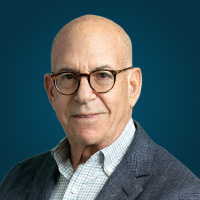
Today I have the privilege of sitting down with someone who has had an enormous impact on my life, career, and the way I think about entrepreneurship and giving back. Larry Levy is one of the great American builders.
Larry Levy
I heard the word entrepreneur, which I had not heard before. I said, “That’s me.” And that never left me.
The degree to which you exceed people’s expectations is how much you’re winning customers. To this day, I can’t stop being ambitious.
SHOW OPEN
Eric Becker
Welcome to “The Long Game Podcast.” I’m Eric Becker.
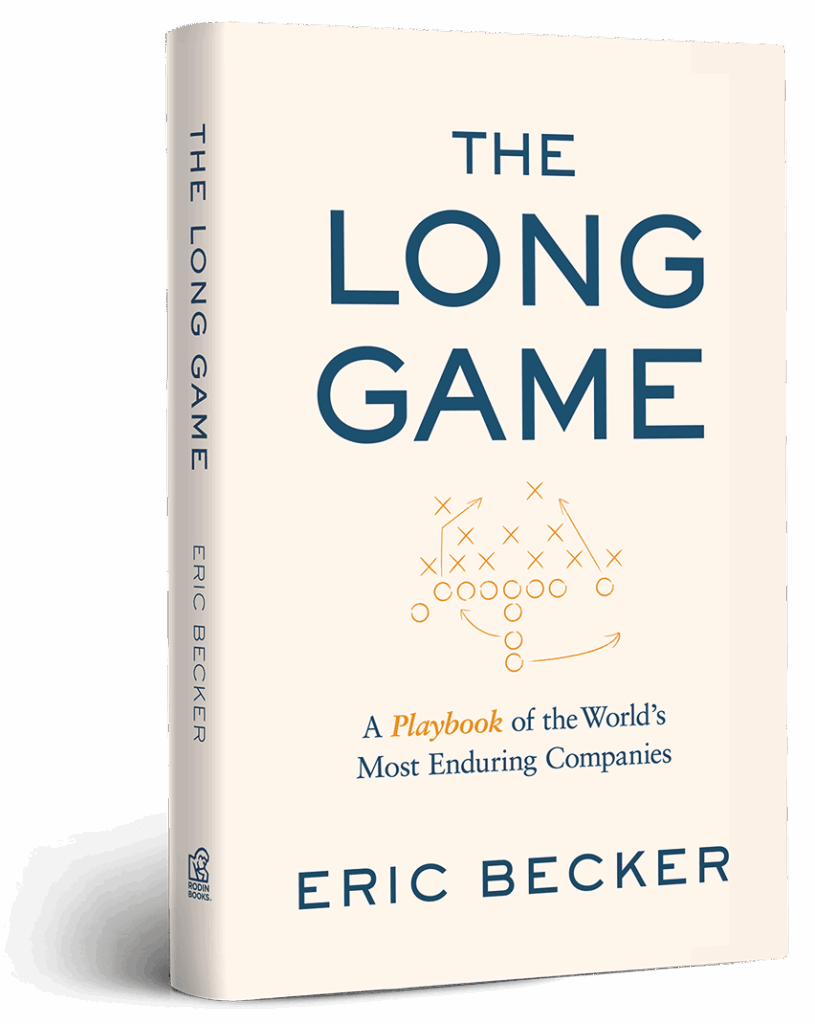
I’m an author, an entrepreneur, and I’m founder and chairman of Cresset, a family office that we built to serve founders, multi-gen business owners, and families. For all the entrepreneurs and aspiring entrepreneurs, for leaders and CEOs, “The Long Game” is for you. It’s the practices. It’s the leadership skills. It’s the culture that can stand the test of time.
I’m Eric Becker and this is “The Long Game.”
INTRO
Eric Becker
Welcome to “The Long Game Podcast” with bestselling author and award-winning entrepreneur Eric Becker, Founder and Chairman of Cresset, a multi-family office with a bold vision to reinvent the way clients experience wealth. For all the entrepreneurs and all the aspiring entrepreneurs. For leaders and CEOs, the long game is for you. I’m Eric Becker and this is “The Long Game.”
He co-founded Levy Restaurants, a company that completely reinvented the way we experience food and hospitality in sports and entertainment.
Today, if you’re sitting in a luxury suite or anywhere in a ballpark, an arena, or a major event anywhere in the country, enjoying an incredible meal and experience, chances are you’re experiencing the model Larry helped pioneer. But the story didn’t start with stadiums or global scale. It started with something far more humble. A young real estate developer and his brother started a delicatessen in Water Tower Place in Chicago, and a family willing to roll up their sleeves.
With vision, creativity, and an obsession with exceeding expectations, that small venture became a company that transformed an entire industry.
Larry has also spent decades giving back, mentoring entrepreneurs and supporting philanthropy across Chicago and helping shape the next generation of founders through the Levy Institute for Entrepreneurial Practice at Northwestern’s Kellogg School of Management. On a personal note, Larry has been one of the most important mentors in my life. When I was a college student, I somehow convinced the Levy team to give me an internship
Larry isn’t just someone who gives advice. He opens doors and he believes in people. He’s an entrepreneur, a builder, a mentor, a philanthropist and one of the great champions of Chicago. And most importantly to me, he’s a longtime friend. So Larry, welcome. I’m so grateful to have you here.
Larry Levy
Thanks, Eric, I’m excited about this and very proud of it. you.
Eric Becker
Thank you. So I’d love to start at the beginning, St. Louis. I know that’s where your roots are. And so let’s talk about where you came from and what it was like growing up there.
Larry Levy
So, I grew up in the same house my mother and her seven siblings grew up in. We left when I was about eight. My dad went into several businesses, went to work for several people before he started his own independent record company distributorship in his 20s.
Eric Becker
Is that when you think about, so like when I visit your offices, you have amazing photographs of rock and roll groups. So I know you love music. And I know that one time you told me that your dad would often take people to restaurants. I think it was on the Hill in St. Louis. Did your love of food and music come from that time there?
Larry Levy
100% and it was Italian food. St. Louis was famous for The Hill, which was all Italian. That’s where Yogi Berra and Joe Garagiola came from and Stan Musial, the great Hall of Fame baseball player, had a restaurant there with an Italian American. So yeah, my dad was a foodaholic. He loved food. His heroes were restaurateurs. And one of the anecdotal research they’ve done at the Kellogg School in our program is that they find that there is a very strong need by entrepreneurs, successful entrepreneurs, whether male or female, to have their father’s approval. And I don’t think it’s a stretch to say that my brother and I wanted to please him by opening restaurants. And he didn’t get to see beyond the first restaurant, but I think that’s why we did it.
Eric Becker
Amazing. And how did you find your way to Northwestern University and to Chicago?
Larry Levy
A fellow whom I admired a lot went to Northwestern. I came to Chicago, visited his fraternity. I said, that’s where I’d like to go to school. I applied to one school, got in, but what I saw when I came there was Chicago with the big, beautiful buildings and an amazing skyline and the nicest people I ever met in my life, which is true to this day, and fell in love with Chicago and I’ve really never left other than during the winters.
Eric Becker
Right, and probably at the beginning, you weren’t able to leave for the early winters. It wasn’t until a little bit later. So at Northwestern, how did Northwestern end up influencing your interest in business and entrepreneurship, or did that come later?
Larry Levy
That’s true too. That’s true. Yeah.
No, I was an entrepreneur at Northwestern as an undergraduate. In my freshman year, I started a laundry service where some of my fraternity brothers would, working for me, would go pick up people’s rough-dry laundry, as they called it in those days: underwear and sheets and stuff like that. We would pick it up and send it back by the end of the week. I made a deal with a local dry cleaner and it became a decent-sized business. I was making five or $6,000 a year the first year and a little more the second year. I booked bands for fraternities and sororities. Eventually I sold flights to Europe for two summers and I didn’t know it till later but I was the largest depositor at the First National Bank of Evanston because I had a quarter of a million dollars of deposits. And the final thing I did as an undergraduate was I created a coupon booklet, so I sold $6,000 or $7,000 worth of those a year and did it in front of the football stadium at football games in the fall. And that became a good business.
Eric Becker
So how did you find your way initially to real estate? How did you get into the real estate business?
Larry Levy
I had a friend from business school who was in the commercial real estate business and he told me that a charismatic guy he met was starting a new real estate brokerage company and that he would only hire people with no experience, but who were well-educated and persuasive. And I took the job and…
Within two years, I became the president of that company. I was brokering 50% of the income of that company. Then I left two years later and started the Levy Organization, which was to develop real estate.
Eric Becker
Which is incredible. I mean, you were young and these are the early days of really entrepreneurship. I mean, back then, while it sounds like that Northwestern was supportive of entrepreneurship, but there weren’t incubators and venture capital firms looking to fund startups.
I mean, it was just a different time. And so that’s just so interesting. It must’ve been almost like a lonely path that there wasn’t anybody else out there doing what you were doing.
Larry Levy
It was the only path at what became the Kellogg School at Northwestern because there were no entrepreneur classes. It was a one-credit course you went to on Thursday nights where you could meet successful and unsuccessful entrepreneurs in conversation, which was my favorite class. But when I heard the word entrepreneur, which I had not heard before I went to Northwestern, I said, that’s me. And that never left me.
Eric Becker
That is amazing and so inspiring. But ultimately you moved yourself into downtown Chicago and into the real estate scene in the city. How did that transition from industrial and land development happen?
Larry Levy
I got a call one day from two guys that were struggling to build an office building near O’Hare. And they wanted to talk to me about being their partner in that. And I had an ulterior motive because I knew they owned the corner of Michigan and Oak, which in Chicago is across the street from the Drake Hotel, probably the best piece of property for mixed use maybe in the country at the time. I met with them on a Saturday morning and They said well we own a lot more than the parking lot at where the building burned down at the corner of Michigan and Oak they wrapped around Walton Street and housed the original Playboy Club and had a famous jeweler and a famous hairdresser. I said, “Would you sell it?” And then they proceeded to tell me about all of the famous developers that gave up on it that wanted to buy it. I asked again, “Would you sell it?” And they said, “If somebody was dumb enough to pay $250 a foot…” Before they finished the sentence, I said, “I’ll take it.” And we made a deal and I got to build my dream building and that’s where you worked, where the office was, where my mother lived, my in-laws lived, and an awful lot of companies started there. But it was a hard building to build.
Eric Becker
Well, I think that’s one of the things that is so interesting about entrepreneurship is that people even today walk by that building and they see, you know, part of the Chicago skyline and that incredible location also catty corner to Oak Street Beach. I mean, it’s just spectacular the views and they think that it’s an unbelievable success. But what I do remember is at one point when I was your intern going on runs with you and you talked about how interest rates were going up and that at one point I think you were paying 21% interest, which is like the highest interest rate, I think it’s like credit card rates.
Larry Levy
And I had borrowed $100 million. And I was dumb enough to personally guarantee it. Not because I didn’t have too much to lose, but it was really something. But I will tell you that I felt for the two and a half years it took to build the building like I had a shop-class clamp on my head. And yet I had to be confident and motivate people and keep trying and trying and trying. And I think I made my reputation on that project because everyone got paid back. I didn’t make any money for two and a half years, somehow endured. People would say, you can count on Larry, no matter what happens, we’ll get paid back.
Eric Becker
Well, and what was also amazing, and I do remember seeing how stressful it was, but also how exciting. Like I remember as that building came out of the ground, it was contemporary and new, and there wasn’t anything else like it around it. So there’s a lot of excitement and then seeing you persevere, basically doing what needed to be done, maintaining a positive outlook. Then there was the culture of the Levy organization, and the development of the food business. So was it around that time that you opened DB Kaplan’s in Water Tower?
Larry Levy
Yes, D. B. Kaplan’s actually opened seven years before that building was finished. And it was, I think, it was not a full-time commitment. We were backing someone, but I would call it hands-on. That person turned out to be a disappointment to us. And my brother and I got very active. We brought our mother from St. Louis, who was a great cook and had tremendous recipes from all of her sisters-in-law and put a lot of her recipes in the restaurant. I would say she saved the restaurant and became the start of what became a very big company.
Eric Becker
And so that’s where the Levy organization was coming into being. And, you know, it was really an incredible journey having both real estate and being a builder of important projects like building One Magnificent Mile, but then also being an operator and building a true operating business in food, which is incredible as well. Did the two of those go together? Was that intentional in some way or was it more accidental and you liked having both?
Larry Levy
I liked having both. I don’t think they were coordinated or took some of the same skill sets. I was not a great operator. We had to have great operations people working with us. Andy Lansing, who is now the CEO of the company and has been for 23 years, Andy really was a great operator and, you know, Mark and I were great at bringing in business and creative concepts and we both have great taste buds. So we were able to capture the pulse of what people wanted to eat and in the environment they wanted to eat it in but we never got good at operations until Andy took over.
Eric Becker
And so here the company is almost 50 years old, I think you were saying and he’s CEO, that’s longevity, that’s playing the long game, which is awesome.
Larry Levy
Right, there have been two CEOs, me and him.
Eric Becker
Incredible. So let’s talk about, about Levy Restaurants and some of these moments of truth in what has become a very, very large enterprise. Like opening Spiaggia. So you talked about the Italian restaurants in St. Louis. Spiaggia was a big, big deal for Chicago. Was that one of the milestones in the development of Levy Restaurants?
Larry Levy
Yes, Spiaggia it was definitely a milestone In Chicago at the time the fancy restaurants were all French. I didn’t particularly like French food, I like bistro French food. We eventually opened a French bistro and you know Italian food was in my blood in the neighborhood I grew up in Saint Louis and we decided to make this a alta cucina, very high-end Italian. We did a lot of research in Italy. The beaches in Italy are called la spiaggia, and this restaurant with 30-foot ceilings faced Lake Michigan and the Oak Street Beach. We didn’t miss a thing.
Eric Becker
So, that was very big for Chicago and big for Levy Restaurants. Before I left to start my first business, I remember that Jerry Reinsdorf had bought the White Sox and you were then looking at the possibility of doing the food for the skyboxes. And you ended up sending me out to interview some of the skybox owners to see what kinds of things, how they thought about the existing setup and what they wanted in something new. And this of course ended up becoming an incredible business. But talk a little bit about that as a moment of truth. that out of the blue, something unexpected that came along?
Larry Levy
Yes, it was out of the blue. They built the boxes before they sold them and they struggled to sell them. You came back with your report that what people wanted. They didn’t know if it was a season ticket, they didn’t know if it was corporate entertaining and what they wanted was a variety of very good food. And by this time we had, I believe, eight restaurants and we developed a menu that they would order a day ahead of time of time. We would prepare the food in the restaurants. Our only investment was a little truck that would go around to the eight restaurants and pick up the orders for that day. And we had like a closet to heat up the food. And people went crazy over the food. They thought it was fantastic. And we realized that if the same food was served, heated up in the restaurants from which they came, that it would be sent back. And so, we said, they have very low expectations and we’re dramatically exceeding them. And that became my truth for how well you’re doing in anything.
The degree to which you exceed people’s expectations is how much you’re winning customers. And when they offered it to us, we said, you know, we’re not institutional food service company. That’s Aramark and Sport Service. And Reinsdorf said, well, we’re the new owners of the team. We’re going to spend whatever it takes to get the best baseball players here. And we’re going to give you seats in the front row when we’re in the World Series. And we said yes right away. I mean, it’s just, you never know where opportunities are coming from and total fluke. And to put that in perspective, Levy Restaurants, I sold it 20 years ago. Today is a $4.5 billion business with 50,000 employees. And I think we’ll keep going for another hundred years.
Eric Becker
Which is Incredible. And I think about what I learned during the short time I was an intern about restaurants where you had all the capital costs, you’d spend potentially millions of dollars to open a restaurant and then either it’s successful or it’s not successful. If it’s successful, you get a return on the investment. If not, that capital is gone. And here, these incredible venues, you were getting them and you didn’t have to invest millions of dollars into building them, which was amazing. Really amazing. Better business model.
Larry Levy
In the first contracts we won, it was a profit sharing split with the new stadium. And we started doing huge volumes in those boxes. We learned that our per capita sales were twice what the legacy caterers were and eventually we started doing the whole stadiums and arenas and the company now has 450 accounts. When I sold the company, there were about 90 accounts spread across 41 cities in the United States. Now it’s all over the world. I can brag about the company because I don’t own it anymore. In the month of March, the company did all the food service at the Super Bowl, the NBA All-Star Game, the Grammy Awards, the Australian Open and the Daytona 500.
It’s the same leadership team I left behind, and that’s why I think it will be a 100-year-old company, because the culture is set. It’s the same culture Mark and my mother and I left behind. More than half of the senior leaders from the beginning were women, which is very unusual, and it’s just a great company, and I’m very proud of it.
Eric Becker
You should be, it’s such an incredible entrepreneurial story. And so when you think of the culture at Levy Restaurants, what are a couple of the things that come to your mind of how you created a great culture? What were some of the secrets to that?
Larry Levy
So, the employee manual first sentence was, we only hire nice people with great smiles. And I think that says it all. We’re happy you’re here. We want you to enjoy what we can bring to you. We had a culture that if you didn’t like what you ate, you didn’t have to pay for it. We had a whole crash team that whenever there was a problem with a customer, we did everything possible to win them back, which said a lot to our staff to try to constantly win the guests. At the table, we had a saying, you may remember this one, Eric, it was called WOCAT, winning one customer at a time. And if you think about the concession business, it’s winning thousands of customers at a time, but we did it one at a time.
Eric Becker
Incredible.
Larry Levy
So, culture was a dominant part of Levy Restaurants, and it was a food culture. We revered the chefs, we revered anything to do with culinary. We had all kinds of famous chefs help us develop signature recipes.
Eric Becker
So, one of the things my mom reminded me of is that when I was an intern working for you, and this is of course before the internet, video calls and all of that. So these are back in AT&T long distance calls. I called my mom to tell her about the job, the secret shopper, and how much fun it was. And at some point she was just trying to relate because she was working for the Baltimore Symphony and not in entrepreneurship or business. And she said to me something like, well, tell me something that you’ve learned. And I said to her, I’ve learned that nice guys can finish first.
There was that saying back then that nice guys finish last, but that was one of the things that I learned from you is that you can have high standards, high expectations, be a high-performing, and you can also be nice in the way that you conduct yourself as well, which I think is pretty cool.
Larry Levy
Thank you.
Eric Becker
So, now you go through that transition and you form Levy Family Office and you kind of shifted your interests to everything from philanthropy like the entrepreneurship program at Northwestern and so many things that I know that you’ve done in giving back, but also then investing in young people and investing almost like as a family venture capital effort.
Tell me what you went on to after, after Levy Restaurants.
Larry Levy
Yeah, our office is really an investment office and all the different kinds of investments, but I had never really been an investor. My youngest son is a very good investor. He runs a hedge fund. He was helpful to me and located his hedge fund in that office. But you know, we’ve found a way we’re shareholders in SpaceX and Anthropic and lots of other companies that are going to go do great things are doing great things. And we got to build the River Point building and the Salesforce Tower in partnership with Hines and one South Dearborn, which is Sidley and Austin’s headquarters. And then, of course, in partnership with Cresset, we created Peakline Ventures to develop real estate all over the country. And that’s been wonderful. We reconnected with you to do all of those things.
Eric Becker
It has been. I know, I know. I have two Larry Levy stories that I want to make sure that as many people know as possible, especially young people. The first was my first day as an intern. And, you know, I got to actually go into your office. You had that very cool desk and this was,
You know, gosh, I guess it was like in 1982 and you said there’s a room and it has all these architectural drawings in it. And I want you to bring me a certain set of maps and drawings, maybe it related to one mag mile. And so I went into that room. It was my first day. There were all these rolled up papers.
In all these little pigeonhole-like mailboxes. And I looked from top to bottom. I didn’t want to disappoint. I went through it twice. I couldn’t find it. And you said to me, I asked you to bring me these drawings, not an excuse. And if you have to call the architect and get another set of copies of the drawings brought over here, or if you have to go to Michigan Avenue to the Rand McNally store and buy a set of drawings, bring me a solution and not more of a problem. And it was such an incredible thing for a kid because I realized, wow, I can solve problems. I don’t have to go and ask you what to do. And it was very empowering and a great lesson. So that was an amazing, you probably don’t remember it, but it’s burned into my mind. Burned into my mind.
Larry Levy
I don’t. Hahaha.
Eric Becker
And then another amazing time, I ended up launching the LifeCard, this healthcare technology company with my brother who deferred from Harvard and never went. And I dropped out of the University of Chicago to go start this in Baltimore. And you had actually offered to help seed us if we needed the capital, but Blue Cross funded the business. And there was somebody I needed to meet. And so I called you in Chicago and I said, Larry, I’d like to meet this person. And you said, look, I’m happy to help you, but I do want to tell you something that you just should know. And that is you’ve started your own business and you can really talk to anybody, pick up the phone, call them yourself, tell them that you know me, but you should be willing to call anybody. And it was also again, like that first day, it was an aha. Oh, wow. I can do that. So that was another awesome lesson that I learned from you.
Larry Levy
And that’s one of the things I put in my memoir for my family, just that. You can call anybody in the world. As you get older, you have easier access to that. But people are curious. They want to talk to you. And if they don’t want to talk to you, they’re probably not going to be very good at what they do.
Eric Becker
Yeah, yes. If they don’t want to talk to you, that probably tells you everything you need to know. So, speaking of that writing a memoir to your kids, if you were having dinner with yourself, and you were with the 30-year-old version of you, what would you tell your younger self in terms of coaching and advice?
Larry Levy
It’s a great question. One of the things I wrote about is that I would have gotten liquid earlier. I don’t mean completely liquid. I would have sold a percentage of the business or something because it’s not like living from paycheck to paycheck, but I was getting more and more successful, but didn’t feel it. I didn’t feel successful. And I think having cash in the bank would have helped me mentally. But again, I might not have worked as hard and been so ambitious. It’s a little bit of a disease with me. I can’t stop. To this day, I can’t stop being ambitious.
Eric Becker
I wrote about this in my notes to our kids, which is that as a family, we seize opportunities. And that’s again, something that I know is how you operate as well. You see an opportunity and you want to go after it.
So, you know, Avy and I got together after I had retired from my business and we were investing together. And one day we start talking about our experiences in family office and then our experience with our Wall Street wealth managers. We decided to try and find a platform. We thought there must be a multi-family office or a platform for CEO founders like us. And when we didn’t find it, we wrote a business plan and decided to start Cresset. And so we got all the way to the point where we were gonna go into the William Blair Building next to River Point. Avy was looking at office space that was on his to-do list. And I text you and I said, Larry, I’m coming back to Chicago. I’m starting a multi-family office and we’re gonna be neighbors. I’ll be in the Blair building next door and it’ll be wonderful to reconnect with you.
Reconnect with you and you text me back. He said I’m in Italy. You’re not going into the Blair building. You’re going to start your business in River Point and how about this: You can start tomorrow in my family office. What could be more authentic than starting a multi-family office in Levy Family Office and Avy and I moved into your office the next day, which was incredible.
Larry Levy
And the competitive anger and all that is still with me. I wasn’t letting you go there.
Eric Becker
I know. And now we have the 47th floor of River Point.
Larry Levy
Yeah. And you were nice enough to let me invest in Cresset too, which has turned out great.
Eric Becker
Well, I mean, a founding investor, a founding client and a member of the advisory board. It’s really been incredible how our lives brought us back together and the entrepreneurial journey. It’s so special, it really is.
Larry Levy
Wonderful. And I’ve had lots of interns, there’s no one more successful than you.
Eric Becker
Well, that is humbling and sweet. So a few other questions about entrepreneurship. Many times we all have the experience of something that we could have gone after and decided not to, and maybe it was a missed opportunity. When you look back on it, was there any big opportunity that you could have had, but really missed out on?
Larry Levy
It’s funny, I don’t think that way because I do what I want. I go after what I want. I’m sure there are a lot of them, the stock market, the Nifty Fifty and all that, but I wanted to build things. I wasn’t trying to get rich, I was trying to accomplish things. I’m a design fanatic, I’m a music fanatic. One of the bits of advice I would give is that to follow your passions. My passions are food, music, sports. And if you look at what Levy Restaurants became, it involves all those things.
Eric Becker
And I love that idea of pursuing our passions. I totally relate to that. And of course I look at Cresset and that came out of a need that Avy and I became very passionate about when we couldn’t solve for it. When you think about leadership, like the idea that your successor at Levy Restaurants is still leading and succeeding with that multi-billion dollar business, how do you think about leadership or even define leadership? What does leadership mean in your book?
Larry Levy
It’s a hard thing to define, but easy to recognize. You know who the leaders are. They come in all sizes. They come in all industries. But it’s the person that stands out that everybody else wants to follow and set a great, positive, optimistic example. And Andy certainly did that. And I think I did that while I was the leader. And I can tell you during those days at One Magnificent Mile, it was really hard to come to the office fully present. I mean, there was no apartment in Chicago that sold for more than a $500,000 in the three years that I was trying to sell them. And we didn’t have anything that sold for less than a half a million. So, yeah.
Eric Becker
And I felt so lucky to actually be on the inside when that was happening because I still wanted to be an entrepreneur, even though I saw that moment. And it was going to be inevitable that any entrepreneur faces their version of some version of that. That was an extreme one, but everyone, everyone faces it. And so to see you navigate that and to be positive and was Incredible.
So, so a few more questions that we’ll, we’ll wrap up. This has been so much fun to go through this history. can’t wait for my sons, Greg and Jake to see this. But you talked about how Levy Restaurants, yeah, will be a long game company, a centurion, as we call a 100-year-old company. So that’s 50 years from now. And when we think ahead 50 years from now, what do you hope people are saying about Levy Restaurants when it’s 100 years old?
Larry Levy
Well, can tell you at 50 years, there’s nobody close in terms of the quality of what we can do. And nobody has figured out that it’s about the food and the Midwestern hospitality, whether it’s in Australia, Los Angeles, New York, it’s a magic formula. The food has to be great. You gotta hire from the best culinary schools, the best hotel and restaurant schools, and the gap has widened instead of narrowed, which I would have thought it would have. And I think that’ll be true 100 years from now.
Eric Becker
And then one time you and I had a conversation about money in life and in business, and you made some comments about what the scorecard really is. And so when you think about the scorecard of a builder, if that’s the theme of your life, what are the things that are measured on that scorecard for you?
Larry Levy
Well, I have to answer by not answering first. It’s to be a great father and a great husband. And, you know, it’s. all Carol and I talk about, and we spend our time. We have a granddaughter
Here right now who’s a senior at Northwestern. But ask the question again, I got emotional and carried away.
Eric Becker
Yeah, no, no, I get it with my own family. And so yes, family first, but I was asking you your scorecard of the life of a builder, these incredible things from building incredible important properties like River Point to building an incredible company like Levy Restaurants. What’s on your scorecard? Because I know it’s not measured in money, it’s measured in other things. And what are what are those other things?
Larry Levy
Yeah, one of the reasons we made the endowment to Northwestern for the Levy Institute is entrepreneurs create terrific jobs for people. And I think we did it with dignity jobs with dignity. I went with Carol to the US Open tennis tournament two years ago. All of these people that worked there came up to me and said, you know, where their kids went to college, and the homes they bought, because we had 50 people in a shared appreciation program, just like you’ve done at Cresset. And I think creating jobs is an important thing, creating good jobs, creating fun, creating chances to grow. We created something called Keys to the Future, which I’m bragging about it, I did not do it myself. An early HR executive created it, which is you didn’t have to go to college. We would put you through a program to train you up to be equivalent to the senior executives in your area. Because we were growing so fast, we had to do that.
Eric Becker
I love that. And one of the things that Avy and I have tried to do and you’ve been a part of it is since Cresset came later in our careers, we not only created the kinds of jobs that you’re talking about, but we decided ultimately to make it an employee-owned company. And so Cresset is about 60% owned by the employees. And I remember like when you were telling the story of the US Open, I remember we made our first dividend to shareholders, 60% of think it was then it was 65% went to the employees and I got hugs in the hallway when we did our first dividend and it was an amazing milestone.
So, just to wrap it up with some fun lightning round questions. One is since we did talk a lot about the incredible Levy restaurant business in these ballpark venues starting there, what’s your favorite ballpark food? If we went to the Cubs game together, what’s your favorite?
Larry Levy
Yeah, not good for you, but it would be a great grilled hot dog. I love hot dogs.
Eric Becker
Yeah, yes, me too. And then visiting your offices with that incredible collection that you have, photography of rock bands. Who’s your favorite band of all?
Larry Levy
So, it’s, you know, in the middle of the night, I try to keep changing my top 10. And I saw a TikTok last night of Paul Simon breaking down Graceland, the song. He said it’s the favorite song he ever wrote. Paul Simon is maybe number one, but it’s certainly in the top five. Simon and Garfunkel are right with him. James Taylor.
Eric Becker
Yeah.
Larry Levy
Freddie Mercury.
Eric Becker
Yeah.
Larry Levy
I don’t know, it’s a long list. The Eagles for sure are in, and we’ve been three times to the Sphere to see them, which is, I recommend everybody go to the Sphere. It’s like, if the best concert you ever saw was a 10, this is a 20. We saw Andrea Bocelli a month ago, we saw Rod Stewart last week.
Eric Becker
Yeah, great. Wow.
Larry Levy
We just, music’s everywhere in our life, but Paul Simon’s probably at the top of the list.
Eric Becker
Favorite Chicago restaurant.
Larry Levy
So, I described before, we’re not fancy, complex food eaters. I love, for two reasons, I love the Lettuce Entertain You restaurants. Rich Melman is the genius of the restaurant business. People talk about Danny Meyer, who’s a great restaurateur and other people. But if you think of all the different kinds of restaurants Rich has created, and we wind up going to his restaurants a lot.
And the second reason, besides him being a great friend, is that competing with him versus competing with Aramark or Sports Service, you know, was so hard. He has the best rewards program, all different kinds of things, and we love, he captures our taste buds somehow.
Eric Becker
He is amazing and I’ve been to some of his restaurants with you and like RPM Seafood and really he has done a wonderful job. Joe’s in Chicago is such a wonderful place.
Larry Levy
And Joe’s in Washington is great.
Eric Becker
Well, this whole program that we’ve done together, I think is a masterclass in entrepreneurship. So as I said earlier, I can’t wait for my boys to see it. And I know that so many people will benefit from your story. Larry, from the earliest days of starting businesses with my brother, Doug, and running companies over many years now, you and your family have been among the greatest cheerleaders along with my own mom and dad.
I know that much of what ultimately I’ve been able to do today can be traced back to that internship and your example that you set as an amazing builder and entrepreneur. You’ve been amazing in showing what’s possible when you open yourself up to opportunities and have the courage to seize an opportunity. And I just want to publicly thank you for your mentorship and our friendship and for sharing your story with our Cresset audience today. So, thanks so much.
Larry Levy
And thanks to you, Eric. It’s a real pleasure. I really enjoyed it.
Eric Becker
Before I let you go, if this episode resonated with you, please share it generously and please click the subscribe button below. Send this to someone in your world who is navigating a pivotal moment right now, someone who is starting down a decision and might need the reminder that recognizing the moment is half the battle. See you next time on The Long Game.
Voiceover
“The Long Game,” a podcast by Cresset, is intended for information only and is not investment advice. Any company discussed is not a recommendation to buy, sell or hold any security. Investment involves risk, including loss of principal. Please consult your advisors before making investment decisions.