COLD OPEN PROMO
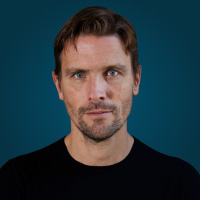
Eric Becker
I want to welcome James Ferragamo to the podcast. James is the Chief Product Officer and a third generation leader of one of the most iconic luxury brands in the world.
James Ferragamo
Attention to detail is everything. It’s really every day bringing that attention to the small details that go to the way you serve a customer, to the way you create a product and everything in between.
Eric Becker
Founded in 1927 by his grandfather, Salvatore Ferragamo, known as the shoemaker to the stars, the brand began as a small artisan workshop in Florence, Italy, and grew into an international fashion house defined by innovative design and expert craftsmanship.
James Ferragamo
And so he was very focused in making his customers as happy, as beautiful, as comfortable as possible by creating products that were really unique.
Eric Becker
Today, Ferragamo is a publicly traded company with a global reach that spans footwear, leather goods, accessories, and ready-to-wear. James has spent nearly three decades inside the family business, helping to navigate unprecedented change in retail strategy, brand development, and transformation.
James Ferragamo
The ideology of the brand remains true, but everything else has to change. It has to be relevant to the times.
SHOW OPEN
Eric Becker
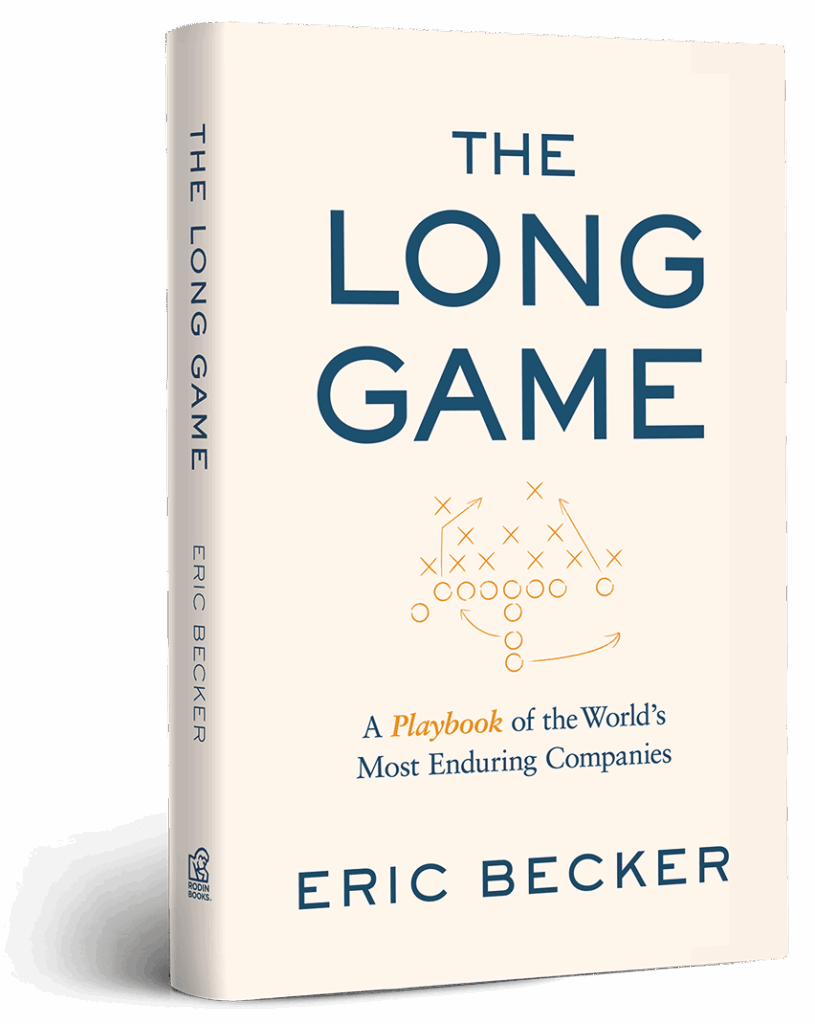
Welcome to “The Long Game Podcast.” I’m Eric Becker.
I’m an author, an entrepreneur, and I’m founder and chairman of Cresset, a family office that we built to serve founders, multi-gen business owners, and families. For all the entrepreneurs and aspiring entrepreneurs, for leaders and CEOs, “The Long Game” is for you. It’s the practices. It’s the leadership skills. It’s the culture that can stand the test of time.
I’m Eric Becker and this is “The Long Game.”
INTRO
Eric Becker
James is at the forefront of an evolving 100 year legacy for a new generation. Welcome, James Ferragamo.
James Ferragamo
Thank you, Eric. Thank you for that introduction, and lovely to be here on the podcast again.
Eric Becker
Absolutely. It’s amazing actually to think that it was probably two years ago that you and I met as we were working on writing the book and you so generously shared the family story and that we met because my wife, Jill and I stayed in a beautiful Ferragamo property. And when I expressed an interest in meeting the family, the ultimate concierge service to turn on and get an introduction to you, which is amazing.
James Ferragamo
Thank you for including us. And yes, we’re an amazing brand and we’re happy to have people that appreciate what we do.
Eric Becker
Absolutely. I’ve been a customer for many years. So I’d love to start at the beginning of the beginning, which is this legendary name, Salvatore Ferragamo. We’re passionate about entrepreneurship, and the whole idea of Salvatore having a passion for shoemaking from a very young age. If you would tell us the story of how Ferragamo came into being. It would be wonderful.
James Ferragamo
Well, there’s an amazing book actually written by my grandfather, it’s called “The Shoemaker of Dreams.” And it really talks about his belief actually that he probably was a shoemaker in a previous life because making shoes for him just was so natural. And in the preface of the book, it actually talks about the fact that he dedicated his life to feet and not really to shoes. You would have imagined shoes, but reality, he wanted to make the feet of his customers shot and feel like they were wearing something which was unique, only done for them. And so he was very focused in making his customers as happy, as beautiful, as comfortable as possible by creating products that were really unique. Shoes were not really made like that in those years. And so he started in a small town just outside Naples called Bonito. You know, would say he believed he was a shoemaker in the past life because his first pair of shoes actually made at the age of nine for his cousin’s first Holy Communion so that’s why he says he came to me so natural, which was quite incredible.
Eric Becker
That is incredible. And so, he made the first pair, and I think he presented it as a gift. And what was the reaction of the family? Was it that they recognized that he had a special talent, or did he have to continue to persevere to show even the family that this was going to be his destiny?
James Ferragamo
Well, the family was very happy. He was one of 14 kids and being a shoemaker was considered probably one of the lowest employment that you could have, a career that you could have. It was not a clean job. It was definitely considered as a dirty or working with shoes. And so he had a lot of resistance. But after that, he started making shoes with the local cobbler in the town of Bonito.
At the age of 11, he went to Naples to work in a store where he was selling shoes to clients. And at the age of 16, he then joined some of his brothers and sisters that had migrated to the United States as it was custom in those years to go and find, you know, in the land of opportunity, that opportunity for him to really make his dreams come true. And it was interesting because one of his brothers gave him the possibility to work in a factory in Boston to make shoes on the production line. And he didn’t want to. He said, you know, “This is not what I like to do. I don’t want to make shoes that are common. I want to do something which is really quite unique.” And so, he then decided to join another brother, which was a tailor in Santa Barbara, and began making shoes with his brother for some of the first movies that were coming out in 1920, 1921. And the products were really quite incredible. And the actors and actresses that were wearing the products appreciated so much what he was doing that then they asked him to actually make shoes for him for when they were off the set. That’s where it really began.
Eric Becker
Which is amazing and I read about the incredible names from that era in movies like Judy Garland and Greta Garbo. And I mean, really the biggest names in show business were wearing Ferragamo shoes, which is incredible. But then also I learned that he went and studied engineering and anatomy, I think at USC, the University of Southern California. And how did that come about? Because to have a passion for making shoes and the story that you were telling about the family’s view of all of that, to then I’m going to go to school and study engineering and anatomy. What do we know about how that happened?
James Ferragamo
He wanted to make a product that was unique. He wanted to make something that was really testing the boundaries between making a shoe that was comfortable and beautiful at the same time. And that’s probably the biggest challenge in shoe making because the foot has 26 bones inside. And so he wanted to understand how do you create a shoe that respects the anatomy of the foot? How do you respect the pump that the foot is? As you walk, it helps with the circulation. And so he wanted to really understand those so that he could make that as a variable that he could consider in his ways of actually making shoes. And so, as he began, he really wanted to understand how do you put a foot with five toes inside a shoe and still, you know, compress it or not and find the right way to make sure that the foot is respected and that that foot feels comfortable and beautiful at the same time. So not an easy task.
Eric Becker
Incredible. And if we think about the year, the year that he was operating in, in the early, this is, think the early part of the century, like the 1920s. So that idea of combining engineering and science with design and how to make things that are beautiful and exciting. That’s just amazing. Like that’s the kind of thing that we would read today that today somebody was maybe using AI and engineering and science and combining that with design.
So, here he was doing that back then. It’s just an extraordinary origin and what incredible DNA in the origin of the Ferragamo company to have that from the very beginning. It’s really extraordinary.
James Ferragamo
Right. And you know, we speak a lot about wellbeing today and I think it’s something which has always resonated with the company. You know, it’s something that our founder has always wanted to make sure that we’re made in a way that was always respecting the wellbeing of his customers. And so it was really something which is always in trend, which is really quite incredible. He was doing this in the 1920s.
Eric Becker
It’s incredible. Before visiting the Ferragamo property in Milan, where we connected, wife and I, Jill and I went to Castiglione del Bosco some years ago, five, six years or so. And back then, I think it was part of the Ferragamo group and Massimo was the person who was involved. And we went for a hike one day with the golf course superintendent. And when we were out hiking, I asked if family members were involved and he spoke about how passionate the family is and engaged and that there were family members involved weekly or daily with the business. And then at a certain point on our walk, he said, do you see that cottage in the distance and the terracotta roof? One of those tiles, if one of those tiles was out of place, Massimo would recognize that he has the long eye. And I had never heard anything described as the long eye before, maybe the ability to see details that others might miss. I’m curious if that resonates with you, that idea of the long eye, is that a family characteristic or maybe just one person, one member of the family’s characteristic?
James Ferragamo
You know, I think definitely the long eye is something which is all about the attention to details. And when you’re working with something as small as a shoe and it’s millimeters are already too much in terms of ensuring that a shoe can fit, it’s really that attention to detail. So I think that Massimo in that example definitely was used to or lived his life in really understanding, until that point that attention to detail is everything. And so I think that that upbringing and also brought forward also by Wanda, his wife of Salvatore, was somebody that also continued that concept of really understanding that it’s not about having that unique product, but it’s really every day bringing that attention to the small details that go to the way you serve a customer, to the way you create a product and everything in between.
Eric Becker
Love that philosophy. And so if we now move ahead in the story, here Salvatore is in Hollywood with celebrity clients, and he then took a big risk and left Hollywood to go back to Italy and to start the business in Florence. With all that momentum in the US, why was it important for him to return to Italy? And how did that that first risk perhaps set up Ferragamo’s future?
James Ferragamo
Well, he began making some shoes. He had a shop in Hollywood after Santa Barbara. The movie industry moved to Hollywood and so he moved with it. In Hollywood, he opened the Hollywood Boot Shop. So he was actually making shoes that he was selling on Hollywood Boulevard. And those shoes were actually his creations that were made locally. But he wasn’t able to actually have that artisanal collaboration. For Salvatore, it was very important to really be able to work with artisans. And he needed to have artisans that would partner with him in making his dreams into reality. And the artisans were making really some incredible shoes for him in Italy because he was able to find artisans that were working on upholstery that he would use them to make shoes. He was using artisans that were binding books for the Uffizi and he would use them to actually make some of his shoes. That’s why his archive, and we have an archive in Florence now that holds about 14,000 shoes of his during his lifetime, one shoe is as different as it can be from the other because of that collaboration with the artisans. And so he decided to return to Italy in 1927 to continue what he had started and really develop those products with that collaboration.
Eric Becker
Incredible and you know in the book we we talk about having studied now multiple companies that have thrived and endured for a hundred years or more and we identified that both in a lifetime in a human lifetime and in a company these moments of truth where you had to make a decision you had to go down one path or another so clearly going to Hollywood big moment of truth and then going back to Italy that would be another. Sadly, Salvatore died at 62 and leaves this incredible creative legacy, as well as this body of work with hundreds of patents that he was able to get on his many innovations. But now suddenly at 62 for the entrepreneur, the founder to be gone and your grandmother, Wanda, who had not been in the business had been my understanding is more of a traditional mother and spouse in a traditional sense, now had this moment of truth. What direction was she going to go in? And so what do you know, what is in the family story as to what she did in that moment and what kind of decision she had to make?
James Ferragamo
Well, she was really quite unique. She passed away quite recently in 2018 and she had lived with Salvatore for 18 years before he had passed away. Together they had six amazing children, of which one my father Ferruccio, and they were able to really work together as a team. She was really quite unique. mean, when he had passed away, this courageous woman that in 1960 decided to sit in his office and said, you know, we have so many people that work in Ferragamo that believe in what he had done. I will help. I will support. I will ask for your help in the people that were working in Ferragamo to bring Ferragamo to where it was.
And his brothers and sisters of my father, so their kids, joined the business, each with their own areas of responsibility, be it a market or be it a product category, so that they could also support their mother in bringing Ferragemo forward. And some were very young, know, unfortunately when he passed away, the youngest Massimo was only two years old and the eldest Fiamma was 17 and she had already worked with her father for a couple of years before he had passed away. And so, she was not only working in a business, she was also growing her kids at the same time. And all of them joined the business because they wanted to support and make Ferragamo from what their father had created into something much bigger after that.
Eric Becker
Really incredible. And I read, there was an article I think in the New York Times when she passed away that had this incredible story about her and what an amazing woman and leader that she was. And that idea of raising a family after that and being the leader of a business, the CEO of a business, and then transforming that business and putting in place the foundation for this global brand really is really incredible. So, she took each of the six children and they each had an opportunity in the business. And so that was either a geography like you have Europe or I’m sending you to open up Asia or was it more around you have shoes and another child had, you know, clothing or something like that.
James Ferragamo
Well, actually the three daughters, Fiamma, the eldest, was responsible for leather, so shoes and handbags. The second, Giovanna, ready to wear, and she was doing all the first shows that were actually held in Florence before they actually moved to Milan. And Fulvia started a business of silk and silk accessories. And the three daughters were also matched by the three sons that Each had an area. My father, Ferruccio was responsible for Europe and then also became the chairman. Leonardo was responsible for developing all of Asia and Massimo in the United States and so in the Americas, really. And they worked as a matrix. So who was in the U.S. wanted to sell shoes ready to wear and silk. And who was doing silk wanted to sell it in the U.S., in Europe, and in Asia. And so they were all business owners within the brand in driving Ferragamo forward. you know, often you have families that unfortunately are not able to have that segmentation and you might have, you know, people stepping on each other’s toes. In this case, actually we’re all working together under Vanda, my grandmother, under their mother, in really pursuing the growth of a business that was very much when the Savattoria had passed away, only U.S. present and after in 60 plus countries and with 18 product categories that they all focused on and developed. And so this is really how a family business was able to really leverage on one concept, which was the creativity, the spontaneity of making products that were really unique and always focused on quality and craftsmanship and innovation, but creating that from a designer that Salvatore was into a brand famous for its name worldwide.
Eric Becker
Incredible. And so when we, when we look at, at the structure, this matrix and everyone had their own area and it obviously was successful, but did it also create maybe a spirit of competitiveness in that we each have an area and we want to demonstrate success? Was there almost, you know, friendly competition between siblings?
James Ferragamo
I’m sure there always is. I think it comes with the DNA of every sibling. But it was all for the better cause. Italian families are quite active and very entrepreneur and able to think quickly and outside the box. And the challenge that you can put between family members is real. It’s spontaneous, it’s without filters. And so they were able to work together in really pursuing those goals. This was actually done together also with management that joined them in supporting all the different activities and really bringing this growth quickly to fruition and in a more organized way for what were the needs of the business, be it product, be it region and stores.
Eric Becker
And so when we look at lessons learned for future generations, for your children, or for others that are watching this podcast, what would be a lesson from the way that Wanda set up this second generation? It worked really well. Is there any lesson from that that someone might want to do the same thing in their family or something that we need to be careful about?
James Ferragamo
Well, I said I would say that you need to have somebody that can guide and facilitate as Vanda was. She was definitely very present and enormous attention to details and everything that was being done. She had really had a cunning eye to really seeing everything in product, in stores, in service and dedicated her life in catering to the business and the family. in pursuing the growth that we were able to achieve. So having somebody that can help in facilitating this is definitely paramount. I don’t think that without it would have been the same. Absolutely not.
Eric Becker
You’re a third generation leader in the family and the statistics are that only 12% of family businesses make it to the third generation. So that’s a small percentage. Do you feel a weight of responsibility and what have we learned as a family? about the third generation and how they can be successful and have both satisfaction and happiness, but also accomplish their dreams as well.
James Ferragamo
Well, you know, Eric, think that generational shifts is a completely different scenario. We speak about first to second, but it has no comparison in going from second to third or probably third to fourth it might also be complex, but the complexity really into the third generation is driven by many factors. It’s driven by possible interests that are varied. know, in our case, we have 23 cousins. And so how can you keep everybody tied in and not being able to divest or not have the possibility of divesting in something that they believe that might be completely different and not related to the business that we’re in. And so, I think you need to be able to facilitate that. You need to also facilitate a decision process that is not the same when you’re 23 versus six. And it’s not the same meaning six with one person that is still there leading, which unfortunately then that because of time is not no longer with us.
Then you need to have a different governance and the complexity also of the business and and the of a company like ours, which is floated on the Milan Stock Exchange needs to be able to really adhere to many different elements. And so how do you ensure that the controlling shareholder, which probably holds many different family branches, can be involved, can ensure and provide guidance to its biggest asset and ensure that that asset is being managed correctly? And so how do you ensure that from a family standpoint, engagement in the business or non-engagement because it’s outside but it’s part of the governance of a controlling shareholder is governed correctly. Those are some of the key issues in family businesses. And I think that those are the issues that I think every business that is able to arrive to a third generation has to face.
There are many hurdles. So unfortunately, I think that those hurdles are the ones that actually create that complexity in really going further in generation and so that 12 % that you are mentioning, I think it’s really trying to understand how do you find the right way in moving forward with a situation which is not business as usual and is not government as usual. It has to take a point of view, which is completely different from the way that was actually managed in the past.
Eric Becker
And what is the role of professional management or professional leadership? At what point in the story does the company or the family bring in outside people and change the way that it worked? When did that happen?
James Ferragamo
So, we started actually, we were always very ahead in terms of trying to find the right solution. One of the elements that is always very important in family businesses is to be able to have this kind of discussions about succession and family involvement when the business is actually performing well. It’s a completely different discussion and it’s much easier discussion when it’s performing well versus a situation of complexity. So, we were able to have a family agreement on the 23 cousins that could join the business early at the end of the 90s in 1998 and limit the number of family members that could actually have an active role in Ferragamo. I think it was three at the time. And we also had other roles in the diversified businesses such as the hotel or in the regions that could also be considered.
And then from there also understanding how we would be able to create that diversification. So we then hired our first CEO, was Michele Norsa. He joined the company in 2006 with the objective of actually going public and giving the family that possibility of really diversifying in different areas and also having that guidance from the Milan Stock Exchange that could ensure that professional aspects of governance in a publicly held company. And so that was the initial part in really creating a governance and trying to bring the family to have the right balance between management and family. And we then went public in 2011. And so from there, then managed to bring forward this evolution.
Eric Becker
And then even in 2022, Ferragamo announced it was bringing in a young creative director, Maximilian Davis. so that was that. So first we see an outside CEO come into the business to prepare for the public offering. This idea of a young creative director coming in with this also that same kind of, we recognize talent where we find it and we bring it into the business. Is that what that decision was about?
James Ferragamo
Yes, absolutely. Maximilian Davis was really trying to find a company which was in need to be relevant and to find ways to be more relevant to a younger generation. So Maximilian joined Ferragamo at the age of 26 as a creative director. So extremely young. And that was really our juxtaposition in having a brand which was founded on a lot of tradition and needed to have a point of view which was different.
And so this contrast brought Ferragamo to really try and find a way to re-modernize and find a way to really become relevant to a younger audience, to a wider audience, without negating the existing customer, which was already appreciating and because of what I was mentioning before about the customer centricity and really being able to serve the customer, finding ways to really serve both younger and existing customers.
Eric Becker
Which is incredible. And I think it’s one of the lessons that I learned in studying these long game companies is that many people think that a company that’s lasted for a hundred years or more would be slow to move, would not take risks. You know, all the things we think about in either a very large organization or some people might think in an older organization, but to bring a 26 year old designer in, you know, that just shows incredible vision, risk taking. the ability to pivot and change that must be in the DNA of Ferragamo.
James Ferragamo
Absolutely. Absolutely. It’s something that has always been in the DNA. I, you know, speaking with my father or my uncles, complexity is a constant. There is always something new happening. And, you know, even in my lifetime, I’ve seen many different situations of complexity that we had to manage. So this is something which definitely is part of every business. And it’s also managed and created by competitors, which of course are not just remaining true to what they’ve done in the past. Probably the ideology of the brand remains true, but everything else has to change. It has to be relevant to the times. know, a brand that doesn’t move to the time, it might not have that customer is going to keep on following them.
Eric Becker
Absolutely. In fact, my family’s business, my father was in the Christmas business, and he decorated malls, shopping malls in the US 400 malls for Christmas. And by the time my father retired, there was this incredible change in retail that was going on where e commerce and online shopping was coming into vogue. And so I saw after my dad retired, his business changed so dramatically.
And I’m sure that that was the same for, for Ferragamo. I have shopped online and in Ferragamo retail stores. So, the brand and the company had to evolve through the evolution of e-commerce. And then now with technology and AI and generational change, we have new customers that are, that are growing up with the brand. What, what, what have you learned around these changes? How does Ferragamo continue to evolve now?
James Ferragamo
So in the past, when it really started, it was very much driven by the department stores. The department stores owned the customer. recent changes that’s begun with my, really my grandfather was just so such a visionary. He actually opened the first store in Florence to be able to talk directly to the customer. opened a store in London. So, he was able to open stores himself to be able to have that customer centricity and ability to talk directly to consumers. Most of it instead was actually done through department stores. it was actually managed, the retail was managed through department stores. Subsequently, then it became a need to be able to have that relationship directly with customers.
And so we went from a wholesale business to a retail business, really to a franchise as we started to develop the business also in Asia and in other countries to then a directly operated business that today is close to 85% of what we sell is done directly to customer. so the dot-com has always been an important component because it’s the way people shop. They walk into your store because they’re holding a phone and they actually see that experience online. And the recent 10 years has really been about trying to create that seamless journey between what is online and what is in store. And creating, of course, the omni-channel ability to be able to service in both channels in a way that to the customer becomes transparent. AI has actually been an enormous support because we’ve been able to actually use this in being able to clientele and be more focused in the way that we actually target customers and understand what are their needs or what are their desires and really be able to provide a better service.
Because we do target customers in a way that we can really talk to them in a way that it’s much more geared to what are their needs versus probably in the past, it was more about just sending a generic mailing letter, which unfortunately was not the point. And it was not really linked to what that customer had done with the brand the previous week or the previous month. And so, it really was not consistent with what was that customer’s experience. So, that has definitely been a big support. And we see also different opportunities also on the supply chain in trying to bring and optimize our ability to have the right product in the right place, in the right quantity, in the right time. And many more different things that we’re actually reviewing also in experiences and opportunities in different fields.
Eric Becker
So James, we talked about 23 cousins in your generation, and that there are 40, I believe 40 young people in the fourth generation, how has family governance evolved? And if a G4 family member wants to come into the business, what are the rules? How do you get involved?
James Ferragamo
Okay, great, thank you. So now, since the last CEO, we’ve actually limit the number of family members further. So, we’re trying to find ways to have less families that are in the management, but more into the controlling group. The objective is actually to really understand how do you bring in some of the younger generation by probably now, in my case, was having at least a couple of years of work experience. What we’re suggesting is that they have at least 10 years of work experience. I call it becoming a commodity, meaning that you have a value on the market recognized for a specific CV that has been built over time. So, if you are joining the family business, you’re coming in with certain credentials. Then as things might happen, you might not be interested in continuing and you can still pursue a career outside because you have that work experience that is also being created outside of Ferragamo. So, I think that this is where we’re focusing also on the younger generation.
We also have Massimo, which is actually supporting this as a second generation in really supporting the fourth generation in interviewing them and understanding what is their interest. We hold meetings also with all the generations, at least twice a year, to really review their interests, talk about the different businesses, and also hearing them and having them tell us some stories of the different activities that they’ve done, whether it have been the recent projects that they were able to develop. And it’s fascinating, you know, some of them really have some incredible new initiatives and ideas that we’re able to develop. So definitely it’s an interesting way of actually being able to share and understand how they’re all shaping up and growing up in different ways.
Eric Becker
And so there’s still a thread or a spirit of entrepreneurship in the family and appreciation for entrepreneurship.
James Ferragamo
Absolutely. Definitely. There’s a lot of appreciation for that. Even beside entrepreneurship is also career, you know, understanding where are they developing their career? What is their area of interest? And is there any way that the family can in any way support them or facilitate any interest that they might have in going forward? which doesn’t necessarily mean having to work in Ferragamo. It can actually be exactly the opposite, working actually outside of the brand. And maybe also training them in understanding what is the governance of the future and ensuring that there is the right ability to steer the direction in the way that we want to go and where management is focused on.
Eric Becker
So, this is such an incredible story, the story of Ferragamo. And it does have these moments of truth where if someone hadn’t made the right decision, we wouldn’t have the company that we have today. We wouldn’t have the family you have today. If Salvatore and Vanda were able to see, and maybe they are up above, what is there today, what do you think they would say? They would have to be incredibly proud of what they would see with the company today, but what would they say about Ferragamo?
James Ferragamo
Well, I would say that they will be very proud of what has been done, but they would also probably say that it’s a company that has so much more opportunities and it can do more. I think that that desire to do more has always been at the center of everything that we’ve done. And I believe the company can do more. And so, I believe that that’s what they’re thinking. Yes.
Eric Becker
Yeah, which is an amazing, that’s such a great way of focusing our energy on the future. And that is such an amazing part of the DNA of the company. So, I have a last question for you. Many years ago, I ran a contest and I had 80 board members and 20 CEOs. And I asked them, what’s the best question that you’ve ever asked or been asked, or do you have a favorite question? And the winner of the contest, his favorite question was, what are you tolerating but shouldn’t be? And I actually ask myself that question now every day. It’s been very powerful. Is there a question that’s a favorite of yours, either something you’ve asked or been asked that maybe has changed the way that you think?
James Ferragamo
I would say probably would be that responding to the daily remembrance of the why. Why do you do this? What is the objective? And I think that that’s a very powerful question that sometimes that modus operandi day in and day out makes you forget. understanding the why is something which is always very useful. And in my case, it’s definitely a why of amazing legacy, amazing responsibility, and, you know, that possibility of having something that tomorrow can keep on growing and can be passed to another generation that can take it and do even better. So, I think that that’s the why of why we do it. And it helps because I think sometimes you go through difficult moments, but if you will focus on that and you don’t understand that there is a longer game here, it’s a different approach. So absolutely, it’s helpful.
Eric Becker
Well, what a wonderful way to end this interview. Thank you for your generosity, meeting with me twice at the beginning of putting the book together and now. And then the lessons that we talked about today of history and family and legacy and the incredible brand, really what a gift for our listeners, for our viewers. So, thank you so much for being here with us today.
James Ferragamo
Thank you, Eric. Thank you for including me. Thank you, Eric. Thank you very much. Really appreciate having this opportunity. Thank you again.
CLOSE
Eric Becker
Before I let you go, if this episode resonated with you, please share it generously and please click the subscribe button below. Send this to someone in your world who is navigating a pivotal moment right now, someone who is staring down a decision and might need the reminder that recognizing the moment is half the battle. See you next time on “The Long Game.”
Voiceover
“The Long Game,” a podcast by Cresset, is intended for information only and is not investment advice. Any company discussed is not a recommendation to buy, sell or hold any security. Investment involves risk, including loss of principal. Please consult your advisors before making investment decisions.