COLD PROMO OPEN
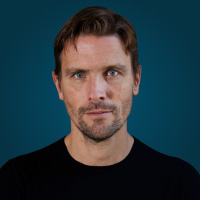
Eric Becker
Today’s guest is one of the most influential decision makers in finance today.
Rick Rieder
I think you gotta do the work.
Rick Rieder
Markets are vicious. When they know you are in a bad spot they tend to find you.
Eric Becker
He helps oversee a $2.4 trillion portfolio for the world’s largest asset manager, BlackRock.
Rick Rieder
My team knows, I say this all the time, “What am I missing?”
Eric Becker
I’m really thrilled to have Rick Rieder with me for the long game.
Rick Rieder
You’ve got to be in the mess. That to me is somebody who’s a builder.
Eric Becker
How do you do it? How do you manage your day?
Rick Rieder
I think sleep’s a waste of time.
SHOW OPEN
Eric Becker
Welcome to “The Long Game Podcast.” I’m Eric Becker. I’m an author, an entrepreneur, And I’m founder and chairman of Cresset, a family office that we built to serve founders, multi-gen business owners and families who want to optimize wealth and elevate their lives. For all the entrepreneurs and all the aspiring entrepreneurs, for leaders, and CEOs, “The Long Game” is for you.
It’s the practices, it’s the leadership skills, it’s the culture that can stand the test of time.
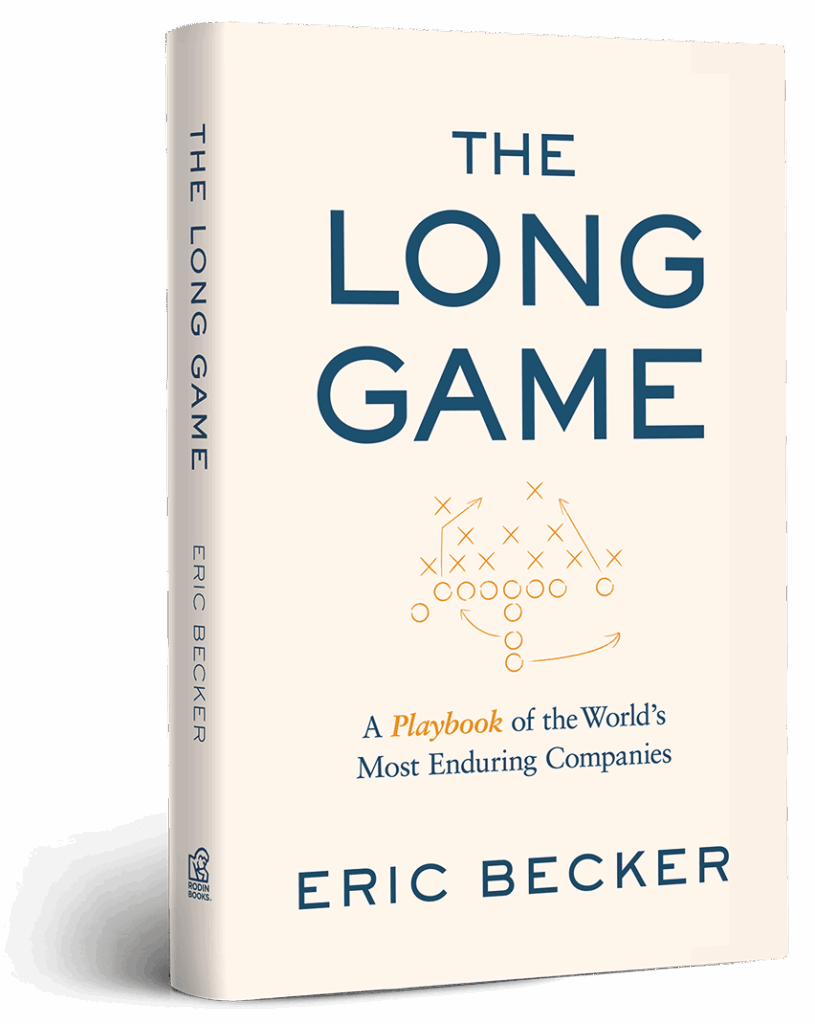
I’m Eric Becker and this is “The Long Game.”
INTRO
Eric Becker
BlackRock is one of the most talked about and studied businesses today. And I’m really thrilled to have Rick Rieder with me for the long game.
With a career that has seen boom, bust, downturns, recovery, and a lot of excitement, Rick has built a reputation for disciplined long game investing. So welcome, Rick. Thanks for being here.
Rick Rieder
Thanks for having me on, I appreciate it.
Eric Becker
Absolutely. So, for our audience, which are CEO founders, Cresset community, you know, we love understanding the origins of where of the beginning. And so let’s talk about your background. I heard that as a kid, you were obsessed with sports stats and even bet your lunch money on games. Do you think that that pulled you into this amazing career?
Rick Rieder
Yeah, I’ve always I have loved sports and then I love, I guess since I was a little kid, I remember I used to study all the statistics, and I used to study how football teams played on turf or indoors or how the Bengals played against the Browns. And anyway, I thought I had an edge. I didn’t. But maybe I did against my friends that I was betting on, but I really didn’t. anyway, but I think, you know, early on, I knew that I love the excitement, I love the chance to actually make what I would call, take risk, but make me do it hopefully in a more educated way. then, and by the way, wasn’t, and then I became a financial analyst, and I wasn’t gonna become a trader.
And literally I got crazy lucky because the moment I was running the interview and a training program at EF Hutton, which I don’t know if anybody ever still remembers. It was their first training, first and last training program. Anyway, the woman said, you know, I was going to be a financial analyst again, and I love doing analysis. And, you know, and I don’t know how she knew my background. And then, and then she said, “why don’t you give trading a shot?” And I remember my dad said, trading is not, it’s a hobby. It’s not a career. And anyway, I’m almost four decades into my hobby now.
But anyway, I still love it, I still love it. And by the way, you know, you go through like periods, like it’s a hard business and it’s frustrating at times. And think of all the analysis you want. And then like stuff happens. So anyway, hopefully getting more right than wrong. So yeah, that was about, that was the origin.
Eric Becker
That’s awesome. And you went to Wharton for business school and at some point, were at Lehman Brothers, including during the great financial crisis of 2008. What did you learn from the great financial crisis, and the end of Lehman, that as time goes by, it guides how you’re thinking about and how you invest today?
Rick Rieder
Well, I left five, six months before the financial crisis. I started a hedge fund.
And I didn’t think you’d have the duress that you had during that period. I thought it was one of the most interesting periods. Some of it today, where you have some volatility in credit. Anyway, I certainly wouldn’t have started my fund back then. Listen, I was on the sale side for 20 years.
I learned a ton being on the sell side about, one thing you do when you’re on the sell side, get to know your clients and you know, why do some people invest this way? And you know, my clients are now my clients and we’re not competitors.
Like, why do they do this? Why, you know, why not? They were, you know, I tried to pick up some really good traits from how they did things. And that really helped me to see, to get a real visual on what they were doing, how they were doing it, etc. And like, what was some of the, some of the positive aspects that I, and, or the negative ones I didn’t want to do. And then I have to say, I mean, being a trader, you know, learning hedging, learning technicals, like the technicals are, I mean, in some markets, like recently, technicals oftentimes overpower the fundamentals. So how do you think about technicals? How do you manage risk? How do you hedge? How do different people across the universe do it? That was a pretty good training ground for me. And I will say one thing, when I started investing, it took me two years to realize that trading and investing are really different.
With trading, the cool thing about trading is every day you get a scorecard. And then you’re like, okay, I gotta get a, you know, in trading, you wanna try and make money every day. Well, investing, oftentimes you wanna put money to work when you’re not making money.
Eric Becker
As Avy and I were putting together Cresset, we had a vision that Cresset would be a 100-year business. So we studied organizations, families, and companies that lasted a hundred years. And we saw that over a lifetime, either a human lifetime or a company lifetime, there were these moments of truth. And one of the things that I read about with you is that, at one time early in your career, a loss led to the realization that you’re not in the business of being right, you’re in the business of generating returns, which makes me think results. Can you explain the difference between those and how that changed the way you invest?
Rick Rieder
Eric, you know, it’s really bad, so I lost a lot of money on one position. It was like the first or second year I was in the business. You know, I remember, you know, we went to school and you studied really hard and, if you did, if you studied really hard, you know, try to get a 95. And if you prepared, you probably were right.
Markets can be wrong for a really long time, even if you are right, which is not definitional by any stretch. But even if you’re right, the markets can be really wrong. Like I think the efficient markets hypothesis I learned in business school is garbage. Like it’s not efficient and the markets can be really wrong. And, you know, I learned, I mean, that one trade like taught me a ton about, you know, what I call you’re right, you’re right, you’re wrong, because it doesn’t matter whether you’re right. If the markets think you’re wrong.
You have a problem, and particularly if the markets know you are in a bad position, markets are vicious when they know you’re in a bad spot, they tend to find you and so I know it really helped me, thankfully earlier in my career when my boss didn’t let me take a lot of risk, thankfully it taught me a lot about how do you manage risk, how do you think about, and you know today, and including when I say today, literally today, you realize how sentiment and psychology, and we’re not like, if we’re right on a theory or we’re right on a proposition around markets or economy or credit, and we’re right, but you don’t get the realization of that for two years.
Markets can really think you’re wrong. And so, we’re in the business of anticipating where are the markets gonna allow us to exit or enter if we’re setting up a short. And what will be, and it’s a little bit of psychology and a little bit of trying to predict the future of what sentiment will look like as opposed to, it doesn’t really matter if we were, you know, if we’re ultimately right, like we don’t get any gold stars.
Eric Becker
Right. And are you still in the seat two years from now when you’re finally proved right? You might not be in the seat. I think of yesterday as the most recent example, woke up in the morning, sort of thinking the sentiment was risk off, open up CNBC, see Warren Buffett making some comments that he’s kind of on the sidelines. And then by the end of the day, the markets pop. And that’s just one day. That’s yesterday. I mean, it really is incredible how things change.
Rick Rieder
Hey Eric, can I throw in one point about that, which is such a big deal. I learned from Paul Tudor Jones about the technicals and about how the technicals matter. Your point about what happened.
I mean, everybody lined up on one side of the boat. And more than I’ve ever seen in my career, there is this momentum around markets. I know that’s social media promulgated or what have you, but like everybody’s got the same view altogether. And then everybody gets in one position altogether. But one of the keys is like when the technicals become so profound.
Like that’s going to drive and if you get some catalyzing event that changes the paradigm, you can get explosive movements. So price matters, technicals matter. And then obviously fundamentals matter.
But maybe I grew up and maybe earlier in my career, it’s like I was always about fundamentals, cash flow and like, you know, all the, you got to marry it all together.
Eric Becker
You do. And it’s interesting because while with what’s going on today, I know that the consumer looking at say the price of gasoline at the pump, there’s a lot of pressure on the consumer. But when I look at companies, clients of ours that are running businesses and own businesses, business is pretty good. And then when you look across the board, it seems like we have a good economy.
So, at some point, when this war that’s going on comes to an end, you just have to believe that there’s going to be a different view of the market when that’s taken away that friction.
Rick Rieder
I totally agree. You know, people like to look at, I was listening to somebody on TV today talking about the analog of today versus 40 years ago. I think you have to respect history and then you have to ignore things that are environmentally quite different. And they were talking, I don’t know, it long discussion about growth at the end of the day today, have something that is very, very different. The U.S. economy is unbelievably flexible, resilient. And you’ve got to put a little bit of perspective to, we don’t have a goods-oriented economy in nearly as acute a way as we do services today. So the oil shock is a big deal. Similar to tariffs. You know, I remember everybody moved to the side of the boat. Oh my God, recession, deep recession. I don’t know, I’ve got to get out of everything. And then when you actually break it down, see tariffs. The U.S. is the largest importer in the world. It’s also the least reliant on trade for GDP in the world of all the countries, developed countries I should say.
Same thing with, I mean, not oil shocks a big deal. I don’t know. So do you haircut growth? 100%. But do you haircut at 30, 40, 50 basis points, maybe 60, 70 base points? And again, what is more, there’s so much, what drives the economy today in services, et cetera, healthcare, technology, et cetera. So anyway, I just think you put a little bit of perspective on it and, you know, we’re operating from a place of the economy, you know, going into this, we were running at five and a half nominal GDP. So maybe.
Eric Becker
Yeah, things are looking good.
Rick Rieder
All of a sudden, every time I turn on the TV, it’s stagflation. Like, yes, you have to respect that something’s different. And by the way, I don’t mean to dismiss this as a big deal. But I think there’s a little, like you say, you know, you still like when, you know, you run your daily life and you’re like, wow, people are doing their thing. Like the economy is still doing its thing. So anyway, I think you got to really be respectful of change, but maybe a little bit of data.
Eric Becker
It is across the board.
So, listening to you, I hear the voice of experience, which, you know, we are in the decisioning business, the good judgment business, and good judgment comes from, many times bad experiences, things that we learn from. In the role that you have now, how do you think about that sort of decisioning engine? Like, is there an investment committee structure? Do you have a team that you talk to about it? The day that the Iran war breaks out, you know, are you gathering a group and starting to talk about how you’re going to make decisions with that new event? How does that work at BlackRock and with you?
Rick Rieder
It’s a great question. It’s all it’s very dependent on types of investments. So we have an investment committee. If we’re putting out an investment that’s going to be with us for longer than six months, or we anticipate there’s a longer exit strategy for my funds, we have a full investment committee. We’ve had it with people in regulation, legal, tax.
And then we go through a full, obviously research analysis, and then we go through a full vetting process. You know, when it comes to like investing in the markets, you know, I got a team and I work around that is, you know, we built it. I’m unbelievably blessed that a bunch of us have worked together for over 20 years. So we got a good group of people that I trust. I talk a lot to clients, like I talk a ton to our clients. And obviously everybody internally in different disciplines, different run different funds, but I learned more from clients and CEOs.
And, you know, like I say, usually, a lot has to do with I have a job that allows me to interface with people that run big businesses or what have you, or big clients. anyway, by the way, I still think when I’m on the phone with them, you know, like it’s a huge honor that I get to talk with these people.
Eric Becker
Right. And are there any with all the experience you have, are there any characteristics of a great investment committee? I think about, you know, one end of the spectrum, it’s everybody’s combative and you don’t get anywhere. The other end of the spectrum is everybody’s overly supportive. You’re not, you’re not challenged. There’s this sort of constructive tension. Is that the sweet spot where it’s like you said, you want to be challenged to make better decisions?
Rick Rieder
I mean, you know, complimentary skill sets is usually important, like crazy important. Like if we, you know, if we set up an investing committee that people that are like, look like me and agree with me, like I have no chance. And we’re just going to make bad risk decisions. But complimentary skill sets, people are willing to challenge everybody else. And people who have courage that are willing to stand up an investing committee and maybe have a different, perspective.
You know, I was literally, it’s funny you said, I had one today, the investment that we out on the size and so like on everything, don’t know how you all do it, like you go through the autopsy of, I did it today, what happened that we could have been bigger and what have you, and so I constantly try and review and evaluate what was. I’ll say one last thing about this, it’s not always group think, like at the end of the day, you have to be willing to make a decision.
And I found that oftentimes you need to know, you need to have a committee, make good decisions, complimentary skill sets, thoughtful people willing to disagree. And then at the end of the day, you got to make the call. oftentimes groups tend to not want to take risk. Like groups, like you always err on the side of the person who tells you the why not. And the person who has that, you got to take risk in the how-to business because otherwise you’re not going to do anything. And I think discouraging the why, like evaluate the why not and then say, okay, I get it. I should assess that.
Eric Becker
To me, it’s more no regrets, like you want to hear the other perspectives, and you want to know that it was fully discussed and then you make your call and then and then you go back later and you can analyze how good of a call it was or what we learned from it. But it’s no regrets, we want to hear those things. But you’re right, if we made group decisions with group think we would never take any risk.
Rick Rieder
Totally. I find that, and I’ve got to go back and see if this is empirically correct, but I think intuitively it’s correct. I think more the committee meetings that are voted 5-4 and 6-3 in favor are better investments than the ones that are 9-0. I’ve got to go back and look.
Eric Becker
Yeah, I think you’re right. I think you’re right. Do you guys use AI at all in that where like sort of like the something’s listening in and then giving an AI point of view?
Rick Rieder
Increasingly, we’ve built these agents. So, we’re big believers in regime identification, look at all the idiosyncratic risk, and then have these agents that can actually evaluate, think, and I would say yesterday I was trying to understand some things around turbo quant and a bunch of other things.
I mean, the information we get is just extraordinary. And so, we’ve built these agents to help us do a whole series of things, data assimilation, evaluation of conditions, predictive analytics, stress testing. So yeah, we, and I would say we’re at the nascent stages of, of really utilizing them. And so we built an entire team that’s dedicated to taking us to the next level on that. But it is, I have to say, I mean, I think people underestimate it.
Eric Becker
I think so too. The productivity enhancement or improvement we’re going to get, I just see it in our own business. It’s unbelievable already how people are leveraging the technology to free up more of their time. They’re more productive. It’s incredible.
Rick Rieder
It’s crazy. I think people underestimate it. I have a real view on what it means for labor and why I think inflation is coming down. I drive in and I usually listen to CNBC or Bloomberg. And yesterday, I just talked to Gemini. And I said, teach me about this. And they’re like, I don’t know. By the way, people probably do that when I’m on CNBC. I learned a ton, a lot more listening about some nuanced garbage.
Eric Becker
It’s incredible. It’s incredible. When Chat GPT first came out as an experiment, I built a virtual advisory board and I put, you know, like Buffett on it and other people that I’ve always respected and read about. it’s simulated an advisory type relationship. And I thought to myself, everybody has a mentor now. Everybody can have a cool advisory board with this technology. It’s pretty cool.
Rick Rieder
So, by the way, I found out that they’re coming out with these glasses that are coming out. So now, you know, I’ve gotten the honor of talking to Elon Musk at Fairmount and I think the guy’s crazy genius. Anyway, you think about where he’s thinking about where things are going and he said to me, and he said in other forums, that you won’t be able to, at some point in near future, you won’t be able to separate the real world from the virtual world. Meaning you go back to these glasses, like somebody, not him, somebody told me, like with the glasses, you’ll sit at dinner and you could have three people at dinner that are not there. And like how freaky, how freaky, it’d be probably cheaper when you think about paying if you have to pick up the bill. But that’s kind of freaky.
Eric Becker
Right. Yeah. Well, imagine Thanksgiving dinner with like a really wild family. Just turn the volume down on the family members that caused all the trouble. But following up on that, following up on that, you do talk to some really, really cool people. And when you think about these leaders in technology that you’ve come to develop relationships with over the years, what are some things that you’re hearing from them that are coming down the road? You know, like what you just described, are there other examples of things that are kind of blowing your mind or that you’re super excited about?
Rick Rieder
Space. I think space is unbelievably cool. In fact, I was trying to figure out today, which I can’t go, there’s a rocket launch in Florida that I was trying to go to, but unfortunately it’s too early. Anyway, I think space, I think the way data delivery is going to work, the way we actually, I mean, you think about, you know, for how we get data, in particularly like internet delivery, data center in the sky. Like you can take clearer, more visual pictures from space than you can on earth. Oftentimes I think space is going to be the most extraordinary set of technologies that that that is one thing that I think is going to be pretty spectacular.
I think, I mean, obviously, AI, driving is pretty incredible. But I’d say the one that I don’t think people talk about that is going to be a bigger evolution than I think people give credit to is space and the things we could do, including healthcare, things you wouldn’t think that are pretty amazing about how that will allow us to do things, you know, obviously because of energy costs, et cetera, but that one blows me away.
Eric Becker
I agree with you. It is amazing. You know, one example, I love to hike and to go to like Pisgah National Forest outside of Asheville. And I had these satellite transponders that I’d give to my kids and whatnot. So if you were really away from the cell towers, now, not only does the iPhone have the ability to talk to a satellite, but T-Mobile has these low orbit star link cell towers now that can talk directly to your phone. And so you can be in the wilderness, and you can actually have cell coverage in the middle of nowhere. And it’s just amazing to think that that comes from space.
Rick Rieder
What do you think about, like every RV, every plane, every train, every developing country, like the ability to provide data is pretty incredible. so, no, think that the sheer size, available size of the market and other, and I don’t think we’ve thought through all the other things that we accomplished in orbit, but I think that is one. Obviously, it goes without saying, everything around AI, but I think that is turf that’s well covered.
Eric Becker
I agree, but let’s talk about something. I’m curious, your view about AI in terms of its impact on society. So I think we’re both super bullish on the impact on productivity, how that could have an impact on inflation. So that’s all exciting, but we do hear a lot of angst and worry when you think about it as a leader of a company, as a dad and family person, and you think of kids and nieces and nephews and whatnot. How do you think about how AI is going to impact daily life and jobs and things that people worry about?
Rick Rieder
You know, I’m an extreme on this because I mean, I use it like you do and I find it extraordinary. I think about like our software, the way we use software and different applications, like we could do it through LLMs now.
Listen, I think we have, I think the speed of adoption is going to be faster than the ability to transition employment. And I am respectful of people who say, whenever you have new technology, you grow, and growth provides for more jobs, and you just switch. You transition people into that. I am respectful of that. I also think there’s a transition period. This application is designed specifically to replace human thinking and cognitive behavior. And I just don’t think you could retrain the six, and I use the analysis of vehicles, of driving. There’s six and a half million people in driving in this country. And the average age of a truck driver, think, is 55. It’s pretty hard. We need more people in health care because of the aging demographic. Pretty hard to retrain somebody to go into health care that’s been driving for 20 years. I just think that speed is part of why I got involved in this Fed thing. And I have real aspiration towards how do you help a bunch of people?
I think this transmission is going to be really hard. I chair the board of 14 charter schools in Newark, and I do a lot of work in Atlanta on the school system. Eric, I don’t know the answer. I, you know, I say, and I may have this totally wrong and I don’t have any wisdom here, but you know, we go through and think about our curriculums and what are we teaching kids? And you know, and I get all the time, like what do we tell kids to go to school? The only thing I will say, I am a believer in thinking at a higher level allows you, whatever happens, so when people say, you know, you don’t need to go to college, there’s some smart people who say that, I don’t know. I think thinking at a higher level, but what the industry, what the world looks like, anybody knows what the world looks like two to three years hence, two to three years hence I think is not sincere.
Eric Becker
I read something this morning actually that I wanted to ask you about that I hadn’t thought about. And that is that as AI does impact, say entry level positions in companies, that that over time could affect the development of good judgment because like, you and I both started kind of at the bottom and then we worked our way up and through all of our lessons learned. That’s how you get to where you are today.
Well, if a young person doesn’t have that opportunity, how do they develop good judgment? And so the argument that I read this morning in this article was, we need to make sure that we actually preserve entry level positions so that we can provide future leaders with experience. It was an interesting perspective. What do you think?
Rick Rieder
I hadn’t heard that, I think it sounds intuitively correct to me. You know, I can I say I’m a believer in capitalism as obviously an appropriate ethos. However, I also have some respect for the idea that regulation and encouraging and maybe in this form and otherwise, like do you slow down some of the implement because it’s just so hard to transition people and it’s a social issue, it’s a young people issue, it’s a low income, it’s a small business issue. Like can you slow down some of this incredibly rapid pace of adoption? I have some sympathy for it, which is good against everything I believe in in terms of capitalism. But I also think there is a human aspect to this like you were describing that I think is important to preserve.
Eric Becker
We’ll have to, they’ll be for policymakers and for people that are advising policymakers, there’s going to be a lot to be thought through. And maybe there will be things that weren’t as big as AI, but we’ll serve as examples. One thing I read about was, you know, we all think about Apple now and we think about our cell phones, our smartphones, but at one time, Motorola and Nokia, they were the kings of, you know, of the cell phones. And Nokia, which was a Finnish company at some point, you know, kind of went away for all intents and purposes.
And the Finnish government really had to get involved because apparently that was such a dominant company in their country. There were so many engineers that needed to then find new things to do. So they did experiments and came up with policy. So maybe we’ll be able to find some examples that’ll give us some inspiration, but it is going to require new thinking. That’s for sure.
Rick Rieder
I’m a believer, you know, for years, like monetary and fiscal policy worked to hand in glove. And then for the last number of years, like we put all the backbone of economic growth on monetary policy. I think effective fiscal married to monetary. Like if we get back there, I think that’s a really powerful dynamic because I do think effective, you know, putting it all on like the interest rate tool doesn’t really work. I think about negative interest rates in Europe. that really do anything? I would argue no. In fact, nothing positive. But, you know, because they didn’t get any fiscal initiative, you had to put it on the back of Mario Draghi. I think there’s some really thoughtful fiscal initiatives that can be implemented.
Eric Becker
I agree. Let’s shift gears a little bit. When you were talking about relationships that you have with CEOs and with leaders of big technology companies, founders, we have such a community of CEO founders, from literally first time CEO founders to serial CEO founders. And I’m curious what you’ve learned about CEOs and which ones are successful, which ones are less than successful. What are some of the things you’ve learned about, you know what it takes to be a great CEO and then one that you might want to invest behind?
Rick Rieder
You know, Eric, something I’ve learned about investing in equities that took me, I don’t know, three decades probably to figure out. You know, it’s actually the person running the company and their management team that’s arguably more important than anything else. And it took me, because I came from the credit background, I would study cash flow, the balance sheet, your business, what’s your operating income, how do you get there, how do you drive cash flow. But you actually live in a world where pivoting your company is incredibly important.
And you know, most of them, what I found, many, many companies, if not most of them, they start out something different than they originally anticipated and then they pivot. Find that, and part of you know I mentioned, a guy like Elon Musk. I mean think about like how he started certain things and then like all of a sudden he’s moved and I think to me I’ve learned more about and I’ll say one thing, the only way I think, and like I said there’s some CEOs on this call way more versed than I am in this, but I think, you know it’s quite frankly, you got to be in the mess. Like I see a lot of you know people that are detached that are CEOs, not a lot thankfully that are detached but…
Eric Becker
Yes.
Rick Rieder
…the people that are in the mess that literally can tell you every part of their business and that have the ability to actually think and pivot because they understand exactly what’s underneath the surface versus, you know, they sit in an office and whatever floors above where the actual stuff happens. That to me is like somebody who’s a, who’s a builder, and is in the mess.
Eric Becker
They’re obsessed with their businesses. They’re incredibly focused, really obsessed with their businesses. They have people around them that tell them not what they want to hear, but like tell them what’s true, what’s really happening. And so that’s another characteristic that we see. And then signal, they manage to stay in touch with whether it’s the customer or the front lines, as you called the mess, they find a way of staying in touch with that and not becoming isolated. That’s for sure.
Rick Rieder
Totally agree. I think that is a big deal. I mean, I will say within my world and see I am not CEO, but I’m saying like an important point I made earlier about if I don’t talk to clients, I don’t really understand what’s happening in the, you know, what were they thinking? What are they, where should I be investing alongside of them or, or in parallel, et cetera. But I don’t know. I think you got to do the work. Hopefully AI is going to change all this. We don’t have to, but I think for the foreseeable future, like being in the middle of it, I think it’s a big deal.
Eric Becker
So thinking of our next gen, like my two boys that I’m sure are watching this in their 30s, when you think of your life, whether it’s a teacher, a coach, or a boss, a manager that you worked for in your entire life, is there one person that comes to mind as like the best boss or the best coach or the best teacher that just above all, there were some characteristics that would be interesting to hear about them?
Rick Rieder
I mean I’ve been lucky, I’ve had one in Lehman that was gentleman Bart McDowell who I worked for a long time and I have tons of respect for and taught me a lot about thinking about people and giving people a rope and then letting, but make sure you watch them, et cetera. You know, Eric, one thing I’ve learned, and I would say some from some public officials is, I spent much of my career thinking through, like, I want to make everybody happy. And it took me a long time to figure out, actually, if you’re trying to make everybody happy, there just some people that are not going to, you know, accomplish what you want them to accomplish. And we’re not in the business of making everybody feel good. And that is a hard thing. And I’ve always wanted to feel like, like everybody feel good and making everybody happy. And I think it’s, you know, it took me a long time to figure it out,
Eric Becker
You can’t keep everybody happy. Yeah.
Rick Rieder
You just can’t. You can, you know, whatever. You just got to do what’s right for the broader business and your clients and your constituents. That’s been a, you know, I would say the last five to ten years, that’s been a big one for me.
Eric Becker
And so then thinking about putting all those things together. So from a CEO perspective, it’s like, you know, know the details, be in the mess, be highly focused and realize you’re not going to make everybody happy. And you’ve got to be able to live with that, make the decision and then live with the decision, analyze it later, see what you can learn from it.
Rick Rieder
And then, you know what? And then get through it like I make some bad ones. And then hopefully they’re not fatal. You know, I’ve been a big believer in, you make sure your, the decisions you make and the risks you take are well sized in terms of the impact they’re going to have. And then, you know, and then just get through, I get depressed when like you make a bad decision and then you just got to think about it. Like if you didn’t take the risk, you’re never gonna do, you’re never gonna, there’s some things that just don’t work out and often that’s because of exogenous influence. But I think, you know, I just think you gotta get, I stink at it, but I think you gotta look through like you make bad decisions and you just gotta say, you what, you’re just gonna do that. I’m not good at it.
Eric Becker
And going back to that concept of like a bad trade, that ultimately, you’re in the business of generating results or returns. I also read that you like the idea of making little bits of money, lots and lots and lots of times, rather than just focusing on making a lot of money in one trade. Can you talk a little bit about what that really means and how you live by that?
Rick Rieder
Yeah, I mean I have a very, very different philosophy around equity investing and debt investing. When you invest in bonds, they either pay you back or they don’t.
They’re not going to double in price. So I believe in fixed income and bonds. really believe in this idea diversify and you know, I view bonds like running a casino. Like if I can tilt the odds in my favor to do it a billion times and diversify, know, take the rate interest rate exposure in some area, take some credit risk here. And just, and my view being it just statistically, I think we can get liquid assets, right? 60% of the time illiquid 70% because they require more work.
Just do it a billion times and let your teams take the risk around it and just keep doing it. Run it like a casino. Diversify like crazy because in fixing them you do it. There’s a million four literally securities and fixed income. Tronches, Problix, Privates, commercial real estate, Rezzi, etc. Equities have a very different view. Equities that can double or triple or quadruple. And it’s hard to diversify equities. Think about the 10 stocks, stock 60% of the return the last couple of years. Like, you got to get on the right engines in equities. And so I believe that in the way you run, I think bonds diversify, create a lot of income, create stability, clip coupon, oftentimes in equities.
I think per the, like, you would ask questions like, what are you most excited about? Finding those areas you’re most excited about, how do you exploit them efficiently? Who are the right company, you know, CEOs, companies to do it? And then I think you got to take the risk. And I think, and you know, hopefully in equities, it’s different than bonds. You can get three wrong, but the one right can crush it for you. And just so different in bonds, I need to get, I need to get more right than wrong regularly.
Eric Becker
You do. But that leads to, think, something that would be super interesting. You know, we have, we all hear about the great wealth transfer that’s going on, and we see it in that we have a lot of CEO founders, it seems like almost every week that are having exits where they’re selling their businesses typically to either private equity or they’re selling them to larger companies.
I’m curious for that person that maybe had the good fortune to sell their business in the last 35, 40 days, and where we are today, you’re sitting completely on cash. What would your advice be to somebody who is now going from running a company to having to take that capital and be an investor really for the first time ever? What would your advice be? Just listening to what you were just talking about, I’m sure you have a point of view.
Rick Rieder
So, I mean, for doing a long-time debt, equity, commodities, everything, I’m a big believer in the great secrets, particularly if you’re in a place where we’re sitting on a decent amount of wealth. Income really works. I really believe in this idea of income. I think if you study equities over time and you look at your return, you get from cash flow, and dividend income really works. If I were in that camp today, you know, I believe in this thesis, create an ample income stream, part of why munis work, you know, like I think today munis are interesting, creating income to me is like a really, really big deal.
And it’s incredibly, you know, like we spent a bunch of time talking about, I mean in my platform, the 10-year treasury. The 10-year treasury hasn’t really moved from four and a quarter for three years and we still talk about the 10-year treasury. The fact of the matter is if you can create a stable income, you know today we’re trying to create six and a quarter, you can do it because rates are where they are. If you create income and just keep clipping that coupon, particularly where you are at point of point of life…
Eric Becker
Right. Right.
Rick Rieder
…like that to me makes, and then I would, everybody’s different around their disposition around this. I think the next few years, if you said you were in that position, would you create a lot of income and lot of stability, protect what you have? I also think venture is really like, would you take, depending on who you are? I would, I mean, I would, because I think technology is changing faster than anybody’s ever seen. Like participating in that.
Eric Becker
Barbell. A barbell.
Rick Rieder
Why not? Maybe you catch lightning in a bottle and there are enough of those companies that are coming down the pike. So that would be my disposition.
Eric Becker
I like it. When you were talking about income and focusing on income, reminds me when I was 19, my mentor and boss was a guy named Larry Levy, a fabulous person. And he used to call it CTO, cash to owner. That’s what he called income, cash to owner, CTO. And anytime he looked at a deal, he wanted to know what’s the CTO in this deal.
Rick Rieder
Always. By the way, I also think people underestimate U.S. equities. if you said to me, how would you structure it? If equities throw off 20% ROE, if you said, so anyway, there’s a balance in there that I think makes sense. I don’t believe in, now I have wealth, I gotta do a 60-40 because do I need to own long interest rates? Why? So, anyway.
Eric Becker
Of course. Right. I think it’s good advice. So continuing with the theme on advice and getting a little bit more of your individual, you know, kind of working style and things that you’ve learned. I’ve read that you’re a workaholic who intensely prepares for everything that you do. And you’re in this 24 seven business. How do you think about structuring your life around a 24 seven business and wanting to always be really well prepared?
Rick Rieder
Yes.
Eric Becker
How do you do it? Do you sleep at all? And how do you manage your day?
Rick Rieder
I think sleep’s a waste of time. But that’s probably not good advice. That’s probably stupidity. Listen, I mean, I’ve simplified my life, and I realize at this point in my life.
Eric Becker
Yeah.
Rick Rieder
You know, people say I’m incredibly varied and cultured and like, I’m gonna lose at that, I get it. But I know I love hanging out with my family, I know I play sports, I play golf, and then I just wanted to work, I work crazy hours. And I’ve just tried to simplify what’s important, and obviously I do a lot of work in urban education, and my philanthropy means a ton to me, so I’ve just isolated to like, I want to do that and then, you know, my wife says, “we’re going to the movies.” I don’t like going, I don’t, you know, even if it’s going with her that, yeah, no, that’s, so that’s what I’ve tried to do. I listen to anybody who thinks, you know, even with AI, everybody’s going to have, AI is a great democratization of information and what have you. I still think you got to put in the time. I just think, this is no matter what industry we’re in, it’s incredibly competitive.
Eric Becker
You’re focused.
Rick Rieder
And I just think it, you know, AI is going to augment our ability to, I think, make good decisions. I’ve just decided like, I, you gotta work harder and the world gets more information. So you need to get more information plus one.
Eric Becker
Yes. Yes. You got to put in the work. And even by the way, with this new emerging technology, it also means putting in the work with AI. I recently started trying to schedule 30 minutes a day just to, like you talked about being in the car and talking to Gemini. I’m trying to build that into my day. I’m learning.
Rick Rieder
Full self-driving is a helpful utility there.
Eric Becker
It is, do you still have the motto work hard, play hard, give back, reboot?
Rick Rieder
Yes, sir. So, I have it. I mean, literally when I walk out of my bedroom every day, I have a big sign that I look at that says work hard, play hard, give back, reboot. And that’s, you know, for your question, that is my life. Like, you know, I believe in that and they, you know the give back thing is a really big deal to me because it’s, by the way, it’s not because I’m this incredible altruist. Like it makes me feel good. And I think it’s, that’s great. While I don’t have the balance of going to enough museums and art shows, I do go every now and then. That to me creates some balance for me.
Eric Becker
I think the giving back part; it’s like part of the deal. We all start off as kids and so there had to be people that help us along, and it’s up to us to pay it forward however we can, from mentorship to philanthropy and service. I think it’s a part of the deal as giving back.
Rick Rieder
And I think it’s selfish to some extent too because it makes you, for me it is, it makes you, like I go to the graduations of our schools and you watch these kids succeed and watch your families, you know, for me it’s a pretty uplifting experience.
Eric Becker
So, a few kind of wrap up questions. I ran this contest many years ago. I had 80 board members of companies I was invested in and 20 CEOs, so 100 people. And I asked the question, what’s the best question you’ve ever asked or been asked and why? And the winner, a wonderful CEO named Gary Keisling, he said, “I ask myself every day, what am I tolerating but shouldn’t be?”
And that question won the contest. And he got a nice dinner that we sent him off to with his wife. And I ask myself that question now all the time. I found it very powerful. Is there any question, like you’ve got the motto on the sign when you go out of the bedroom, is there any question that you like to ask yourself or that you believe is a powerful question to ask others?
Rick Rieder
You know, I feel like, you know, every day, I just like think the devil’s advocate question that I ask every day. It’s like oftentimes I have a view on something and then it’s like I want to know every day like what do I have right? You know my team knows I say this all the time. What am I missing? And that question, I mean I must say it to my team on email or otherwise a hundred times a day. What am I missing? What am I missing? What am I missing? To me that is the question because you know anybody’s investing for trading or whatever there’s a sense of paranoia that like you know, everybody else knows what’s going on and you’re the dumbest person out there.
And this sense of paranoia that actually I think causes you to ask the question, okay, you know, there’s something I’m not getting. And usually when you find a security that’s misvalued, it’s misvalued for a reason or it’s, or it’s not. And then, uh, but, but you know, that to me is like, that is the big question I ask all the time. What am I missing? And then you try and if you can evaluate that and then put it in a box to understand what does that mean relative to evaluation, et cetera. But that to me is the big question that I ask literally all day.
Eric Becker
That’s a great question. And with that, I want to thank you for doing this interview with me today. It’s been really a lot of fun. We’ve covered a lot of different topics, not always when we see you on CNBC talking about what’s happening that exact moment. And you’ve been very generous and open, which I really appreciate. Some of what stands out to me is how disciplined you are, how thoughtful and focused on what it is that you do, which to me is all part of playing the long game, and how you have defined these moments of truth, whether it’s learning from a painful lesson or learning from things that did work and then how to pivot from all of that. So really, a masterclass here today in investing and this perspective. So appreciative, really wonderful being with you today.
Rick Rieder
Thank you, Appreciate it.
Eric Becker
Before I let you go, if this episode resonated with you, please share it generously and please click the subscribe button below. Send this to someone in your world who’s navigating a pivotal moment right now. Someone who’s staring down a decision might need the reminder that recognizing the moment is half the battle. See you next time on The Long Game.
The Long Game, a podcast by Cresset, is intended for information only and is not investment advice. Any company discussed is not a recommendation to buy, sell or hold any security. Investment involves risk, including loss of principal.
Please consult your advisors before making investment decisions.